Blog

All Ford Dealer Starke FL Ford Service Food in Starke Ford Commercial Places to Eat in Starke FL New Fords Starke Ford Dealer Ford Mustang Things to do in Starke Ford E-Transit 2026 Model Year Ford F-150 Lightning Ford Maverick 2026 Ford Explorer Ford SUVs Ford Trucks Murray Ford Starke Service 2026 F-250 2026 F-350 Ford Accessories Ford Expedition SUVs
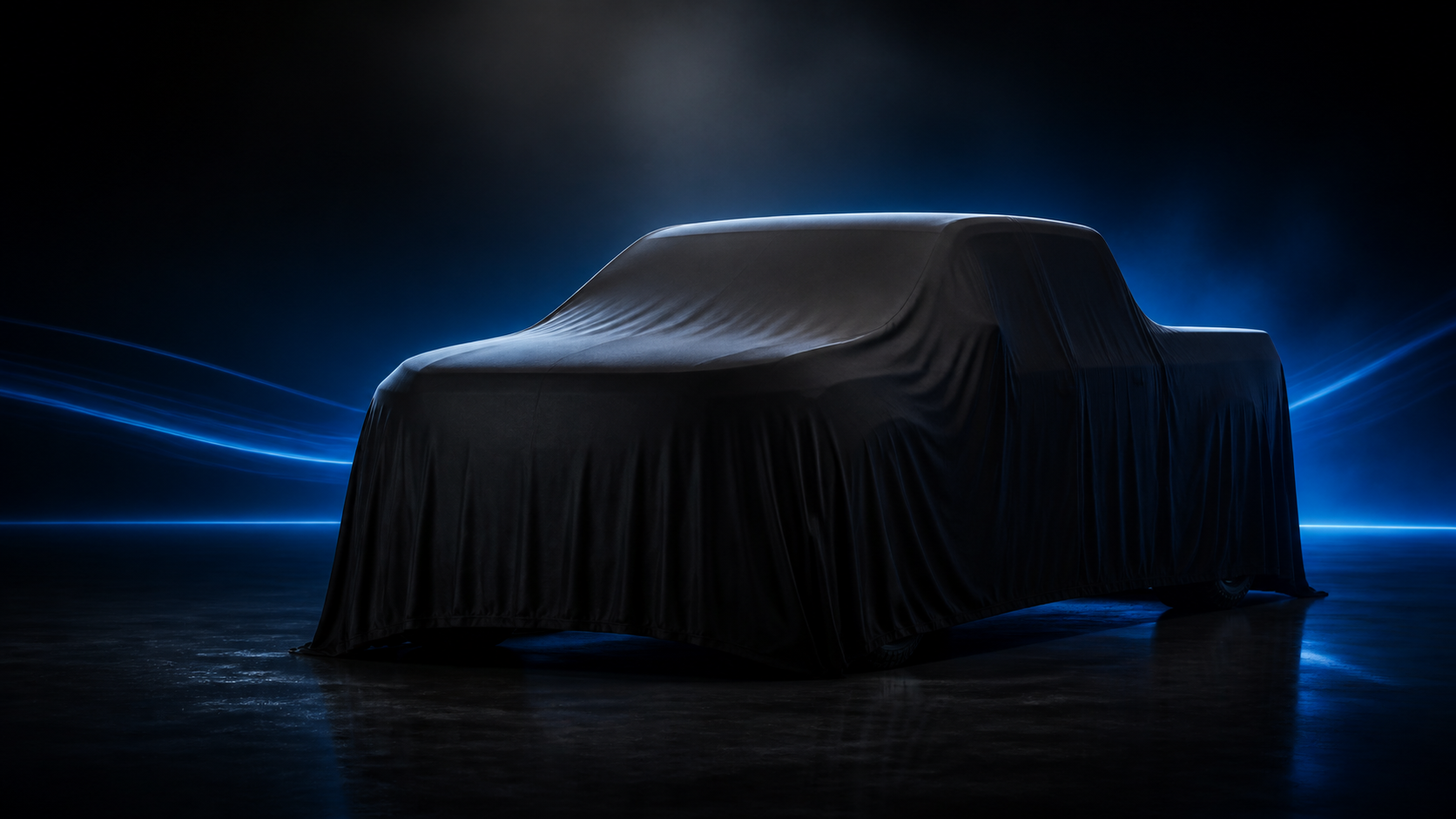
Ford Fathom: Ford’s More Affordable Electric Truck Is Coming

Ford Fathom: Ford’s More Affordable Electric Truck Is Coming

What if buying an electric truck didn’t require a luxury-vehicle budget? That is the idea behind the Ford Fathom, an all-new midsize electric pickup scheduled to arrive in 2027. With a starting MSRP of $28,350 before destination charges, the Fathom is being designed to make electric driving accessible to a much wider group of truck buyers. This is not simply a less expensive version of an existing Ford electric truck. The Fathom will be the first vehicle constructed on Ford’s new Universal Electric Vehicle Platform, using a new production system intended to reduce complexity, control costs, and create room for practical technology. Here is what Ford has confirmed—and what drivers should still be waiting to learn. Ford Fathom at a Glance Ford has announced several important details about its upcoming electric pickup: Midsize, four-door electric truck Seating for five adults Starting MSRP of $28,350 with a standard-range battery $1,595 destination and delivery charge Preorders expected to begin in early 2027 Built on the Ford Universal Electric Vehicle Platform Production planned for Louisville, Kentucky Bed and front trunk, or “frunk,” for cargo Bidirectional power capability Next-generation BlueCruise capability Large high-resolution center display Standard Digital Key Apple CarPlay and Android Auto compatibility Navigation powered by Apple Maps Over-the-air software-update capability Important details such as EPA-estimated range, towing capacity, payload, charging speed, dimensions, and available trim levels had not been released at the time of writing. How Affordable Is the Ford Fathom? The Ford Fathom will start at $28,350 with its standard-range battery. That figure excludes the $1,595 destination charge, taxes, title, registration, dealer documentation fees, and optional equipment. Dealers set final selling prices. Even with those qualifications, the announced starting price places the Fathom in unusual territory. New electric trucks have traditionally carried prices considerably higher than comparable compact or midsize gas-powered pickups. Ford is attempting to change that equation by designing the vehicle, battery, software, and assembly process together. The result is intended to be a modern electric truck that begins below $30,000 without being stripped of the technology customers expect. Why Is It Called Fathom? A fathom is traditionally a unit used to measure the depth of water. The word can also mean understanding something deeply. Ford selected the name to represent the work its development team did to understand how customers actually use their vehicles. The truck is intended for people who want everyday practicality, flexible cargo space, modern technology, and an attainable price—not necessarily the size or towing capacity of a full-size pickup. There is also an older meaning behind the name. A fathom once described the approximate span of a person’s outstretched arms. Ford connects that idea to the Fathom’s welcoming, spacious interior. A New Platform for a New Kind of Ford Electric Truck The Fathom is the first model based on Ford’s Universal Electric Vehicle Platform. This architecture was created to support an eventual family of affordable electric vehicles with different body styles. Instead of adapting a gasoline-powered platform, Ford designed the system specifically around electric propulsion. That gives engineers greater freedom to position the battery, create a spacious cabin, and provide storage at both ends of the vehicle. Ford says the Fathom will have more passenger volume than a Toyota RAV4 while still providing a truck bed and a front cargo area. This could make it particularly useful for households that want one vehicle to handle commuting, errands, passengers, and weekend projects. The platform is also being designed to accept software improvements through over-the-air updates, allowing compatible features to evolve after the truck leaves the dealership. How Ford Plans to Keep the Price Down A lower price does not come from one dramatic breakthrough. Instead, Ford is simplifying hundreds of individual parts and processes. The Fathom will be assembled using the new Ford Universal EV Production System. Rather than moving an incomplete vehicle along one traditional assembly line, Ford’s system divides production into three main branches: The front section of the truck The rear section of the truck The structural battery, seats, carpeting, and center console Those sections come together later in the process. Ford expects the approach to reduce manufacturing time, require less factory space, and improve working conditions for plant employees. The platform is also designed around a more efficient electrical architecture. Reducing excess wiring, fasteners, and individual components can lower weight and manufacturing expense. A lighter and more efficient vehicle may be able to deliver useful driving range without relying on an enormous, expensive battery. American Assembly and LFP Batteries Ford plans to build the Fathom at its retooled Louisville Assembly Plant in Kentucky. The company has invested approximately $2 billion in the plant as part of its affordable-EV program. The truck will use lithium iron phosphate, or LFP, battery technology. Ford plans to assemble the battery cells at BlueOval Battery Park Michigan. LFP batteries can offer several practical advantages, including lower material costs and long service life. They also avoid using nickel and cobalt in the battery chemistry. Ford has not yet disclosed the Fathom’s battery capacity or estimated driving range, so shoppers should wait for official specifications before comparing it directly with other EVs. Bidirectional Power: More Than Transportation One of the Ford Fathom’s most interesting confirmed features is bidirectional power capability. An ordinary electric vehicle takes electricity from the grid and stores it in its battery. A vehicle with bidirectional capability can also send power back out. When paired with compatible home equipment, the Fathom is expected to help run household essentials such as lights, a refrigerator, and Wi-Fi during an outage. That potential could be especially appealing to Florida residents preparing for storms and temporary power interruptions. Bidirectional charging may also help some owners manage electricity costs. The vehicle could charge when electricity rates are lower and return some of that energy to the home during more expensive periods. Home-power functionality will require compatible equipment, professional installation, and support from the owner’s electric utility. Ford has not yet released complete equipment or installation details. A Digital-First Interior The affordable price does not mean Ford is eliminating every screen or connected feature. The Fathom will include a large, high-resolution center display with navigation powered by Apple Maps. Apple CarPlay and Android Auto compatibility will also be standard, allowing drivers to bring familiar apps and services into the vehicle. A standard Digital Key will let a compatible phone act as the vehicle key. Owners will also be able to use the Ford app for supported remote functions. Every Fathom will be built with the necessary hardware for Ford’s next generation of BlueCruise. When activated through an eligible plan or trial, BlueCruise supports hands-free highway driving on designated Hands-Free Blue Zones. It remains a driver-assistance feature, so drivers must continue watching the road and be ready to take control. Where Will the Ford Fathom Fit in the Truck Lineup? The Fathom is not an electric F-150, nor is it simply a battery-powered Maverick. Ford describes it as a midsize pickup. That places it conceptually between the compact Maverick and larger F-150, although official dimensions have not yet been announced. Its likely appeal is different from that of a full-size work truck. The Fathom is being developed for drivers who want: An approachable purchase price An electric vehicle with a real cargo bed Room for five passengers Easy daily drivability Storage in both a bed and frunk Modern connected technology The convenience of charging at home Backup-power potential Buyers who need maximum towing or payload capacity should wait for Ford’s final specifications. Those whose top priority is efficient commuting, home projects, outdoor equipment, or daily family use may find the Fathom’s combination especially compelling. What Has Ford Not Announced Yet? Although Ford has revealed the name, starting price, platform, and several features, many important numbers are still unknown. Ford has not yet published: EPA-estimated driving range Battery capacity Maximum charging rate Estimated DC fast-charging time Horsepower or torque Towing capacity Payload capacity Bed dimensions Overall length and width Available battery choices Trim levels Final production or delivery schedule Until those details are available, claims about the Fathom’s range or capability should be treated as speculation. Is the Ford Fathom Right for North Florida? For drivers in Starke and the surrounding Gainesville, Lake City, and Jacksonville areas, the Fathom could offer an appealing combination of manageable size and everyday utility. Home charging may allow many owners to begin each morning with the range needed for commuting and errands. The bed and frunk should provide flexible storage for tools, sports equipment, groceries, or weekend gear. Bidirectional power could add another layer of value when a properly equipped home experiences an outage. As with any electric vehicle, the right choice will depend on daily mileage, charging access, towing needs, and travel habits. Ford’s forthcoming range and charging specifications will help shoppers determine how well the Fathom fits longer highway trips and demanding truck use. When Can You Order a Ford Fathom? Ford says preorders will begin in early 2027. Interested shoppers can currently register with Ford to receive updates and a future preorder invitation.Exact production timing, dealership allocations, and customer delivery dates have not been announced. At Murray Ford of Starke, we’re here to help North Florida drivers follow the Fathom’s development, understand the preorder process, and compare it with other Ford trucks and electric vehicles as more specifications become available. Visit Murray Ford of Starke at 13447 U.S. Highway 301 South in Starke, Florida, to explore today’s new Ford lineup and ask about future Ford Fathom updates. Frequently Asked Questions What is the Ford Fathom? The Ford Fathom is an upcoming midsize, four-door electric pickup. It will seat five people and will be the first vehicle constructed on Ford’s new Universal Electric Vehicle Platform. How much will the Ford Fathom cost? The Fathom will have a starting MSRP of $28,350 with a standard-range battery. That price excludes a $1,595 destination charge, taxes, registration, dealer fees, and optional equipment. The dealer sets the final selling price. When will the Ford Fathom be available? Ford says Fathom preorders will begin in early 2027. A specific production launch or customer delivery date has not yet been announced. What is the Ford Fathom’s driving range? Ford has not released an EPA-estimated driving range. Battery capacity and charging-speed figures also remain unannounced. How much can the Ford Fathom tow? Ford has not yet published towing or payload ratings for the Fathom. Buyers who plan to tow should wait for the final specifications and confirm the capacity of their selected configuration. Can the Ford Fathom power a house? The Fathom will offer bidirectional power capability. When connected to a properly equipped home, its battery will be able to help power household essentials during an outage and may help manage electricity costs. Additional home equipment and utility approval may be required. Will the Ford Fathom have BlueCruise? Every Fathom will be built with BlueCruise-capable hardware. Using BlueCruise will require activation through an eligible plan or trial. BlueCruise is a hands-free driver-assistance feature, not an autonomous-driving system.

Read More
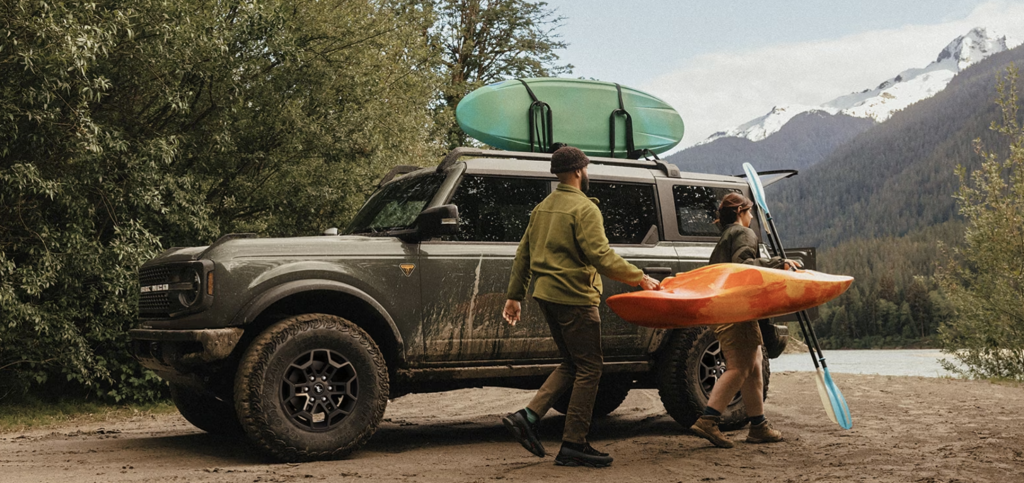
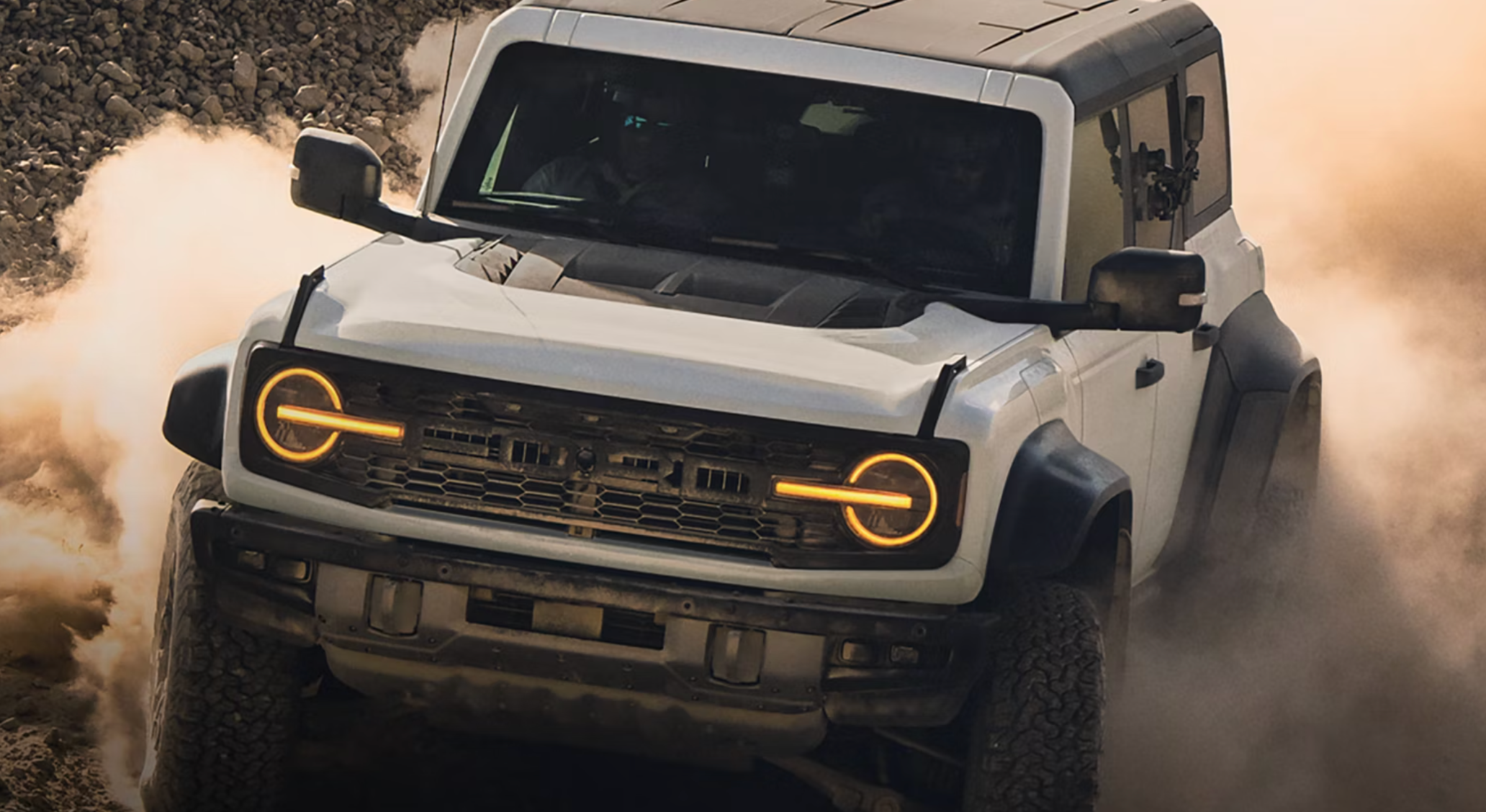
bronco dirt road

Ford Bronco G.O.A.T. Modes Explained: What Each Mode Actually Does

One turn of a dial can change how your Bronco responds to a rainy road, loose sand, rocky terrain, or an open stretch of trail. That’s the idea behind G.O.A.T. Mode on a Bronco. G.O.A.T. stands for “Goes Over Any Type of Terrain,” and the system gives you selectable drive modes designed for specific conditions. Depending on the setting and your Bronco’s equipment, the vehicle can adjust throttle response, transmission behavior, traction and stability controls, and four-wheel-drive settings. If your question is, “What is G.O.A.T. Mode on a Bronco?” the simplest answer is that it helps prepare the vehicle for what’s underneath the tires. Five Modes or Seven? Your Bronco Trim Decides The Bronco G.O.A.T. Modes you get depend on the model. For 2026, Base, Big Bend, Outer Banks, and Heritage Edition models have five modes: Normal Eco Sport Slippery Sand Badlands, Stroppe Edition, and Raptor models get seven: Normal Eco Sport Slippery Off-Road Rock Crawl Baja So, before planning around a particular G.O.A.T. Mode on a Bronco, check the exact model and equipment. Not every Bronco has every setting. Normal, Eco, and Sport Change the Everyday Drive You don’t have to leave pavement to make use of the system. Normal is your everyday setting, balancing comfort and general drivability. Eco prioritizes efficient driving and extended range. Sport goes the other direction by sharpening accelerator response, changing steering feel, and holding lower gears longer for quicker acceleration. That makes G.O.A.T. Mode on a Bronco relevant even if most of your week involves US-301, errands around Starke, or highway miles toward Gainesville or Jacksonville. The trail modes may get the attention, but some of these settings are built for the drive you make every day. Slippery Mode Is the One to Remember When the Weather Turns Florida rain can turn a perfectly ordinary road slick in a hurry. When using G.O.A.T. Mode on a Bronco, Slippery mode reduces throttle response and adjusts shifting for firm surfaces with reduced traction. Depending on the Bronco’s four-wheel-drive system, the mode can also change which 4x4 setting is selected by default. Among the Bronco G.O.A.T. Modes, Slippery may be one of the most useful for drivers who rarely leave pavement. The key is using the mode that matches the surface. Ford specifically warns against using certain four-wheel-drive configurations intended for slippery conditions on dry pavement. Sand Mode Helps the Bronco Keep Moving Loose sand requires momentum, traction, and a different response than pavement. On 2026 Broncos equipped with Sand mode, the vehicle prepares itself for soft terrain rather than treating it like an ordinary road. That makes G.O.A.T. Mode on a Bronco useful when the surface gets loose and maintaining forward progress becomes the priority. It’s also a good reminder that drive modes aren’t magic buttons. Tire pressure, terrain, driver input, vehicle equipment, and good judgment still matter when you leave pavement. Off-Road, Rock Crawl, and Baja Get More Specialized Move into Badlands, Stroppe Edition, or Raptor territory and the Bronco G.O.A.T. Modes get more specialized. Off-Road is built for mixed surfaces like sand, gravel, mud, and uneven terrain, with 4H becoming the default on applicable Broncos. Rock Crawl uses 4L and adjusts throttle and transmission response for more control over obstacles. The rear electronic locking differential engages, and properly equipped models can disconnect the stabilizer bar for better articulation. Baja takes the opposite approach. This G.O.A.T. Mode on a Bronco is designed for higher-speed off-road driving, with quicker throttle response and stronger torque delivery over loose terrain. Rock Crawl wants patience. Baja wants room to move. The Dial Is Easy. Choosing the Right Mode Matters More. Using the system itself isn’t complicated. The Bronco uses a console-mounted controller to select its drive modes. Ford notes that mode availability can depend on vehicle conditions and that off-road modes should be returned to an appropriate on-road setting when you’re back on regular pavement. The important part is understanding what each G.O.A.T. Mode on a Bronco is trying to accomplish instead of simply turning the dial because the terrain looks interesting. You don’t need Baja for a rainy commute, and Rock Crawl isn’t there to make a grocery run more exciting. See G.O.A.T. Mode on a Bronco in Action Before You Hit the Trail The best time to figure out your Bronco’s controls is before you’re staring at an obstacle. At Murray Ford of Starke, our team can show you how the Bronco G.O.A.T. Modes work on the specific model you’re considering and explain which trims offer the terrain settings that match how you want to drive. Explore our current Ford Bronco inventory, then get behind the wheel and try the controls for yourself. A G.O.A.T. Mode on a Bronco can change a lot about how the SUV responds. Knowing when to turn that dial is what makes the technology genuinely useful. Ford Bronco G.O.A.T. Modes FAQs Still learning the terrain-management system? Here are quick answers about Bronco G.O.A.T. Modes, what the settings mean, and how to use them correctly. What is G.O.A.T. Mode on a Bronco? G.O.A.T. Mode on a Bronco refers to selectable drive settings designed for different roads, weather, and terrain. Depending on the selected mode and vehicle equipment, the system can adjust throttle response, transmission behavior, traction and stability controls, and four-wheel-drive operation. How do you use Ford Bronco G.O.A.T. Mode? Use the console-mounted controller to bring up the available modes and select the setting that matches your driving conditions. Available settings depend on the Bronco model, and certain modes are intended specifically for off-road use. What does G.O.A.T. stand for on a Ford Bronco? G.O.A.T. stands for Goes Over Any Type of Terrain. It’s Ford’s name for the Bronco’s selectable terrain and drive modes. Which Ford Bronco models have seven G.O.A.T. Modes? For 2026, Badlands, Stroppe Edition, and Raptor have seven modes. Base, Big Bend, Outer Banks, and Heritage Edition models have five. Always confirm the equipment on the specific Bronco you’re considering. Which Bronco G.O.A.T. Mode should I use in the rain? If you’re using G.O.A.T. Mode on a Bronco in the rain, Slippery mode is the setting designed for firm surfaces with reduced traction. It lowers throttle response and adjusts shifting to help the Bronco respond more smoothly on slick roads.
Orange Mustang

What Is an RTR Mustang? Exploring the Mustang RTR Spec 3, Spec 5 & More

A Mustang GT already knows how to make an entrance. RTR looks at that same car and asks a different question: how much further can we take it? The result is a Mustang with a sharper stance, specialized suspension, distinctive bodywork, RTR badging, and, depending on the Spec, a serious jump in horsepower. If you’re searching for an RTR Mustang for sale, understanding the different versions matters. Spec 2, Spec 3, Spec 5, and Ford’s newer factory RTR Package don’t all deliver the same experience. Here’s how they fit together. What Makes a Mustang an RTR? RTR stands for “Ready to Rock,” and the company was founded by professional driver Vaughn Gittin Jr. RTR Vehicles is independent from Ford, but the two companies collaborate closely on Mustang projects. The serialized RTR vehicle program starts with a Mustang and adds RTR-engineered appearance, chassis, wheel, tire, suspension, and performance upgrades depending on the Spec level. So, when you find an RTR Mustang for sale, you’re looking at more than a Mustang with a graphics package. The higher Specs can substantially change how the car looks, handles, and puts power to the pavement. Spec 2: Start With the Chassis For 2026, RTR Spec 2 can be built from any Mustang GT chassis. It adds RTR’s aggressive grille and body components, 20-inch staggered wheels, Nitto tires, adjustable suspension components, lowering springs, unique badging, graphics, and a serialized dash plaque. RTR currently lists the package starting at $18,995 above the cost of the base Mustang GT. Spec 2 makes sense for the shopper who wants the full RTR look and a more focused chassis without making a supercharger the centerpiece. That’s an important distinction when comparing one RTR Mustang for sale with another. The badge may say RTR, but the Spec tells you how far the transformation goes. Mustang RTR Spec 3: Now Add 810 Horsepower This is where things get considerably louder. The 2026 Mustang RTR Spec 3 pairs the GT’s 5.0-liter V8 with a 3.0-liter Ford Performance Whipple Supercharger, producing 810 horsepower and 615 lb-ft of torque. It also carries over the RTR styling and tactical suspension hardware while adding staggered RTR wheels as standard equipment. Within the RTR Mustang for sale lineup, Spec 3 is where power takes a major jump. RTR lists the package from $33,995 above the Mustang GT base vehicle. For drivers who want more than a standard Mustang GT, Spec 3 adds the supercharged power and RTR-tuned chassis upgrades that make the car feel like a much more complete performance build. Mustang RTR Spec 5: RTR Turns Everything Up Then there’s the Mustang RTR Spec 5. For 2026, this is RTR’s flagship Mustang and the most capable production Mustang RTR the company has offered. Its supercharged 5.0-liter V8 uses a Stage 2 Whipple system to produce more than 870 horsepower and 660 lb-ft of torque. Buyers can choose a six-speed manual or 10-speed automatic. But Spec 5 isn’t simply a Spec 3 with more boost. It receives an integrated widebody system, exposed carbon-fiber exterior components, adjustable coilover suspension, upgraded brakes, forged 20-inch wheels, Michelin Pilot Sport 4S tires, RTR by BORLA active exhaust, and RECARO sport seats. Production is limited to just 50 U.S. units for the 2026 model year. With production that limited, finding an RTR Mustang for sale in Spec 5 form takes a little more patience than tracking down a more widely available Mustang. How Is Ford’s Factory RTR Package Different? This is where the naming can become confusing. Ford offers a factory-installed RTR Package for the 2026 Mustang EcoBoost Fastback. Developed with RTR and built at Ford’s Flat Rock Assembly Plant, this version uses the turbocharged 2.3-liter EcoBoost engine rather than the V8 found in RTR’s serialized Spec models. The factory package includes RTR’s signature illuminated grille elements, 19-inch wheels, a 3.55 Torsen limited-slip rear axle, Brembo brakes, active-valve exhaust, an electronic drift brake, and Ford-patented anti-lag technology. MagneRide damping is available as an option. Ford also offers a separate RTR Appearance Package that can be added to the main RTR Package. It includes Hyper Lime brake calipers and matching exterior graphics. The factory-built EcoBoost RTR is separate from RTR’s serialized, GT-based Spec 2, Spec 3, and Spec 5 vehicles. Those models take a different approach, particularly the supercharged V8-powered Spec 3 and Spec 5. If an RTR Mustang for sale catches your eye, confirm which program and configuration you are considering before assuming every RTR follows the same formula. Which RTR Mustang Fits the Way You Drive? The best RTR depends on what you actually want from the car. If the look, suspension, and sharper chassis matter most, Spec 2 gives you the RTR treatment without stepping into supercharged territory. If power is the priority, the Mustang RTR Spec 3 is the clear jump. Its 810-horsepower setup gives you a very different experience from a standard GT while still keeping the car below the extreme rarity of Spec 5. The Mustang RTR Spec 5 is for someone who wants the halo version. With more than 870 horsepower, widebody construction, carbon-fiber components, and production limited to 50 U.S. units, it’s less about finding the middle ground and more about getting the most exclusive RTR Mustang in the lineup. That’s why the right RTR Mustang for sale depends less on which badge looks best and more on how much performance, rarity, and customization you actually want. Ready to Rock? Start With a Mustang in Starke At Murray Ford Starke, you can explore our current Mustang inventory and get familiar with the GT models that form the foundation for many RTR builds. If an RTR Mustang for sale is what you’re ultimately after, availability depends on the specific RTR program, model year, production, and authorized-dealer inventory. RTR maintains its own dealer and vehicle locator for serialized Spec models. Start by finding the Mustang configuration you like, then make sure you understand whether you’re looking at Ford’s factory RTR Package or a serialized RTR Spec 2, Spec 3, or Spec 5 build. Because with RTR, the badge is only the beginning of the story.

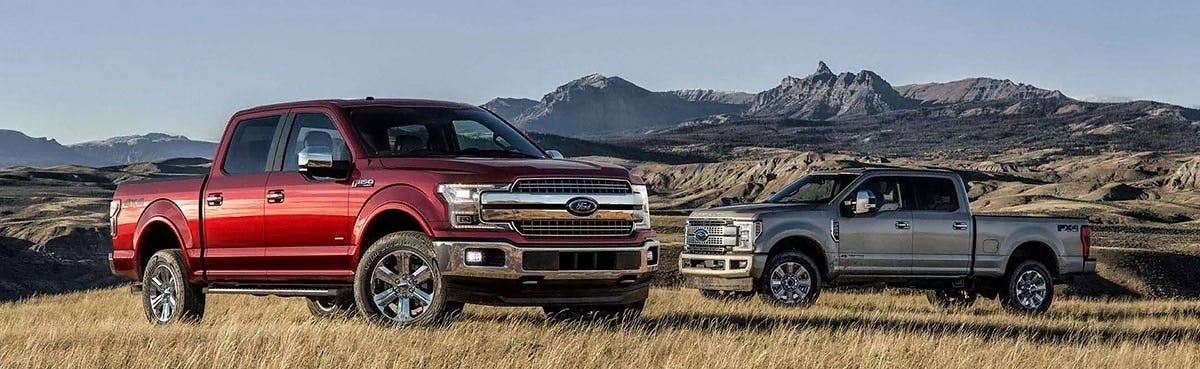
two f-150's

F-150 SuperCab vs. SuperCrew: What’s the Difference?

Two F-150s can take up nearly the same space in your driveway and feel completely different once everyone climbs inside. That’s the heart of SuperCab vs. SuperCrew. SuperCab gives you useful rear seating while keeping a 6.5-foot bed standard. SuperCrew puts much more emphasis on rear-passenger room and gives you a choice between 5.5- and 6.5-foot beds. For Starke truck shoppers, the right cab depends on whether people or bed space usually get first claim on your F-150. F-150 SuperCab vs. SuperCrew Starts With the Back Seat The biggest difference is easy to feel from the second row. The current F-150 SuperCab provides 33.5 inches of rear legroom. SuperCrew stretches that to 43.6 inches, a difference of more than 10 inches. Both cab styles can seat five or six people depending on configuration. That makes SuperCab vs. SuperCrew less about whether you can carry passengers and more about how often you’ll actually do it. SuperCab can work well when the back seat is used occasionally for coworkers, kids, bags, or gear. If adults or growing kids will regularly occupy the second row, SuperCrew gives them considerably more room to settle in. Bed Space Changes the Equation Here’s where F-150 SuperCab vs. SuperCrew gets more interesting. The 2026 SuperCab comes with a 6.5-foot bed, while SuperCrew offers 5.5- or 6.5-foot options. That gives the F-150 SuperCab a useful mix of rear seating and longer-bed space for tools, gear, and work supplies. SuperCrew gives you more flexibility: choose the shorter bed for a more passenger-focused setup, or pair the roomy cab with the 6.5-foot bed when you need more of both. In the SuperCab vs. SuperCrew decision, it really comes down to how much space you need for people versus cargo. SuperCab vs. SuperCrew Length Isn’t as Simple as You’d Think You might assume the bigger cab always makes the truck much longer. Not necessarily. For 2026, a SuperCab with the 6.5-foot bed and a SuperCrew with the 5.5-foot bed both measure 232.0 inches overall. Move to a SuperCrew with the 6.5-foot bed and length grows to about 243.8 to 243.9 inches, depending on drivetrain. That SuperCab vs. SuperCrew length difference can matter for garages, parking, jobsites, and everyday maneuvering. If you want more rear-seat room without a longer truck, the short-bed SuperCrew is especially appealing. If the 6.5-foot bed matters more, SuperCab vs. SuperCrew becomes a choice between a shorter cab and a longer overall truck. Which Cab Fits Your Actual Week? When you’re weighing SuperCab vs. SuperCrew, forget the brochure for a minute. Picture Tuesday. If your F-150 usually carries one or two people while tools, equipment, or weekend gear fill the bed, the F-150 SuperCab can make a lot of sense. You still have a second row when you need it, but the standard 6.5-foot box keeps cargo space high on the priority list. If your truck doubles as the family vehicle, road-trip machine, carpool ride, or crew hauler, SuperCrew is easier to justify. That extra rear legroom can make Don’t Pick the Cab Without Checking the Rest of the Truck Cab style is only one part of an F-150 configuration. Engine, drivetrain, trim, bed length, towing equipment, payload, and available features can all change from truck to truck. Ford’s current F-150 lineup also limits certain configurations depending on the trim you choose. So once you’ve settled the SuperCab vs. SuperCrew question, look closely at the exact truck. The right cab paired with the wrong bed, engine, or equipment still isn’t the right F-150. Try Both Cab Styles at Murray Ford of Starke Cab dimensions make more sense when you’re sitting in the truck. At Murray Ford of Starke, our team can help you sort through cab styles, bed lengths, engines, towing needs, and available equipment based on how you’ll actually use your pickup. We’re located at 13447 U.S. Highway 301 South in Starke. Explore our F-150 inventory online, schedule a test drive, and let us help you make the SuperCab vs. SuperCrew choice from the driver’s seat. The Right Cab Is the One You’ll Use The F-150 SuperCab vs. SuperCrew choice doesn’t need to be complicated. SuperCab prioritizes useful rear seating and a standard 6.5-foot bed. SuperCrew gives passengers far more second-row legroom and lets you choose between shorter- and longer-bed configurations. Think about who rides with you, what goes in the bed, and where the truck needs to fit. The better answer usually becomes obvious. F-150 SuperCab vs. SuperCrew FAQs Still sorting out SuperCab vs. SuperCrew? Here are quick answers about seating, dimensions, and how the two F-150 cab styles differ. What’s the difference between SuperCab and SuperCrew? In SuperCab vs. SuperCrew, the biggest difference is rear-seat space. The F-150 SuperCab has 33.5 inches of rear legroom and comes with a 6.5-foot bed, while SuperCrew provides 43.6 inches of rear legroom and offers 5.5- or 6.5-foot beds. What is an F-150 SuperCab? An F-150 SuperCab is the middle cab option between Regular Cab and SuperCrew. It adds a second row of seating while pairing the cabin with a 6.5-foot bed on the current F-150. How long is an F-150 SuperCab with a 6.5-foot bed? A 2026 F-150 SuperCab with the 6.5-foot bed measures 232.0 inches overall. Its wheelbase is 145.4 inches. How long is a Ford F-150 SuperCrew? It depends on the bed. A SuperCrew with the 5.5-foot bed measures 232.0 inches long, while a SuperCrew with the 6.5-foot bed measures about 243.8 to 243.9 inches depending on drivetrain. That’s the key SuperCab vs. SuperCrew length difference to consider when parking or garage space matters.

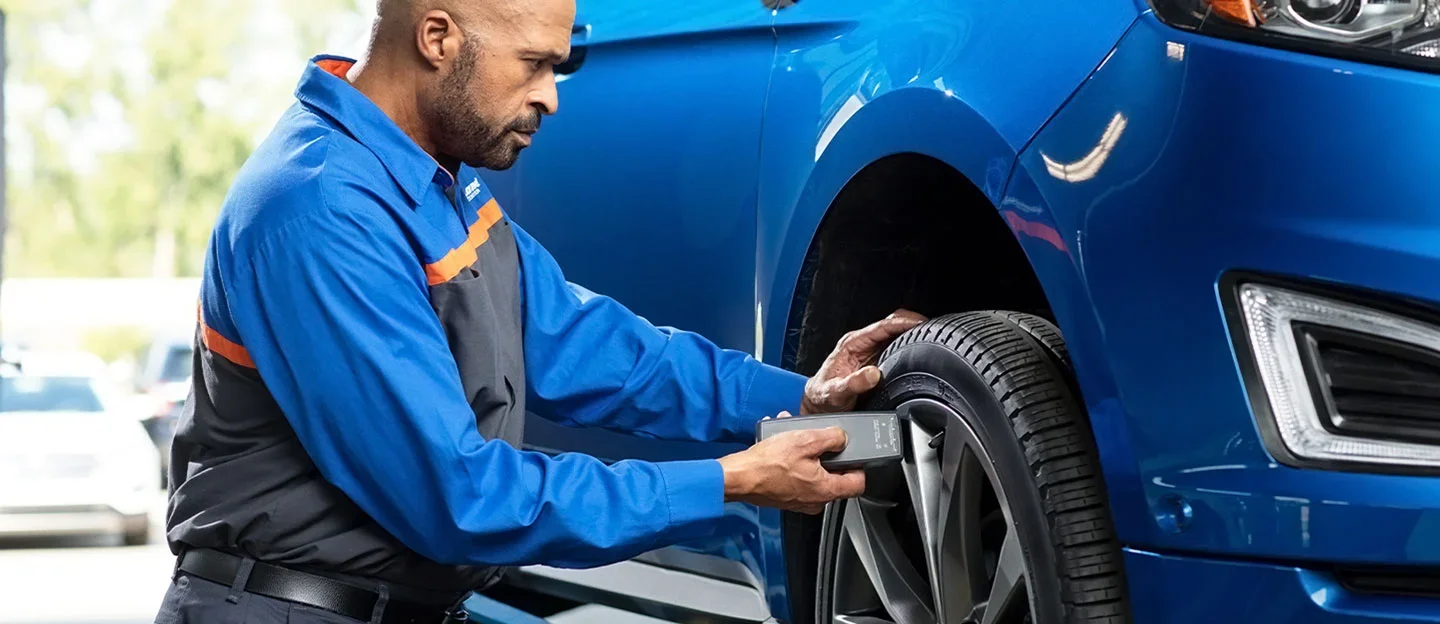
quick lane

Ford Quick Lane® in Starke: Service Without an Appointment

Vehicle maintenance rarely shows up at a convenient time. Your oil-life reminder pops on during a busy week. A tire starts losing air before a weekend trip. Your battery suddenly sounds less confident than it did yesterday. That’s when convenient Ford Quick Lane service can make routine maintenance easier to handle. That’s exactly where Quick Lane® fits in. If you’re looking for Ford Quick Lane near you in Starke, Murray Ford of Starke gives you a convenient place to handle routine maintenance without building your whole day around a traditional service appointment. No Calendar Tetris Required Quick Lane makes routine vehicle maintenance easier to fit into a busy schedule with no-appointment service for common maintenance needs and vehicles from many makes and models. With Ford Quick Lane near you, it’s easier to take care of maintenance without planning days ahead. At Murray Ford of Starke, our Quick Lane Tire & Auto Center is located at 13447 U.S. Highway 301 South, with weekday evening and weekend availability, including Sundays. That gives Starke-area drivers more flexibility to handle maintenance around work, errands, and family plans. Oil Changes Are Just the Starting Point A lot of drivers associate Quick Lane with oil changes, and that’s certainly an important part of the job. A Ford Quick Lane oil change can help you stay on top of one of your vehicle’s most basic maintenance needs without turning it into a complicated service visit. But Ford Quick Lane service goes well beyond fresh oil and a new filter. At Murray Ford of Starke, available Quick Lane maintenance includes tires, brakes, batteries, wheel alignments, belts and hoses, wiper blades, lamps and bulbs, air-conditioning service, cooling-system maintenance, transmission service, suspension and steering work, electrical service, and vehicle checkups. So, when you look for Ford Quick Lane near you, think beyond the oil-change reminder. It can also be a convenient stop when your wipers are streaking, your battery needs attention, your tires need service, or your brakes aren’t feeling quite like they used to. Your Car Doesn’t Have to Wear a Ford Badge Here’s a detail worth knowing: Quick Lane isn’t exclusively for Ford vehicles. Quick Lane provides routine automotive maintenance for all makes and models, including cars, trucks, and SUVs. Murray Ford of Starke’s Quick Lane also specifically serves all vehicle makes and models. That makes Ford Quick Lane near you useful even if there’s more than one brand parked in your driveway. You might drive an F-150 while your spouse drives another brand. Maybe the family has an older SUV or a commuter car that still needs tires, brakes, or routine maintenance. Ford Quick Lane service gives you one more local option for keeping those vehicles moving. Quick Lane or the Main Ford Service Department? Both have an important job, but they aren’t always used for the same reason. Quick Lane makes sense for many routine maintenance and everyday wear-item needs. Think oil changes, tires, batteries, brakes, alignments, wipers, and similar services. Our Ford service department is the better place to start when your Ford needs more involved diagnostics, repairs, or other dealership-level work beyond routine maintenance. The good news is that you don’t have to diagnose the situation yourself. If you aren’t sure whether Ford Quick Lane service or the main Ford service department makes more sense, our Murray Ford of Starke team can help point you in the right direction. That’s part of the advantage of having Ford Quick Lane near you through a full Ford dealership. Routine maintenance and broader service support are both close at hand. Small Maintenance Now Can Save a Bigger Headache Later It’s easy to ignore little changes in a vehicle because they don’t always feel urgent. A slow-starting battery still starts. Slightly worn wipers still clear most of the windshield. Tire wear happens gradually. An oil-change reminder can be dismissed with the push of a button. But routine maintenance is easier to deal with before those small issues become inconvenient ones. A Ford Quick Lane oil change, tire check, battery service, brake inspection, or other routine visit gives you a chance to stay ahead of everyday wear. For more involved concerns, our Ford service team can help determine the appropriate next step. If you’ve been putting off maintenance because your schedule is packed, finding Ford Quick Lane near you can finally make checking it off the list a lot easier. Make Your Next Maintenance Stop in Starke You shouldn’t need an empty afternoon just to take care of your vehicle. With convenient Ford Quick Lane service, routine maintenance can fit more easily into the day you already have planned. At Murray Ford of Starke, we make it easier to tackle routine maintenance with flexible Quick Lane availability and a broad range of services for different makes and models. If your vehicle needs more specialized attention, our Ford service team is here, too. Ford Quick Lane FAQs If you’ve been wondering, “Is there a Ford Quick Lane near me?” or “How does Ford Quick Lane service work?” here are quick answers to common questions. What is Ford Quick Lane? Quick Lane® Tire & Auto Center handles routine maintenance such as oil changes, tires, brakes, batteries, alignments, and other common vehicle needs. It also services many makes and models. Is Quick Lane owned by Ford? Yes. Quick Lane® is a Ford Motor Company service brand designed to make routine vehicle maintenance more convenient. How does Quick Lane service work at Ford dealers? Bring your vehicle to a participating Quick Lane location for eligible routine maintenance. If the vehicle needs more involved work, the dealership can help direct you to the appropriate Ford service team. Do you need an appointment for Ford Quick Lane? No. Quick Lane is built around no-appointment maintenance, although service times can vary depending on customer volume and the work your vehicle needs. Where can I find Ford Quick Lane near me in Starke? Murray Ford of Starke’s Quick Lane Tire & Auto Center is located at 13447 U.S. Highway 301 South in Starke. If you need Ford Quick Lane near you for routine maintenance, tires, brakes, or a Ford Quick Lane oil change, our team is ready to help.

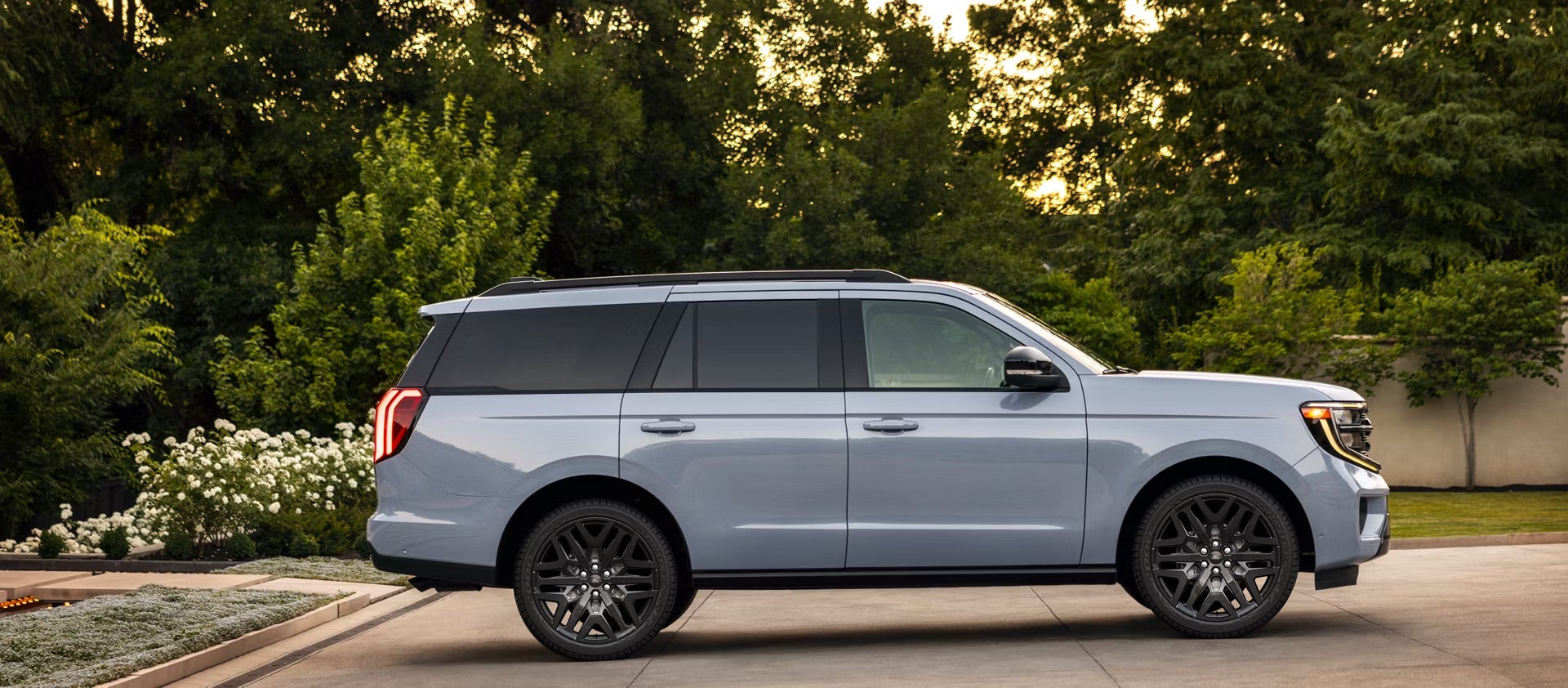
Grey Ford Expedition in a driveway

Ford Expedition Towing Capacity: Big SUV, Serious Strength

A full-size SUV should do more than carry a full house. The Ford Expedition towing capacity gives families the muscle to bring along boats, campers, utility trailers, and other weekend gear while keeping three-row comfort in the equation. For 2026, a properly equipped Expedition can tow up to 9,600 pounds, and the towing capacity on Ford Expedition models varies by configuration and equipment. At Murray Ford of Starke, we can help you look beyond the headline number and find an Expedition built for what you actually plan to tow. How Much Can a Ford Expedition Tow? For 2026, how much can a Ford Expedition tow depends heavily on drivetrain and wheelbase. The standard-wheelbase Expedition 4x2 is rated to tow up to 6,000 pounds, while a properly equipped 4x4 can reach the 9,600-pound maximum. Expedition MAX models are rated up to 6,300 pounds with 4x2 or 9,000 pounds with 4x4. That range is why the Ford Expedition towing capacity should never be treated as one universal number. The exact SUV matters. What Changes the Ford Expedition Tow Weight? Configuration makes a big difference. Drivetrain, wheelbase, axle ratio, wheels, passengers, cargo, accessories, and towing equipment can all affect the final Ford Expedition tow weight rating. Ford specifically notes that maximum towing varies with vehicle configuration, cargo, accessories, and passenger load. That also explains why the towing capacity on Ford Expedition models can differ even when two SUVs look similar on the lot. For example, Ford rates the 2026 Expedition Tremor® at up to 9,300 pounds when properly equipped, while qualifying standard-wheelbase 4x4 models can reach 9,600 pounds. 9,600 Pounds Takes the Right Setup Seeing “9,600 pounds” on a spec sheet doesn’t mean every Expedition is ready to pull that much. The maximum Ford Expedition towing capacity applies to properly equipped models. Ford’s 2026 towing information also states that trailer ratings above 7,000 pounds require a weight-distributing hitch for Expedition and Expedition MAX models. That makes equipment verification especially important if you’re shopping with a specific boat, camper, or trailer already in mind. Instead of asking only how much can a Ford Expedition tow, bring the loaded trailer weight into the conversation. That gives our team a much better starting point for matching you with the right configuration. Towing Tech Takes Some Stress Out of the Hitch Strength is useful. Making that strength easier to manage is even better. The Ford Expedition towing capacity is supported by towing-focused equipment such as a Class IV hitch receiver, Tow/Haul Mode, Trailer Sway Control, Pro Trailer Hitch Assist™, a 360-Degree Camera, and Pro Trailer Backup Assist™ 2.0. Ford also lists a trailer brake controller as part of its towing equipment Those features can make the towing capacity on Ford Expedition models more approachable for drivers who don’t want every campground arrival or boat-ramp backup to become an event. They don’t replace careful towing, but they can make connecting, maneuvering, and controlling a trailer feel more manageable. Don’t Forget What’s Inside the SUV Trailer weight isn’t the only number that affects Ford Expedition towing capacity. Passengers, coolers, luggage, pets, and cargo inside your Expedition all add weight. Trailer tongue weight also counts toward the vehicle’s available payload. Ford recommends tongue load at roughly 10 percent of total loaded trailer weight and notes that passengers, cargo, and tongue weight must remain within the vehicle’s GVWR and rear axle limits. So the towing capacity on Ford Expedition models you can realistically use on a family trip may be different from the maximum printed in a towing chart. That’s especially worth remembering when all three rows are occupied and the cargo area is packed for a North Florida weekend. Expedition or Expedition MAX: More Space, Different Numbers Need more room behind the third row? Expedition MAX stretches the formula, but that added size comes with its own towing ratings. For 2026, the MAX 4x4 tops out at 9,000 pounds, compared with the 9,600-pound maximum Ford Expedition towing capacity for qualifying standard-wheelbase 4x4 models. The MAX 4x2, however, is rated up to 6,300 pounds compared with 6,000 pounds for the standard-wheelbase 4x2. That’s a good reminder that “bigger” doesn’t automatically mean “higher tow rating.” The better question is how the Ford Expedition towing capacity fits your needs, whether you prioritize maximum trailer capacity, maximum interior space, or the right balance of both. Match the Expedition to Your Trailer in Starke If towing is part of your SUV search, start with the trailer rather than the trim badge. At Murray Ford of Starke, our team can help you compare the towing capacity on Ford Expedition configurations, review the equipment on specific vehicles, and make sense of the numbers that apply to your setup. Browse our available Ford Expedition inventory to compare current trims and configurations, then bring us your trailer weight and towing plans. We’ll help you identify an Expedition with the equipment you need and verify the rating on the exact vehicle you’re considering. Three Rows, One Serious Tow Vehicle The Ford Expedition towing capacity is proof that choosing a family-sized SUV doesn’t mean leaving serious capability behind. With up to 9,600 pounds of available towing strength, useful trailering technology, and multiple wheelbase and drivetrain choices, the Expedition can handle everything from daily passenger duty to weekends with a trailer attached. The trick isn’t simply finding the biggest number. It’s finding the Expedition whose Ford Expedition tow weight, passenger space, and equipment all fit what you plan to bring along. At Murray Ford of Starke, that’s the part we can help you get right.

Ford Bronco Trim Levels Explained

The Bronco lineup doesn’t follow a simple good-better-best formula. One model gives you the essentials and room to customize. Another adds daily comfort. Farther up the lineup, you’ll find specialized hardware for rocky trails, retro-inspired styling, and high-speed off-road performance. Understanding the Ford Bronco trim levels can help you spend money on the capability and comfort you’ll actually use. At Murray Ford of Starke, we help North Florida shoppers compare each Bronco’s personality, equipment, and everyday practicality before choosing their trail partner. Bronco Trim Levels in Order For the current 2026 lineup, the Bronco trim levels in order are: Base, Big Bend, Outer Banks, Badlands, Heritage Edition, Stroppe Edition, and Raptor. That order provides a helpful starting point for comparing Ford Bronco trim levels, but the special editions don’t always follow a traditional upgrade ladder. Heritage Edition focuses on vintage style, Stroppe Edition draws inspiration from desert racing, and Raptor sits at the top for extreme off-road performance. Base: Start With the Bronco Essentials The Ford Bronco Base trim is the blank canvas of the lineup. It offers the Bronco’s core 4x4 character without loading the vehicle with every available appearance or luxury feature. For 2026, the Base is the starting point among the Ford Bronco trim levels, offering two-door and four-door configurations with a 300-horsepower 2.3-liter EcoBoost engine. Shoppers can choose a seven-speed manual or 10-speed automatic transmission, and the Sasquatch Package is available for drivers who want a more aggressive trail setup. Choose the Ford Bronco Base trim when you want straightforward capability, prefer a lower starting point, or plan to personalize your Bronco over time. Big Bend: Everyday Adventure Gets Easier The Ford Bronco Big Bend trim is one of the most approachable choices for daily driving. It builds on the Base with touches such as rear privacy glass, aluminum wheels, and more package flexibility. The four-door Big Bend keeps the 300-horsepower 2.3-liter EcoBoost engine and offers manual or automatic transmission choices. Available Black Diamond, Free Wheeling, and Sasquatch packages let shoppers move the design toward rugged utility, retro style, or stronger off-road capability. For many Starke drivers, the Ford Bronco Big Bend trim lands in a useful sweet spot. It has the Bronco look and open-air character while remaining comfortable enough for commuting, errands, and weekend exploring. Outer Banks: More Polish for the Daily Drive When comparing the Bronco trim levels in order, Outer Banks is where the lineup begins to feel more refined. Body-color exterior details, 18-inch wheels, power front seats, carpeted flooring, and an available Lux Package give it a more polished feel than the lower Ford Bronco trim levels. An available 2.7-liter EcoBoost V6 adds extra muscle, while the available 60th Anniversary Package blends retro design with leather seating and Sasquatch off-road equipment. Outer Banks makes sense when your Bronco will spend most weekdays on pavement, but you still want removable doors, open-air fun, and real 4x4 confidence. Badlands: Built for Tougher Trails Badlands is where the lineup becomes more serious about technical off-roading. It adds HOSS 2.0 suspension with Bilstein dampers, seven G.O.A.T. Modes, full-vehicle steel bash plates, an advanced 4x4 system, and an available front stabilizer bar disconnect. The cabin also reflects its trail focus with marine-grade vinyl seating and washout-capable rubberized flooring. Leather-trimmed seating is available for shoppers who want rugged hardware with a more upscale interior. Among the Ford Bronco trim levels, Badlands is a strong choice for drivers who expect to use the Bronco’s capability rather than simply admire it in the driveway. Heritage Edition: Old-School Looks, Modern Hardware Heritage Edition brings vintage Bronco character into the current lineup. Its Oxford White-painted hardtop, heritage graphics, plaid cloth seats, and unique badging create a look that stands apart immediately. It’s more than an appearance package. The 2026 four-door Heritage Edition includes 35-inch tires and HOSS 2.0 suspension, with an available 2.7-liter EcoBoost V6. Choose it when classic Bronco style matters just as much as modern capability. Stroppe and Raptor: Performance Turns Up Stroppe Edition brings Baja-inspired attitude with a 330-horsepower 2.7-liter EcoBoost V6, HOSS 3.0 suspension with FOX internal bypass dampers, and distinctive Code Orange details. For 2026, it’s offered as a four-door model. Raptor is the highest and most extreme entry among the Ford Bronco trim levels. Its 418-horsepower 3.0-liter EcoBoost V6, 37-inch tires, wide stance, and HOSS 4.0 suspension are built for drivers seeking serious high-performance off-road capability. Match the Trim to Your Kind of Adventure Reading the Bronco trim levels in order only tells part of the story. The right choice depends on where you’ll drive and what you value most. Start with Base for simplicity and customization. Across the Ford Bronco trim levels, Big Bend suits balanced daily use, Outer Banks adds extra comfort, and Badlands is built for demanding trails. Heritage Edition brings throwback personality, while Stroppe and Raptor appeal to shoppers who want specialized off-road performance. Put the Bronco Lineup to the Test in Starke At Murray Ford of Starke, our team can help you compare the Ford Bronco trim levels, starting with the Ford Bronco Base trim and moving through Big Bend, Outer Banks, Badlands, and available special editions. Explore current inventory, check the equipment on individual vehicles, and take your top choice for a test drive Ford Bronco Trim Level FAQs Still comparing the Ford Bronco trim levels? These quick answers explain the lineup, from the Ford Bronco Base trim to its most capable options. What are the Bronco trim levels? For 2026, the Bronco trim levels in order are Base, Big Bend, Outer Banks, Badlands, Heritage Edition, Stroppe Edition, and Raptor. Package and configuration availability varies by trim. What Bronco trim should I get? The right choice depends on how you plan to drive. Choose the Ford Bronco Base trim for core capability, Big Bend for a balanced daily driver, Outer Banks for added comfort, or Badlands for more technical off-roading. Heritage Edition emphasizes retro styling, while Stroppe and Raptor deliver specialized performance. Which Bronco trim has leather seats? Leather-trimmed seating is available on several Ford Bronco trim levels, including select Outer Banks, Badlands, and Raptor configurations. The Outer Banks 60th Anniversary Package also includes leather seating. Always confirm the upholstery on the exact Bronco you’re considering. What is the highest Bronco trim? Raptor is the highest-performance Bronco trim. It uses a 418-horsepower 3.0-liter EcoBoost V6 and specialized suspension designed for demanding off-road driving. Which Bronco trim is best for daily driving? The Ford Bronco Big Bend trim is a strong everyday choice because it combines useful comfort features, four-door practicality, and available packages without moving immediately into the more specialized upper trims. Outer Banks is also worth considering when premium cabin features are a higher priority.

explorer 1 Large

Ford SUVs by Size: Compact, Midsize, and Full-Size Models

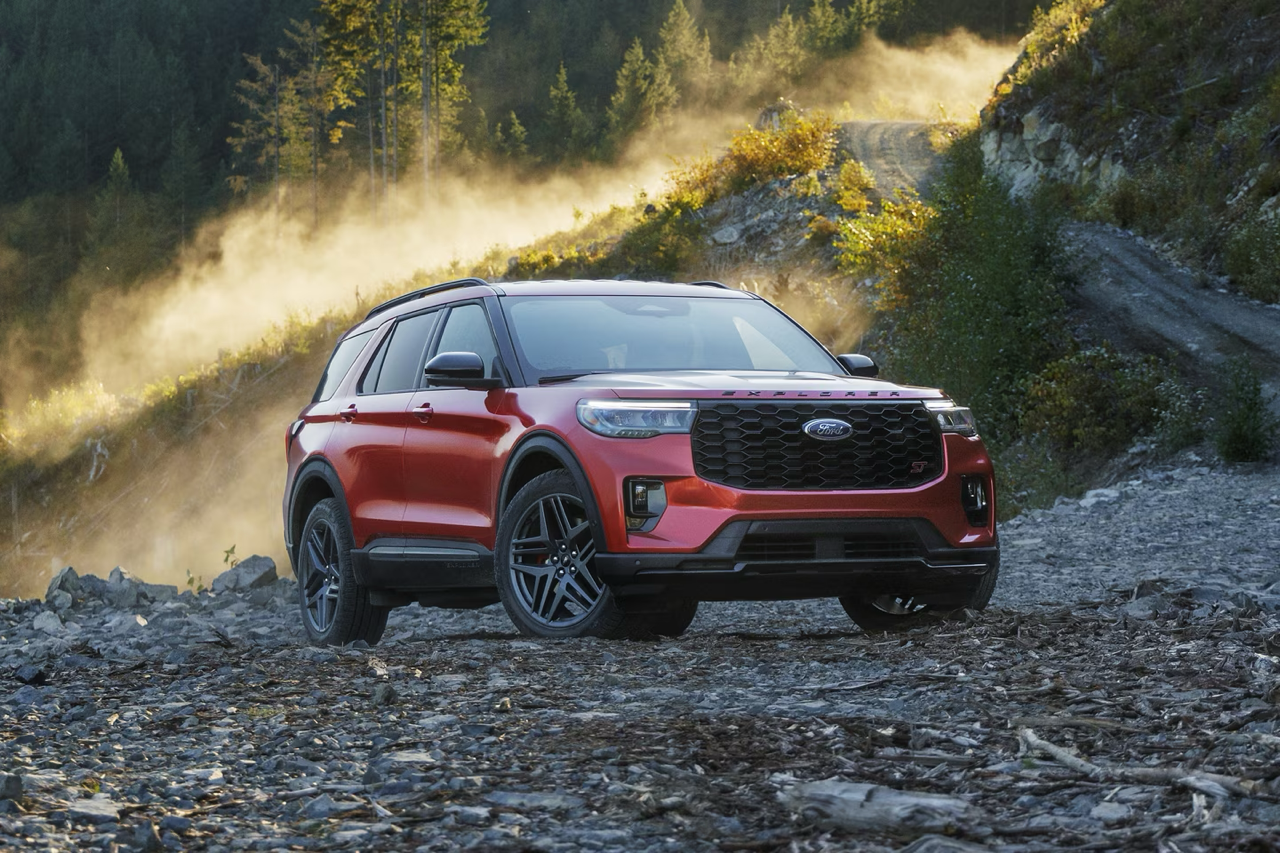
More SUV isn’t always better. The right fit might be a small Ford SUV for easier daily driving, a three-row Ford mid size SUV for family space, or a full-size model built for bigger plans. Comparing Ford SUVs by size helps you separate city-friendly options from family vehicles and full-size haulers. At Murray Ford of Starke, we’ll help you compare the Escape, Bronco Sport, Mustang Mach-E®, Bronco®, Explorer®, Expedition®, and Expedition MAX based on the space you’ll actually use. Ford SUV Sizes From Smallest to Largest When ranking Ford SUV models by size by overall length, the general order is: Bronco Sport, two-door Bronco, Escape, Mustang Mach-E, four-door Bronco, Explorer, Expedition, and Expedition MAX. The two-door Bronco is the exception. It’s technically midsize, but its short body puts it close to Bronco Sport length. Exact measurements vary by trim, body style, and equipment. Compact Ford SUVs: Easier to Park, Ready to Pack The compact end of Ford SUVs by size includes three distinctly different five-passenger choices. Ford Bronco Sport: Compact Size, Adventure-Ready Shape The Bronco Sport is the shortest conventional small Ford SUV in the lineup at roughly 173 inches long. It offers up to 65.2 cubic feet of cargo space, depending on configuration, and its upright shape works well for coolers, camping gear, fishing equipment, and taller items. Choose it for city-friendly sizing with extra confidence for dirt roads and outdoor weekends. Ford Escape: Everyday Space Without the Bulk At about 180 inches long, the Escape seats five and offers up to 65.4 cubic feet of cargo room on certain EcoBoost® models. Hybrid and plug-in hybrid figures differ. It’s a smart fit for school runs, Gainesville commutes, groceries, and shoppers who want flexible space without rugged styling. Mustang Mach-E: Electric Performance, Useful Cargo Room The five-seat Mustang Mach-E measures about 185.6 to 187 inches long, depending on model. It offers 29.7 cubic feet behind the rear seats, up to 59.7 cubic feet with them folded, plus a front trunk for smaller items. The Mustang Mach-E is a strong small Ford SUV for drivers who want electric performance, two-row practicality, and useful cargo space. Ford Midsize SUVs: Pick Your Kind of Adventure The middle of Ford SUVs by size comes down to two very different choices: Bronco and Explorer. Ford Bronco: Built for the Trail The Bronco is the adventurous Ford mid size SUV. Two-door models seat four and offer up to 52 cubic feet of cargo space, while four-door versions seat five and provide up to 83 cubic feet. Exact measurements vary by roof, trim, and configuration. Choose the Bronco for trail capability, removable body components, and open-air driving. The four-door is the better fit for passengers and camping gear. Ford Explorer: Family Space Without Full-Size Bulk The Explorer is a three-row Ford mid size SUV that seats six or seven and offers about 85 cubic feet of maximum cargo space. For many Starke families comparing Ford SUVs by size, Explorer hits the sweet spot with room for kids, friends, sports gear, and road-trip luggage. Full-Size SUVs: Bring Everyone and Their Luggage Expedition and Expedition MAX sit at the largest end of Ford SUVs by size. Both offer three rows and seating for up to eight, depending on trim and seat configuration. The standard Expedition measures about 209.9 inches and offers up to 108.5 cubic feet of cargo space. Expedition MAX stretches to 221.7 inches and increases capacity to 123.1 cubic feet, with more room behind the third row when every seat is in use. Choose Expedition for full-size space with easier maneuverability. Pick Expedition MAX for maximum cargo room on long trips with a full cabin. Towing capacity varies by configuration, passengers, and cargo, so our team can confirm the exact rating for the SUV you’re considering. Which Ford SUV Fits Your Routine? A small Ford SUV like the Bronco Sport or Escape is a smart fit for city driving, daily errands, and shoppers who don’t need a third row. Explorer gives growing families three rows without full-size bulk, while Bronco is the pick for serious off-roading. At the largest end of Ford SUVs by size, Expedition brings strong towing potential and passenger room, and Expedition MAX adds the most cargo space. Compare Ford SUVs in Starke Reading about Ford SUV models by size gives you a helpful starting point, but the differences become much clearer once you’re sitting behind the wheel. Browse our Ford SUV inventory online or visit us at Murray Ford of Starke to compare seating access, passenger space, cargo room, and overall dimensions. Our team will help you find the right balance without steering you toward more SUV than you need. Compact for the commute or full-size for the whole crew, seeing Ford SUVs by size in person can make your decision much easier. Ford SUV Size FAQs These quick answers cover the lineup’s biggest models, common size classifications, and smallest-to-largest order for shoppers still comparing Ford SUVs by size. What are the Ford big SUVs? The Expedition and extended-length Expedition MAX are Ford’s full-size SUVs. Both offer three rows and seating for up to eight, while Expedition MAX provides the greatest overall length and cargo capacity. Is a Ford Explorer a full-size SUV? No. Explorer is generally considered a Ford mid size SUV. It offers three-row seating for six or seven and sits between compact Ford crossovers and the full-size Expedition. Is a Ford Escape a full-size SUV? No. Escape is a compact, two-row SUV with seating for five. It’s designed more for commuting, small families, and everyday cargo than full-size passenger and towing needs. What are the Ford SUVs in order of size? By overall length, the general order is Bronco Sport, two-door Bronco, Escape, Mustang Mach-E, four-door Bronco, Explorer, Expedition, and Expedition MAX. This Ford SUV models by size ranking can shift slightly when trim-specific exterior equipment is added.

ranger-truck-bed

The Must-Have Truck Bed Accessories for Every Ford Pickup

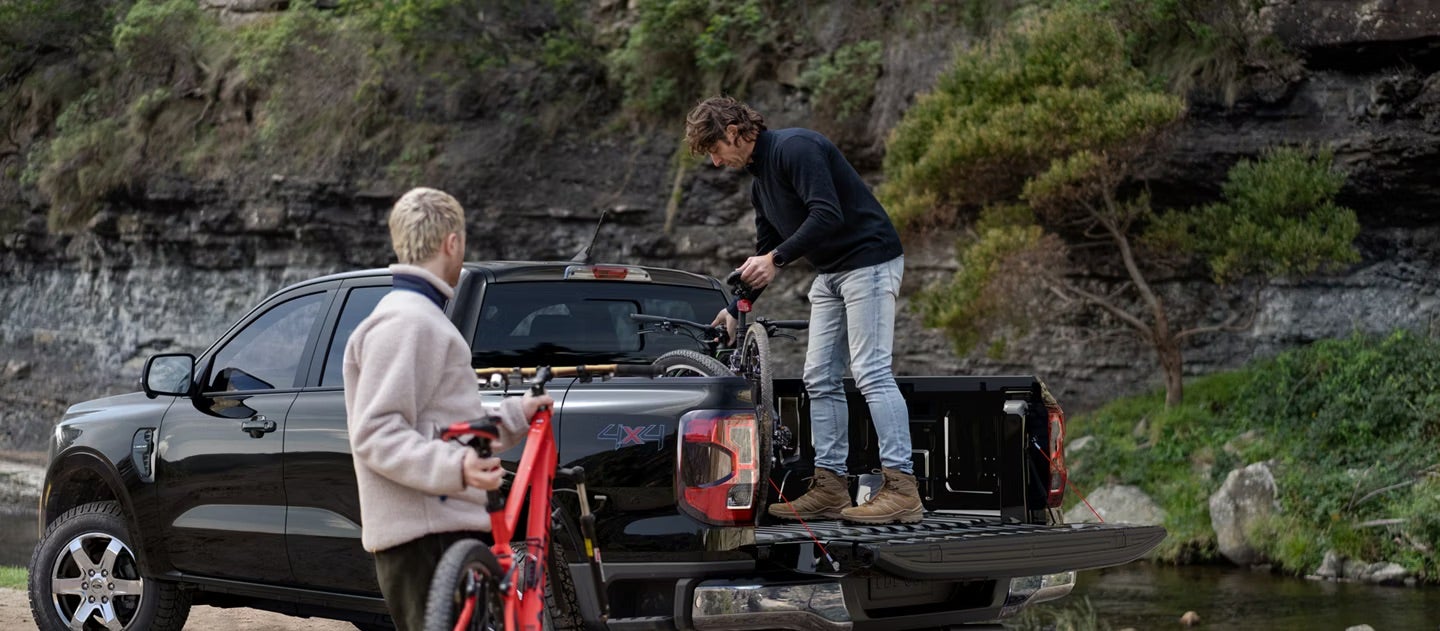
A pickup bed gives you room to haul, but without the right setup, groceries roll, tools get buried, and Florida rain reaches uncovered cargo. The best truck bed accessories fix those everyday problems. Maverick and Ranger owners may want organizers that maximize space, while F-150 and Super Duty drivers may need secure tool storage and heavier-duty protection. At Murray Ford of Starke, we’ll help you choose accessories that fit your truck, cargo, and routine. Start With the Way You Actually Use Your Truck Before adding truck bed accessories, think about what usually lands in your bed. Tools? Camping equipment? Fishing gear? Building supplies? Sports equipment? Weekly groceries? Your answer will help you prioritize protection, security, or truck bed storage. Bed length, installed equipment, and accessory compatibility can also vary by model year and configuration, so confirm fitment for your specific truck before ordering. Ford Maverick: Make a Compact Bed Work Smarter The Maverick’s FLEXBED® design is especially well suited to dividers, tie-downs, bed extenders, and covers. Ford notes that its molded bed pockets can hold cut lumber to create separate sections or two-tier storage. That makes a truck bed organizer one of the smartest additions for Maverick drivers. Dividers, bins, and cargo nets can keep grocery bags upright, separate muddy equipment from clean gear, and stop smaller items from sliding toward the cab. A soft folding or rolling cover is another practical choice. It keeps cargo out of sight and adds weather protection without taking away the bed’s everyday flexibility. A removable bed mat can also protect the floor while making cleanup easier after hauling plants, beach gear, or home-improvement supplies. Ford Ranger: Build a Bed That Can Switch Roles The Ranger sits in a useful middle ground. It’s manageable around town, but its bed still has room for outdoor equipment, tools, weekend projects, and practical truck bed accessories. For many Ranger owners, the winning combination is a cargo management system and tonneau cover. Ford offers a Ranger rail-and-cleat system with adjustable tie-down points, helping drivers secure different cargo shapes and reorganize the bed when plans change. Add bins or a truck bed organizer for straps, recovery gear, sports equipment, or smaller tools. This setup helps you use the Ranger’s space efficiently without permanently filling the bed with a large storage box. For drivers around Starke who split their time between commuting, fishing, home projects, and trailering, flexible truck bed storage usually makes more sense than a single-purpose setup. Ford F-150: Secure Tools Without Sacrificing the Whole Bed The F-150 can handle family duty, towing, or full-time work, so its truck bed accessories should match how you use it. A lockable truck bed tool box is a smart choice for contractors, technicians, landscapers, and anyone carrying valuable equipment. Cross-bed boxes keep tools secure and leave room underneath for longer materials, while drawer systems create enclosed truck bed storage below a usable cargo deck. Keep in mind that drawer systems also add weight and reduce some bed depth. A hard folding or retractable cover adds security and keeps gear out of sight. Soft covers are lighter and easier to remove, while hard covers provide a stronger barrier. Rolling and retractable designs offer quick access, though some housings take up space near the cab. Always confirm that your cover works with any toolbox, bed rail, divider, or rack already installed. Ford Super Duty: Choose Protection Built for Hard Use Super Duty trucks often carry heavier equipment, bulk materials, and fifth-wheel or gooseneck towing hardware, so choosing the right truck bed accessories is especially important. Durable protection and secure truck bed storage can help keep jobsite gear organized, protected, and ready for the next task. A heavy-duty truck bed tool box can keep hand tools, straps, hitches, and jobsite equipment secured between uses. Before installation, confirm compatibility with your bed length, towing hardware, tonneau cover, and any factory bed-storage features. Ford’s Super Duty accessory documentation notes that certain storage products, liners, mats, covers, and toolboxes may not be compatible with one another. For frequent hauling, a quality truck bed liner should be near the top of the list. It protects the bed from daily wear while helping preserve the truck’s usefulness over years of work. Spray-In, Drop-In, or Bed Mat? Each bed-protection option serves a different shopper, making liners and mats some of the most practical truck bed accessories. A spray-in truck bed liner creates a fitted, textured coating without a separate shell. It’s a popular choice for frequent hauling because it protects exposed metal and doesn’t shift around. A drop-in liner uses a molded insert. It can provide substantial impact protection, but dirt or moisture may collect underneath if it isn’t maintained properly. A removable bed mat covers the floor rather than the entire box. It’s a simple option for reducing scratches, cushioning cargo, and creating a more stable surface for bins or other truck bed storage. Ford lists spray-in liners, drop-in liners, and removable mats among available F-150 bed options, though availability depends on the truck and configuration. Find Ford Truck Accessories in Starke Ready to improve your truck’s organization, protection, or everyday usefulness? Browse our Ford accessories page, then contact us to confirm fitment and availability for your model, bed length, and equipment. You can also explore our Ford truck inventory to find a Maverick, Ranger, F-150, or Super Duty that fits the work and recreation you have planned. Our team can help you choose the right truck bed accessories and build a setup that makes sense from day one. Truck Bed Accessories FAQs Choosing between a cover, truck bed liner, toolbox, or cargo system can feel like a lot. These quick answers can help you narrow down the best setup for your Ford pickup. What are the best truck bed accessories for utility? The most useful options are usually a tonneau cover, liner or mat, adjustable tie-downs, cargo dividers, and secure storage. The ideal combination depends on your truck. A Maverick may benefit most from compact organizers, while an F-150 or Super Duty work truck may need a lockable toolbox and heavy-duty bed protection. Where can I buy truck bed accessories? You can shop through our dealership. Browse the Murray Ford of Starke accessories page, then contact us for help finding compatible products. We can check your model, model year, bed size, and installed equipment before you order. What are the must-have truck bed accessories? For most owners, the essentials include bed protection, a cover, tie-downs, and some form of truck bed storage. Add a truck bed organizer for loose cargo or a truck bed tool box when security is the priority. The best setup is the one that solves the problems you encounter every week.

2026 Ford F-350 parked two men are unloading the luggage

Discover the 2026 F-350 in Starke, FL: Built for Power and Performance

When you consider the 2026 F-350 in Starke, FL, you will see how it’s redefining what it means to own a heavy-duty truck. Designed with unparalleled strength and cutting-edge technology, this Ford powerhouse is perfect for tackling the toughest jobs. Whether you're hauling equipment or towing a trailer, the 2026 F-350 delivers exceptional performance and reliability. Unmatched Towing Capacity When it comes to towing capacity, the 2026 F-350 Super Duty® stands out as a leader in its class. With advanced engineering and robust powertrain options and a maximum towing capacity of 40,000 lbs when properly equipped, this truck is built to handle heavy loads with ease. So, if you're transporting materials for work or towing a camper for a weekend getaway, the F-350 ensures you have the capability you need. Advanced Technology for Every Drive The 2026 F-350 doesn’t just excel in power—it also offers state-of-the-art technology to enhance your driving experience. Features like Ford Co-Pilot360® Technology provide added safety and convenience, while options like BlueCruise™ enable hands-free highway driving on most U.S. roads. Additionally, the in-vehicle Wi-Fi hotspot ensures you stay connected no matter where the road takes you. Built to Last with American Craftsmanship Ford’s commitment to American manufacturing shines through in every detail of the 2026 F-350. From its durable frame to its high-quality interior materials, this truck is designed to withstand the test of time. It’s no wonder that Ford continues to be a trusted name for drivers across the country. Why Choose the 2026 F-350 in Starke, FL? The 2026 F-350 is more than just a truck—it’s a reliable partner for work and play. Visit Murray Ford Starke today or explore their website at murrayfordstarke.com to learn more about this incredible vehicle and schedule a test drive.

2026 Ford F-250 getting ready to show it heavy duty capabilites

Discover the 2026 F-250 in Starke, FL

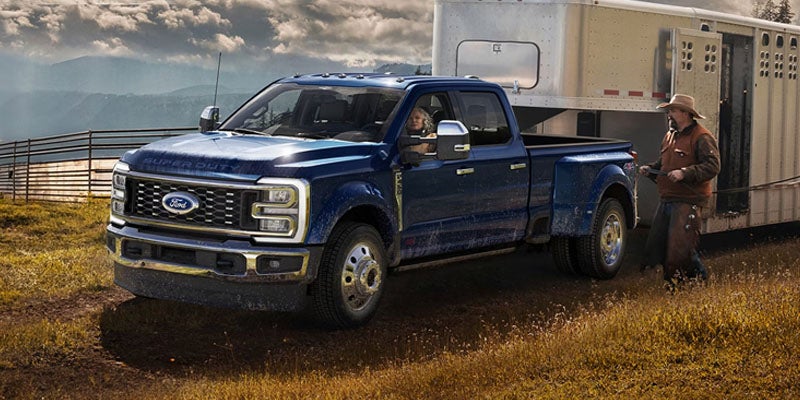
Drivers who have experienced the 2026 F-250 in Starke, FL know it’s redefining what it means to drive a heavy-duty truck. With its robust design, advanced technology, and impressive towing capacity, this truck is engineered for performance and reliability. If you're hauling equipment to a job site or towing your boat for a weekend getaway, the 2026 F-250 Super Duty® delivers unmatched versatility and strength. Engineered for Unmatched Towing Capacity One of the standout features of the 2026 F-250 is its exceptional towing capacity. Designed to handle the toughest jobs, this truck offers a range of powertrain options, including a high-performance diesel engine that ensures you can tow heavy loads with ease. With a maximum towing capacity of 23,000 lbs when properly equipped, the F250 makes towing a dependable, stress-free experience. In addition to its raw power, the 2026 F-250 incorporates advanced towing technologies like trailer sway control and Pro Trailer Backup Assist™, ensuring a safer and more controlled towing experience. Advanced Technology for Modern Drivers The 2026 F-250 isn’t just about power; it’s also packed with innovative technology. Ford Co-Pilot360® technology comes standard, offering features like adaptive cruise control, lane-keeping assist, and blind-spot monitoring tailored for towing. The available BlueCruise™ hands-free driving system allows you to navigate long stretches of highway with ease. Inside the cabin, you’ll find a spacious and tech-forward interior equipped with a large touchscreen display, wireless smartphone integration, and an available Wi-Fi hotspot. Built Tough for Every Terrain The rugged design of the 2026 F-250 is a testament to Ford’s commitment to durability and performance. Its high-strength steel frame and military-grade aluminum-alloy body provide a perfect balance of strength and weight savings. This makes the truck not only capable of handling heavy loads but also more fuel-efficient than previous models. If you are going off-road, the available Tremor Off-Road Package offers enhanced ground clearance, skid plates, and off-road-tuned suspension. Paired with selectable drive modes like Rock Crawl and Mud/Sand, the F-250 is ready to conquer any terrain you throw at it. Why Choose the 2026 F-250 in Starke, FL? Drivers in Starke, FL looking for a truck that combines power, technology, and reliability will find everything they need in the 2026 F-250. Its impressive towing capacity makes it ideal for both professional and personal use, while its advanced features ensure a safe and enjoyable driving experience. With its exceptional towing capacity, state-of-the-art technology, and rugged build, it’s clear why this model is a top choice for those who need a reliable workhorse that doesn’t compromise comfort or innovation. Visit Murray Ford Starke today to experience the 2026 F-250 for yourself!

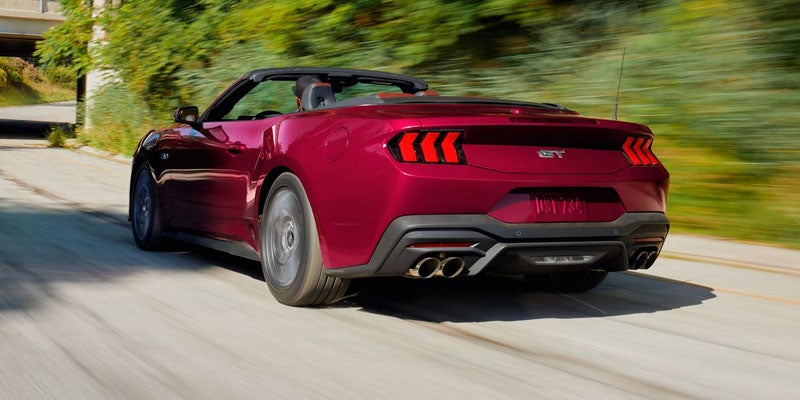
2026 Red Ford Mustang back profile cruising on highway

2026 Ford Mustang: A New Era of Performance and Style

A Closer Look at the 2026 Ford Mustang Lineup The 2026 Ford Mustang lineup includes 9 trim levels that range from basic models to high performance versions. If you prefer a hardtop or a convertible, there are options available for both styles. The primary trims consist of the EcoBoost, GT, and Dark Horse models. EcoBoost Fastback Trim Level vs GT Fastback Trim Level The EcoBoost Fastback features a 2.3L EcoBoost 4-cylinder engine, and this engine produces 315 hp and 350 lb-ft of torque. It comes with 18" aluminum wheels, which are standard for this trim level. This version focuses on a balance of performance and fuel economy for daily driving. The GT Fastback utilizes a 5.0L Ti-VCT V8 engine that generates 480 hp and 415 lb-ft of torque. If the vehicle has the active valve performance exhaust, the power output increases to 486 hp. This trim includes 19" wheels and a TORSEN limited-slip rear axle to improve vehicle handling on the road. New Features for 2026 The 2026 Ford Mustang offers 10 exterior color choices, including Avalanche Gray and Orange Fury Metallic Tri-coat. The interior includes a 12.4" digital instrument cluster and a 13.2" center touch screen display. These screens provide access to Apple CarPlay® and Android Auto®, which are standard technology features. The Ford Connectivity Package is available for drivers who require a Wi-Fi hotspot and navigation services. This package allows for continuous internet access and real-time traffic updates while driving. The cabin also features varied seatbelt colors, including Black with Red Stripe and Prime Blue. Why Choose the 2026 Ford Mustang in Starke, FL? Murray Ford Starke in Starke, FL carries the 2026 Ford Mustang for local customers. The vehicle provides a selection of engines and modern technology that fits various lifestyles. Interested individuals should contact the dealership to discuss available features or to schedule a time to view the vehicle in person. The 2026 Ford Mustang offers a range of trims, such as the EcoBoost Fastback and GT Fastback, to accommodate different performance needs. Customers can explore the latest technology and engine specifications at Murray Ford Starke in Starke, FL. Visit the dealership or their website to obtain more information about the 2026 model year.

Oil Change in Starke, FL

Why Regular Oil Changes Are Crucial for Your Vehicle in Starke, FL

The Role of Oil Changes in Engine Health Engine oil performs several functions, including the lubrication of internal components and the reduction of heat within the engine block. Over time, the chemical properties of the lubricant degrade, which results in higher friction levels. Because the oil breaks down, this process can lead to component wear if the fluid is not replaced at recommended intervals. Improved Engine Performance Lubrication allows 4-cylinder, 6-cylinder, and 8-cylinder engines to operate within standard parameters. Clean oil removes debris and sludge that builds up during the combustion process. If you commute through Starke, fresh oil ensures the mechanical systems function without unnecessary resistance. Enhanced Fuel Efficiency Dirty or degraded oil increases the workload of the engine, which typically lowers fuel economy. By keeping up with routine maintenance, the vehicle can achieve the manufacturer's estimated gas mileage. This efficiency is important for drivers who operate vehicles in heavy traffic or high temperatures. Prolonged Engine Life Reducing friction minimizes the physical stress placed on metal parts. This reduction in wear helps extend the operational lifespan of the powertrain. Consistent service prevents premature failure of critical engine parts, which helps avoid expensive mechanical issues. Recommended Service Intervals Service frequency is determined by the vehicle manufacturer and the specific driving environment. Modern engines using synthetic oil often require service every 5,000 to 7,500 miles. Drivers should consult the documentation provided with their vehicle for exact specifications. Schedule Your Oil Change Murray Ford Starke provides automotive maintenance for various makes and models. Drivers can visit us in Starke, FL, or use the online portal to select a time for vehicle service.

Contact Us

Fill out this form below and we'll contact you shortly
*Required Fields