

Ford Explorer vs. Expedition
Intelligent 4WD
8.7 inches of ground clearance
Trail-focused equipment
Available 3.0L EcoBoost V6
440-hp High-Output 3.5L EcoBoost V6
33-inch all-terrain tires
10.6 inches of ground clearance
Electronic-locking differential
Rock Crawl mode and skid plates
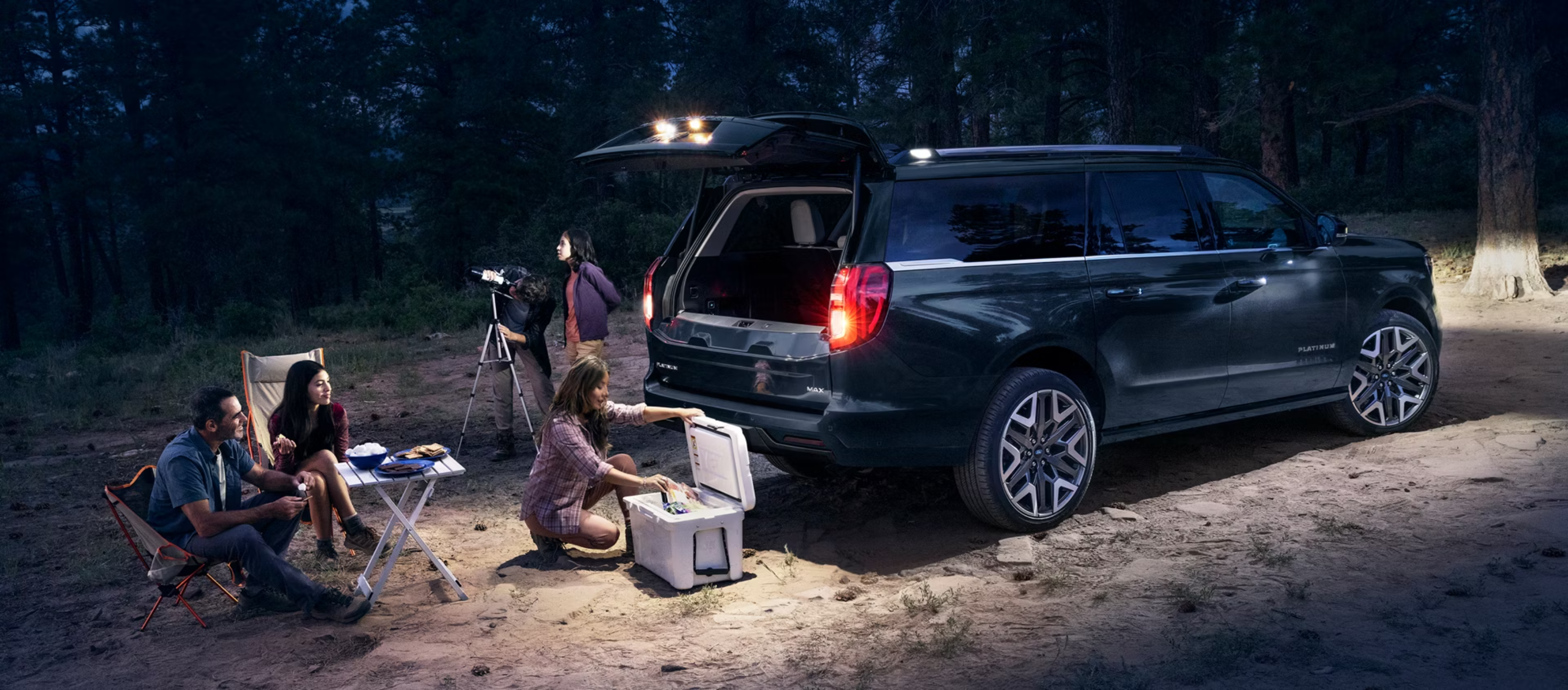
Ford Explorer vs. Expedition:
Which SUV Is Right for Your Family?
Three Rows in Both, but They Solve Different Family Problems
The Ford Explorer vs. Expedition decision comes down to how much space and capability your family actually uses.
The 2026 Explorer is the more manageable option. It seats six or seven, measures 198.7 inches long, offers up to 85.8 cubic feet of cargo space, and can tow up to 5,000 pounds when properly equipped.
Expedition moves into full-size SUV territory. It seats seven or eight, provides substantially more cargo room, and can tow up to 9,600 pounds when properly configured. Families that need even more room can choose the longer Expedition MAX.
For many Starke-area families, Explorer vs. Expedition is less about which SUV is better and more about whether Explorer already gives you enough. If you regularly fill the third row, pack heavily, or tow a larger trailer, Expedition’s extra size starts making a lot more sense.
Explorer vs. Expedition at a Glance
2026 Ford SUV | Explorer | Expedition |
|---|---|---|
Overall length | 198.7 in. | 209.9 in. |
Expedition MAX length | N/A | 221.7 in. |
Seating | 6 or 7 | 7 or 8 |
Cargo behind third row | 16.3 cu. ft. | Up to 22.9 cu. ft. |
Maximum cargo | Up to 85.8 cu. ft. | Up to 108.5 cu. ft. |
MAX maximum cargo | N/A | Up to 123.1 cu. ft. |
Standard engine | 2.3L EcoBoost I-4 | 3.5L EcoBoost V6 |
Maximum towing | 5,000 lbs. | 9,600 lbs. |
Available four-wheel drive | Intelligent 4WD | 4x4 |
That snapshot captures the basic Ford Explorer vs. Expedition split. Explorer delivers three-row practicality without full-size dimensions. Expedition adds space and capability for families that genuinely need more.
Explorer vs. Expedition Size: About a Foot Separates Them
The Explorer vs. Expedition size difference comes down to more than inches. The real question is whether you’d rather have a smaller SUV that’s easier to manage or a larger one that turns its extra footprint into more usable space.
Ford Explorer: Easier to Live With Every Day
At 198.7 inches long, Explorer keeps three-row capability in a more manageable package. It’s the easier choice for tighter garages, crowded parking lots, school pickup lines, and families that don’t need full-size dimensions every day.
Ford Expedition: Bigger With a Purpose
Standard Expedition measures 209.9 inches long, 11.2 inches longer than Explorer, while Expedition MAX reaches 221.7 inches. That added size means more vehicle to maneuver, but it also creates more room for passengers and cargo. For families weighing Ford Explorer vs. Expedition, that extra space can be worth the larger footprint when it gets used regularly.
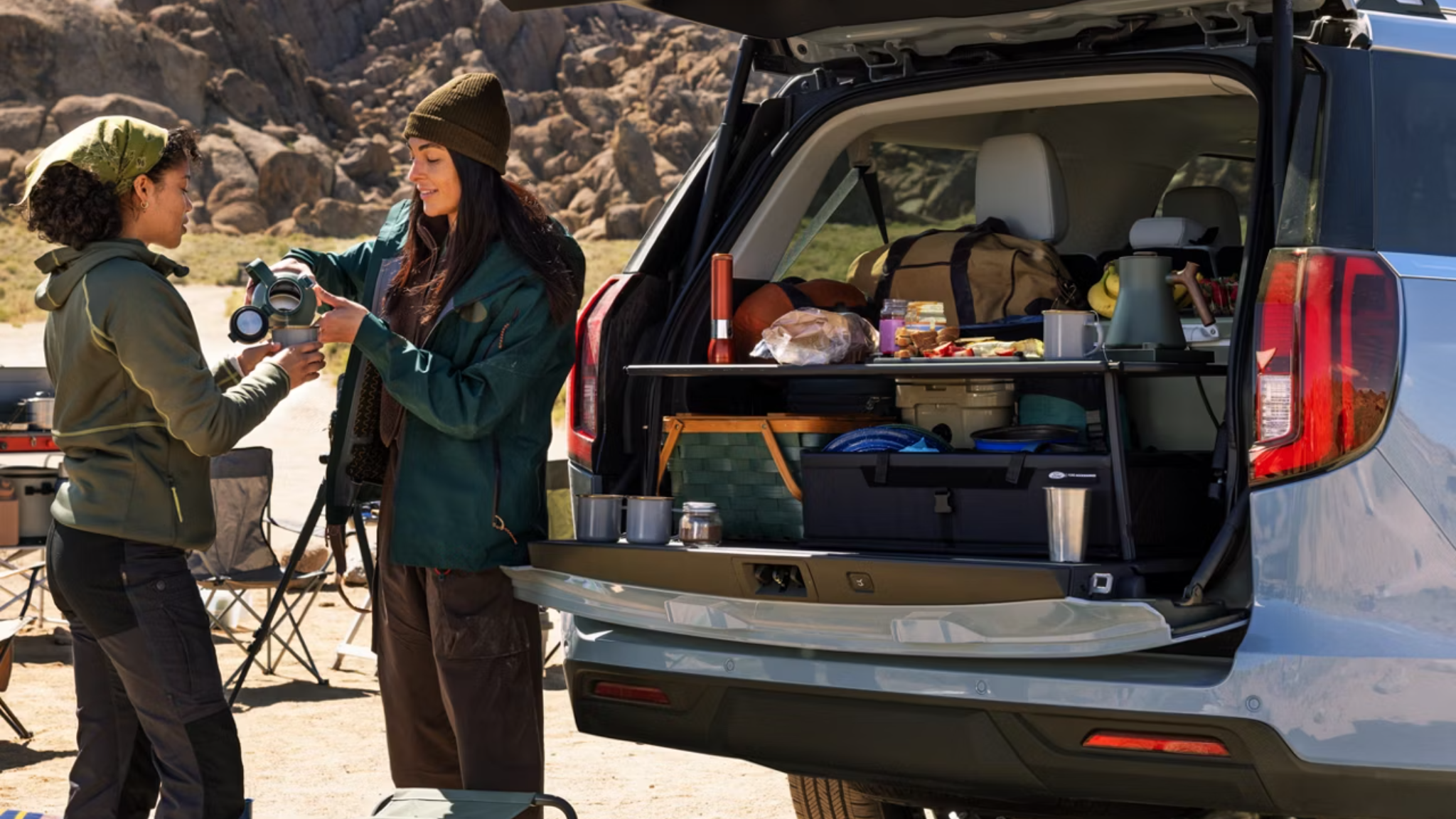
The Bigger Question: What Happens With the Third Row Up?
Cargo space makes the Ford Explorer vs. Expedition difference especially useful for families to consider.
Explorer provides 16.3 cubic feet of cargo space behind the third row. Fold the rear seats and maximum cargo capacity reaches up to 85.8 cubic feet, depending on model.
Standard Expedition can provide up to 22.9 cubic feet behind the third row and 108.5 cubic feet maximum. Expedition MAX pushes those figures to as much as 37.4 cubic feet behind the third row and 123.1 cubic feet maximum.
That means Expedition’s advantage becomes especially noticeable when you need passengers and luggage at the same time.
When weighing Explorer vs. Expedition, a household that uses the third row mostly for occasional carpools may be perfectly comfortable in Explorer. If all three rows stay occupied during road trips while suitcases, sports bags, coolers, or beach gear still need a home, Expedition has much more room to work with.
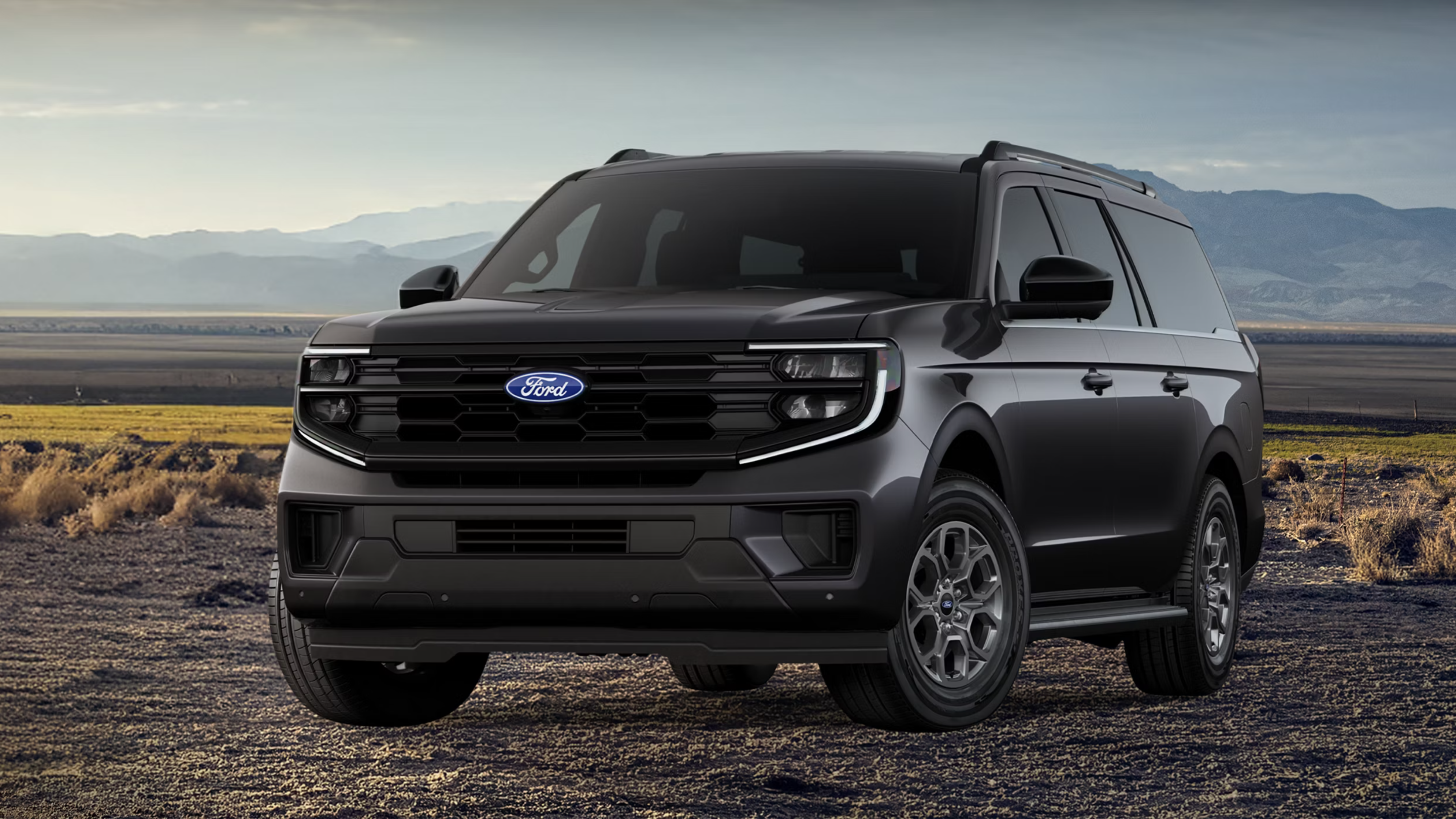
Expedition MAX Is for Families That Need Seats and Cargo Together
Expedition MAX deserves its own mention because it changes the Ford Explorer vs. Expedition equation considerably.
It uses the same three-row concept as standard Expedition but stretches overall length to 221.7 inches. The payoff is up to 37.4 cubic feet of cargo room behind the third row, more than double Explorer’s 16.3 cubic feet.
That doesn’t mean every large family needs MAX. Its extra length also means more vehicle to park and maneuver.
But if your normal trip involves three rows of passengers plus a full load of luggage, MAX solves a problem Explorer and even standard Expedition can’t solve to the same degree.
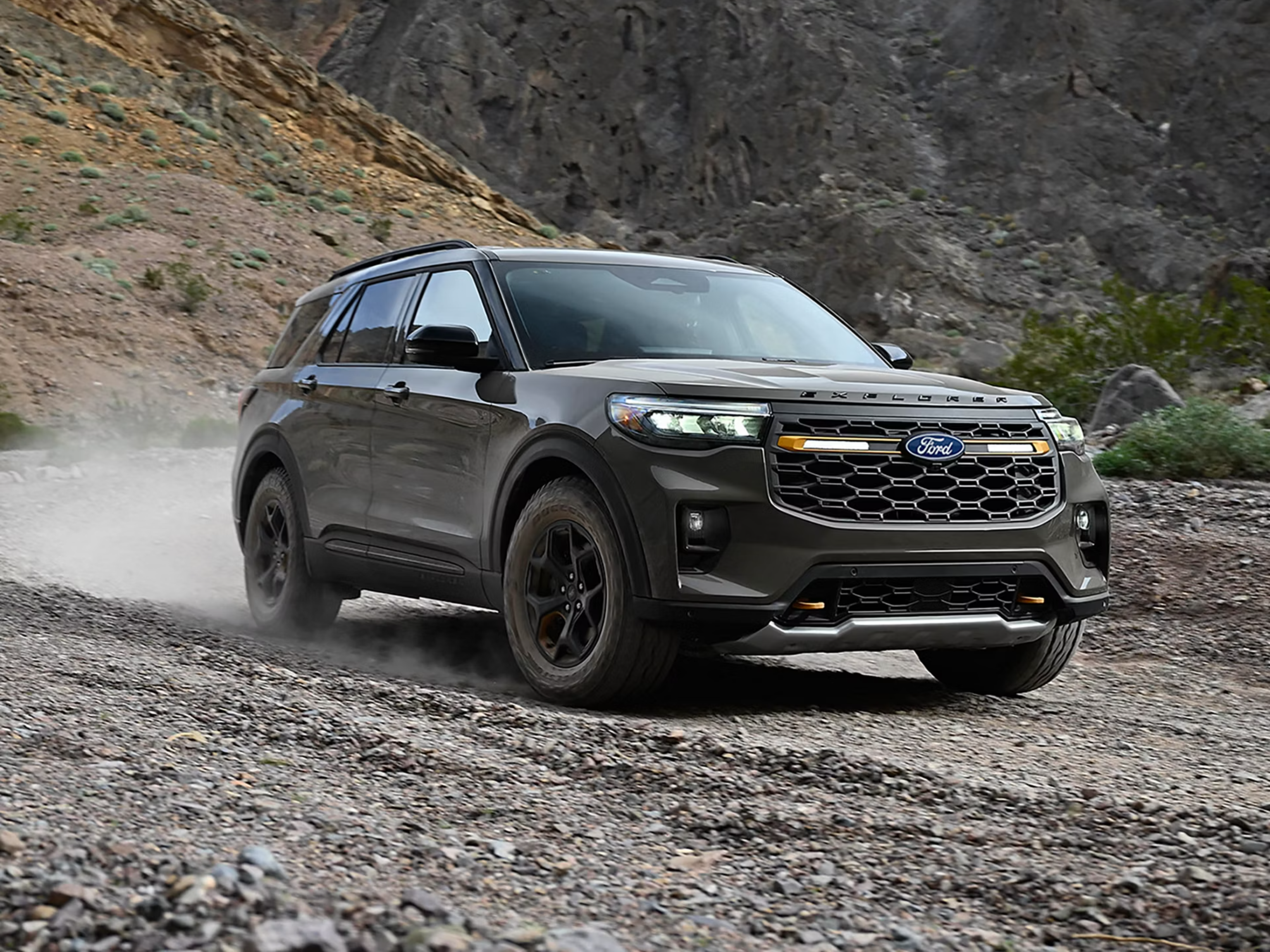
EcoBoost Power Matches Each SUV’s Job
Explorer starts with a 2.3L EcoBoost four-cylinder producing 300 horsepower, paired with a 10-speed automatic transmission. A 3.0L EcoBoost V6 is available on select models for shoppers looking for stronger performance.
Expedition starts with a 3.5L EcoBoost V6 producing 400 horsepower and 480 lb-ft of torque. A High-Output version is available in certain configurations with 440 horsepower and 510 lb-ft of torque.
For Ford Explorer vs. Expedition, the power difference reflects each SUV’s role. Explorer balances commuting, family travel, and occasional towing without full-size dimensions, while Expedition brings the extra muscle needed for a larger SUV, more passengers and cargo, and substantially heavier trailers.
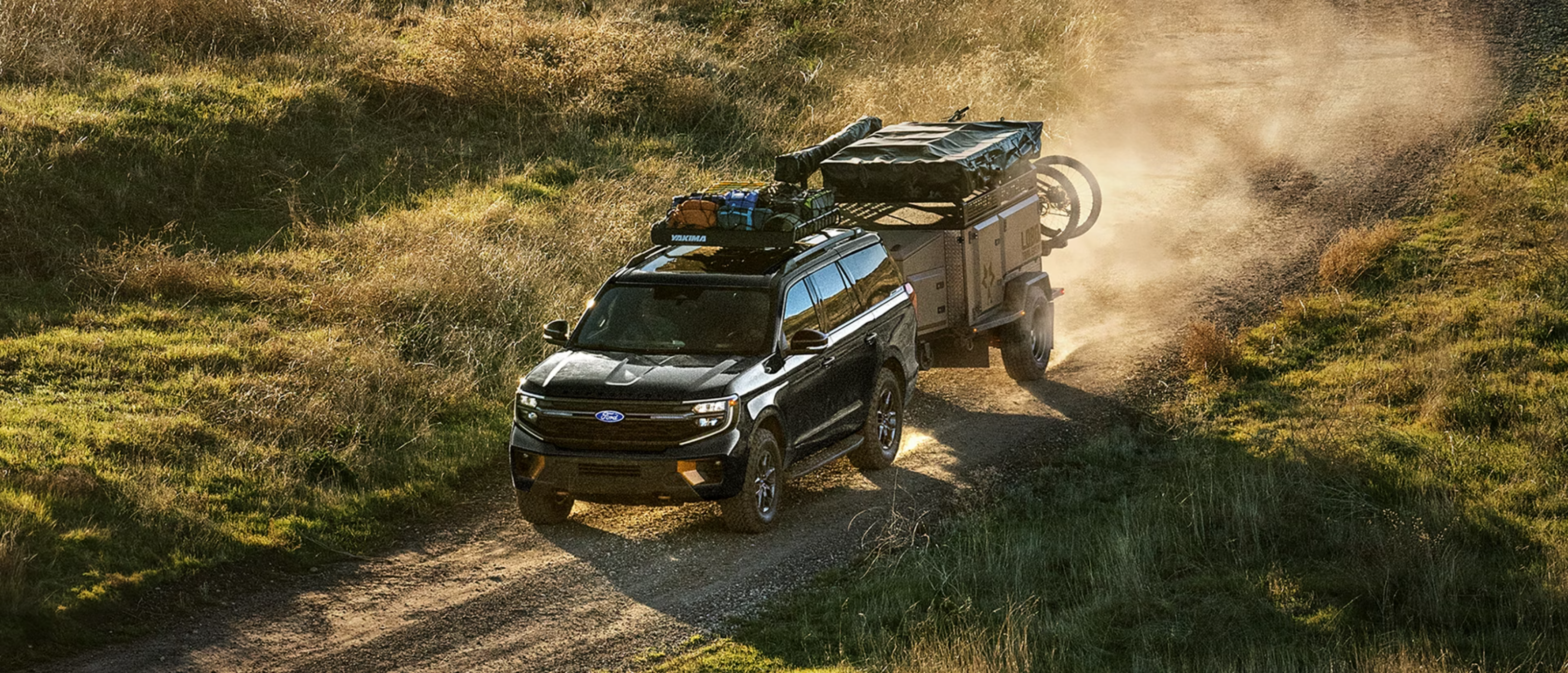
Towing May Settle Ford Explorer vs. Expedition Quickly
If a trailer is an important part of your plans, this may be the easiest part of the Explorer vs. Expedition choice.
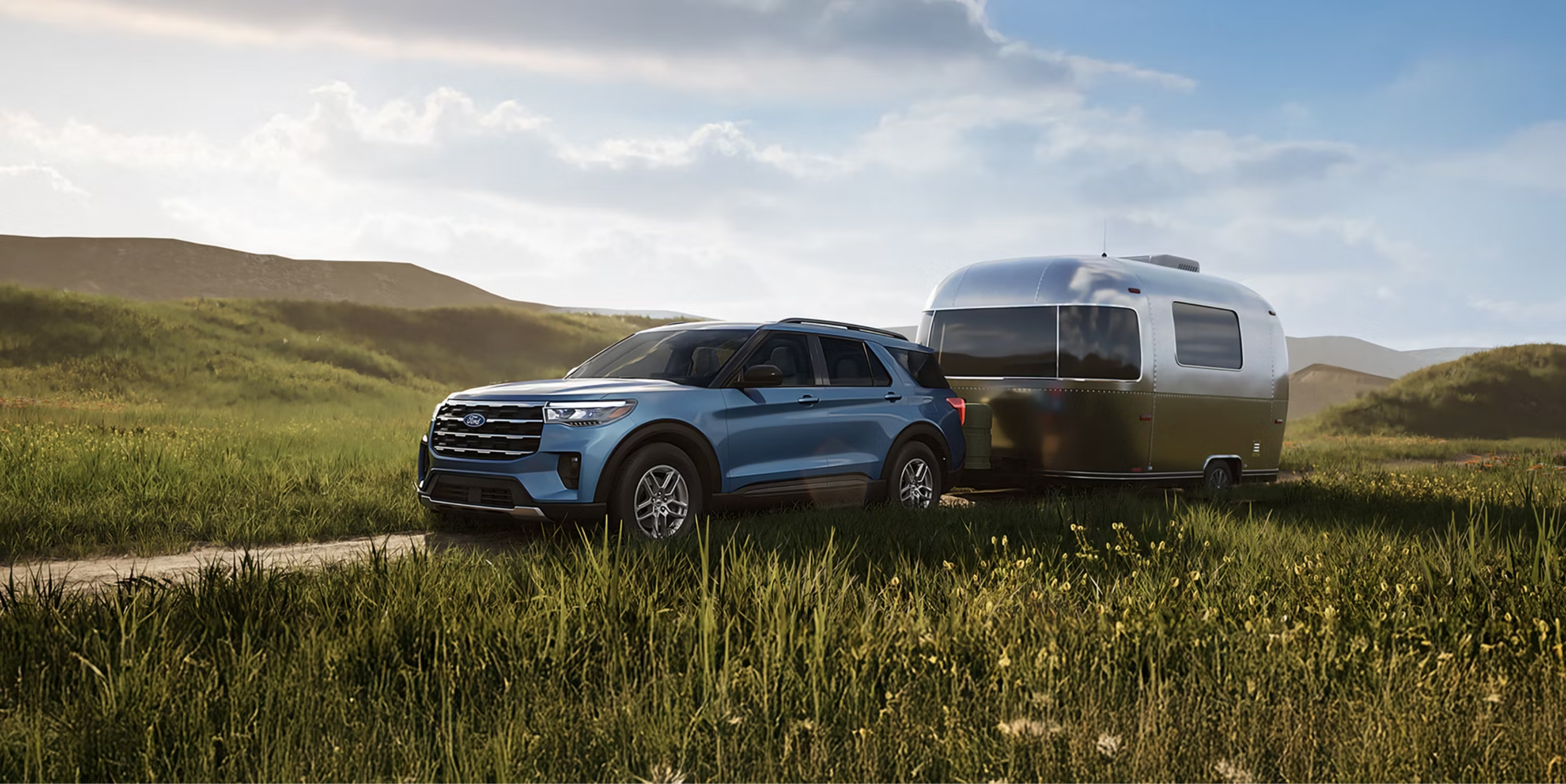
The 2026 Explorer can tow up to 5,000 pounds when properly equipped, and Ford includes the Class III Trailer Tow Package across the lineup.
Expedition reaches as high as 9,600 pounds in the proper 4x4 configuration. Expedition MAX 4x4 can tow up to 9,000 pounds, while Expedition Tremor reaches up to 9,300 pounds.
For a smaller recreational trailer, Explorer may provide all the capability your family needs. A larger camper, boat, or enclosed trailer can make Expedition’s additional towing capacity much more valuable.
Exact towing ratings vary with drivetrain, equipment, wheels, passengers, cargo, and configuration, so check the specific SUV before hitching up. For families with heavier towing needs, that capability can be one of the clearest deciding factors in Ford Explorer vs. Expedition.
Want Tremor Capability? Both SUVs Give You the Option
Choosing between Ford Explorer vs. Expedition doesn’t mean choosing between family practicality and off-road capability. Both offer Tremor models, but they approach the trail in very different sizes.
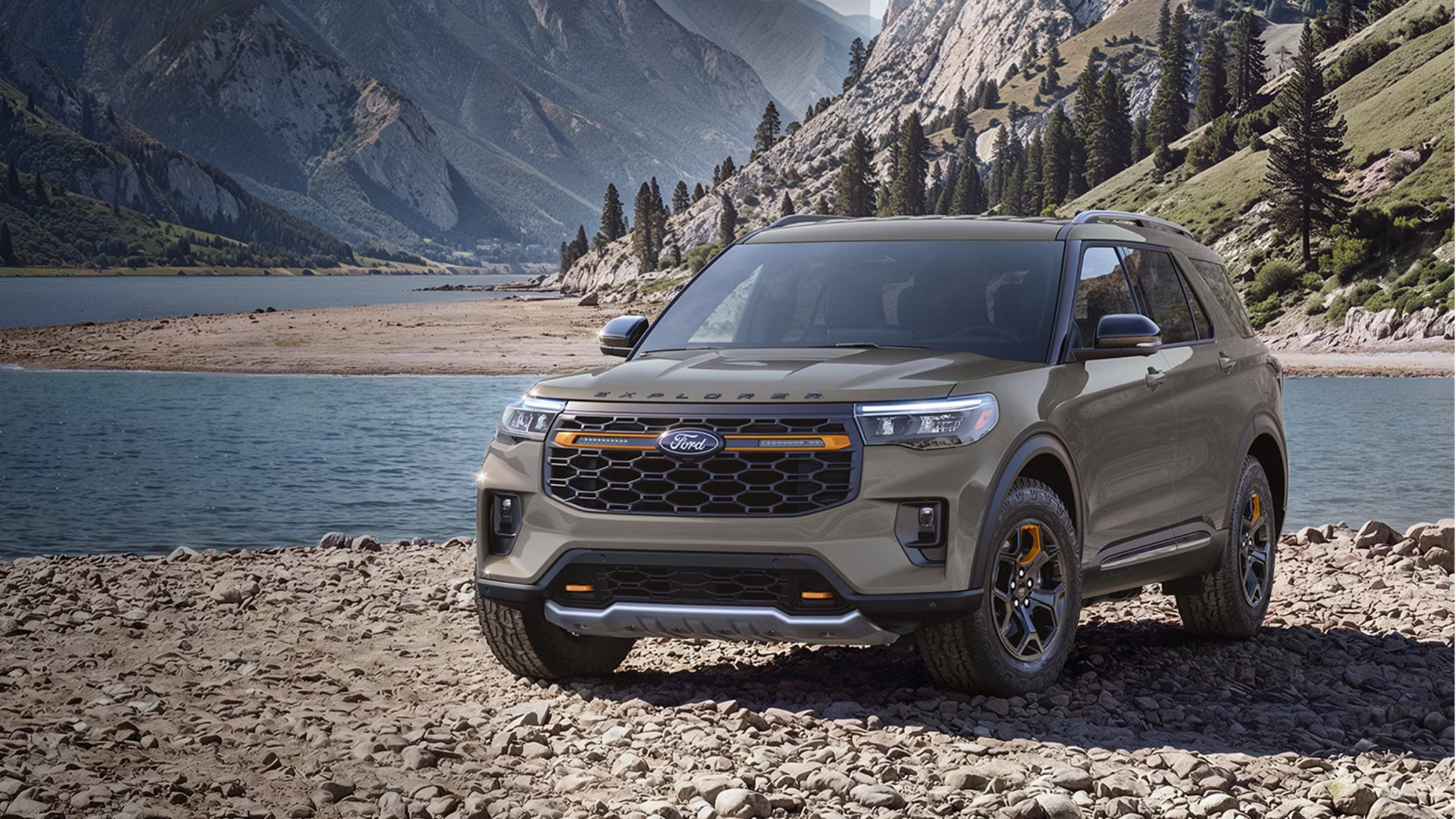
Explorer Tremor
Explorer Tremor is the easier fit if you want added off-road capability without stepping up to a full-size SUV.
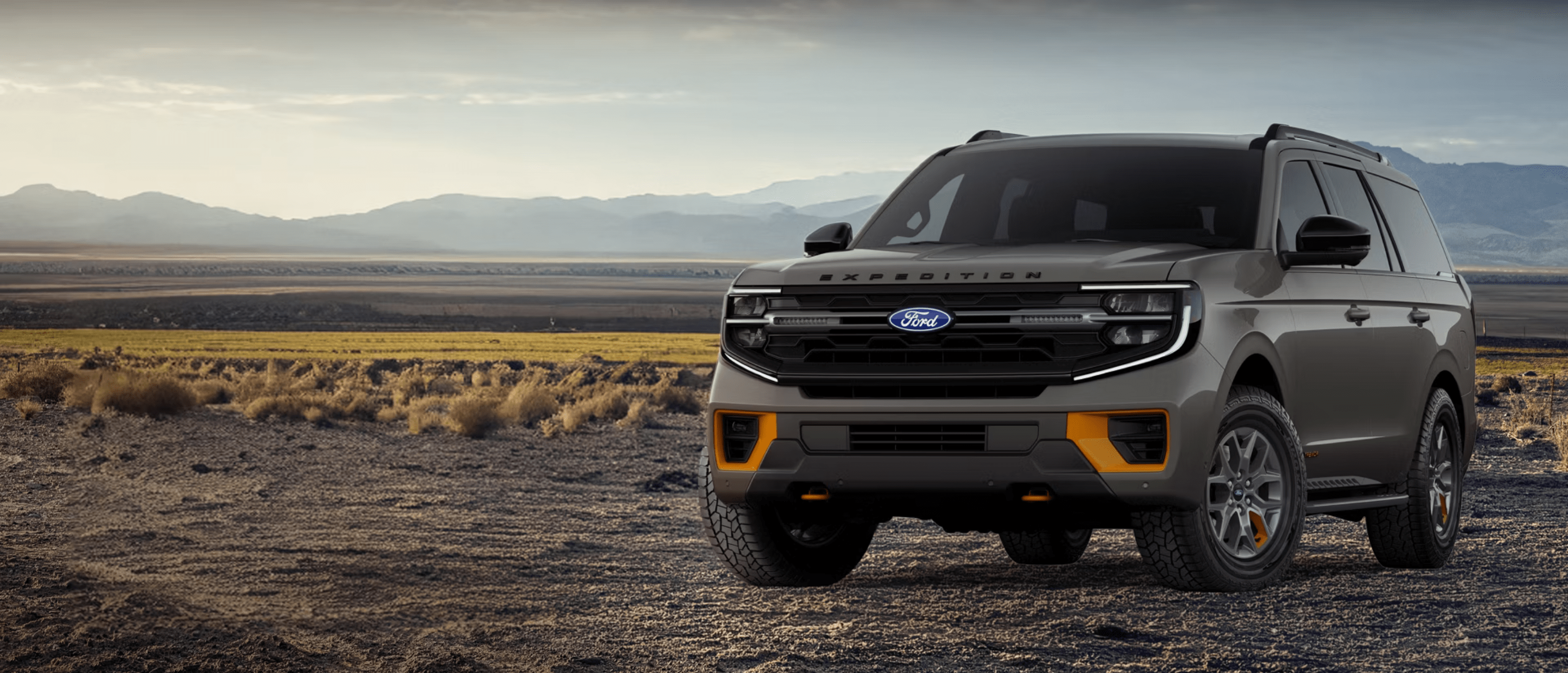
Expedition Tremor
Expedition Tremor adds more serious trail hardware while preserving full-size passenger space and stronger towing capability.
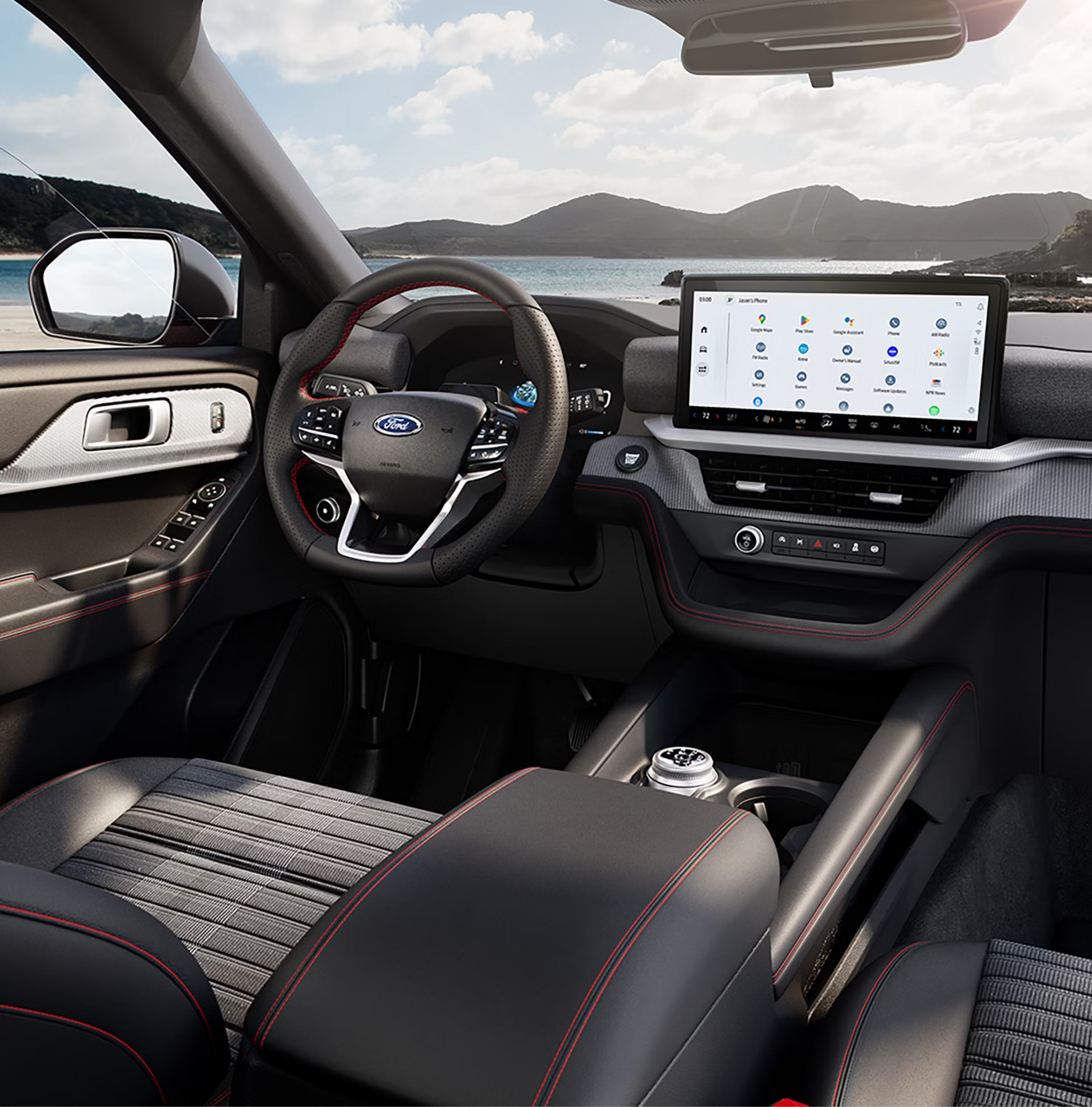
Both Feel Modern Up Front
Technology is unlikely to be the deciding factor in Ford Explorer vs. Expedition because both offer a strong list of family-friendly features.
Explorer centers the cabin around a 13.2-inch touchscreen with the Ford Digital Experience, smartphone connectivity, available BlueCruise, and a broad range of driver-assistance technology.
Expedition pairs its 13.2-inch center display with a sweeping 24-inch panoramic display. Depending on configuration, buyers can also add available BlueCruise, premium B&O audio, rear-seat entertainment, and other road-trip-focused features.
That gives Expedition a more expansive, tech-forward cabin, while Explorer keeps many of the same modern conveniences in a smaller package. For families evaluating Explorer vs. Expedition, the difference is less about having technology and more about how much cabin space you want around it.
Make the Right SUV Fit the Budget
Once comparing Ford Explorer vs. Expedition points you toward the right SUV, our finance team at Murray Ford of Starke can help you review payment options, trade-in value, and available financing.
Which Ford SUV Fits Your Family?
The Ford Explorer vs. Expedition decision is really about how much space and capability your family will use on a regular basis.
Explorer is the better fit if you want three rows, easier maneuverability, and up to 5,000 pounds of towing without moving into a full-size SUV. Expedition makes more sense if you regularly carry more passengers, need extra cargo room behind the third row, or want substantially more towing capability.
The right choice depends less on which SUV is bigger and more on whether your everyday routine actually calls for that extra size.
See the Size Difference at Murray Ford of Starke
Numbers can tell you Expedition is 11.2 inches longer than Explorer. For the Ford Explorer vs. Expedition decision, sitting in both SUVs shows whether those inches actually matter to your family.
At Murray Ford of Starke, we can help you compare available Explorer vs. Expedition models, try the second and third rows, load up the cargo areas, and see which SUV feels right for everyday driving around Starke and bigger family trips.
Ford Explorer vs. Expedition FAQs
Still deciding between the two? These quick answers cover the biggest Ford Explorer vs. Expedition questions about size, seating, cargo space, towing, and everyday family use
How much bigger is an Expedition than an Explorer?
Standard Expedition measures 209.9 inches long, making it 11.2 inches longer than the 198.7-inch Explorer. Expedition MAX measures 221.7 inches, creating a 23-inch Explorer vs. Expedition size difference.
Which is better, Ford Explorer or Ford Expedition?
Neither is automatically better. For families weighing Explorer vs. Expedition, Explorer is a strong choice if you want three rows, useful cargo space, and easier everyday maneuverability. Expedition is better suited to families that need more passenger room, more cargo space, or substantially greater towing capability.
Should I get an Explorer or Expedition?
Choose Explorer if six or seven seats, up to 5,000 pounds of towing, and a midsize footprint cover your normal needs. Expedition makes more sense if you regularly carry seven or eight people, need more room behind the third row, or tow heavier trailers.
What is the difference between a Ford Explorer and Expedition?
The main Ford Explorer vs. Expedition differences are size, passenger capacity, cargo room, and towing capability. Explorer is a midsize three-row SUV, while Expedition is a larger full-size SUV with greater maximum cargo and towing capacity.
Which has more cargo space, Explorer or Expedition?
Expedition. Explorer provides up to 85.8 cubic feet of maximum cargo space. Standard Expedition offers up to 108.5 cubic feet, while Expedition MAX reaches 123.1 cubic feet.
Does Ford Explorer or Expedition seat more people?
Explorer seats six or seven depending on configuration, while Expedition can seat seven or eight. In Explorer vs. Expedition, Expedition has the advantage if maximum passenger capacity is a priority.