

Ford Explorer vs. Toyota Highlander
Ford Explorer vs. Toyota Highlander:
Which 3-Row SUV Does More?
Three rows can solve a lot of problems.
They can handle school pickup, weekend travel, visiting family, sports gear, and the occasional moment when suddenly everyone needs a ride.
But not every three-row SUV approaches those jobs the same way.
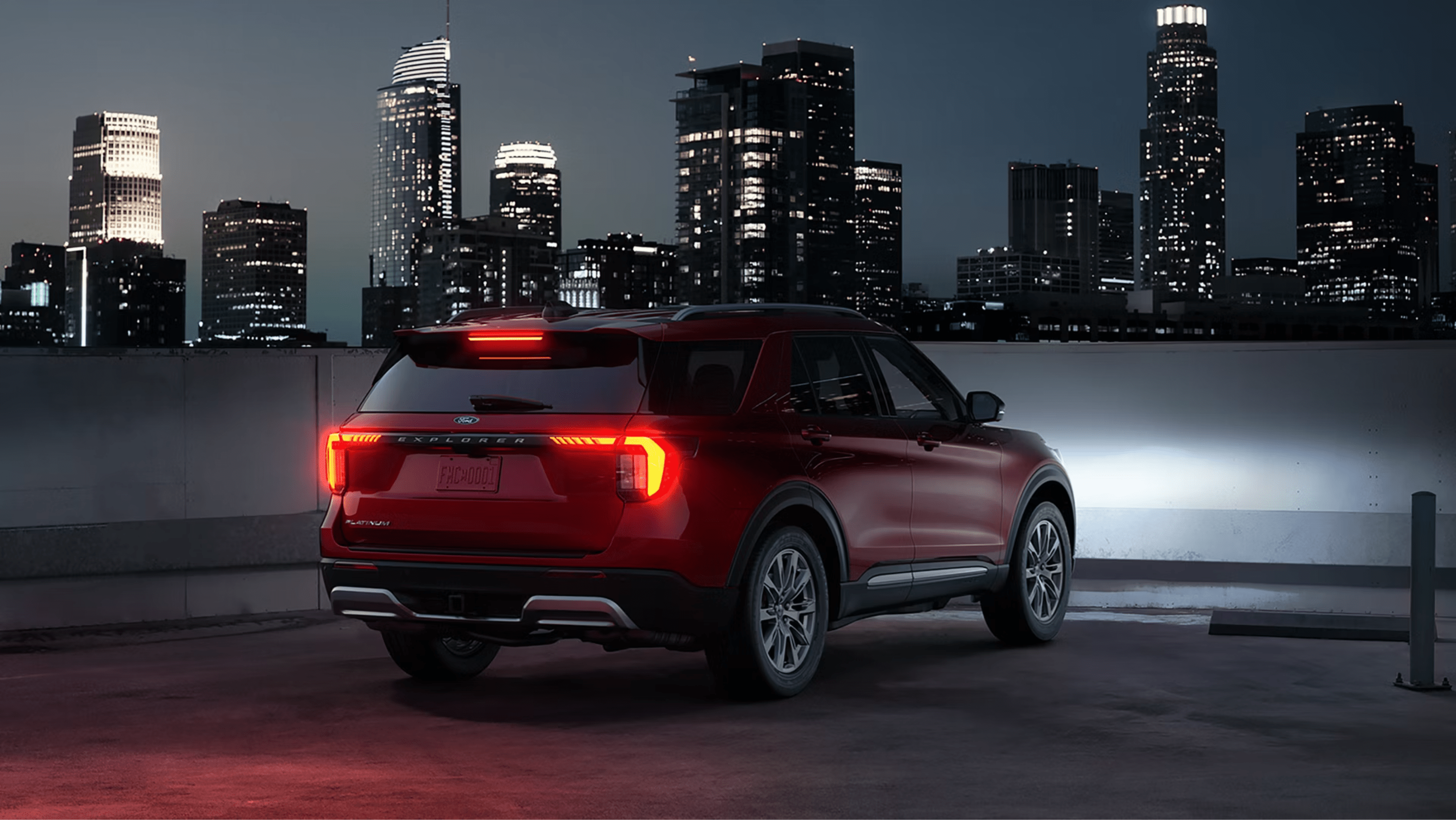
That’s what makes Ford Explorer vs Toyota Highlander worth a closer look. The Highlander leans into family practicality, available hybrid efficiency, and seating for up to eight. The 2027 Ford Explorer answers with more standard horsepower, slightly more maximum cargo room, available high-output V6 power, and trims that can take the SUV in very different directions.
At Murray Ford of Starke, we’d rather help you figure out which differences will actually matter from the driver’s seat.
The Numbers Tell Two Different Stories
A quick look at the Ford Explorer vs Toyota Highlander specs shows just how differently these SUVs tackle a similar mission.
Specification | 2027 Ford Explorer Active | 2026 Toyota Highlander Gas |
|---|---|---|
Standard Engine | 2.3L EcoBoost® I-4 | 2.4L turbo 4-cylinder |
Horsepower | 300 hp | 265 hp |
Max Towing | 5,000 lbs. | 5,000 lbs. |
Maximum Seating | 7 | 8 |
Overall Length | 198.7 in. | 194.9 in. |
Wheelbase | 119.1 in. | 112.2 in. |
Cargo Behind 3rd Row | 16.3 cu. ft. | 16.0 cu. ft. |
Maximum Cargo | 85.8 cu. ft. | 84.3 cu. ft. |
Explorer is longer, rides on a longer wheelbase, and brings more standard horsepower. Highlander can seat one additional passenger and offers a hybrid powertrain Explorer doesn’t currently match.
That makes Ford Explorer vs Toyota Highlander less about finding one SUV that wins every category and more about deciding what kind of versatility you want.
How the Powertrains Compare
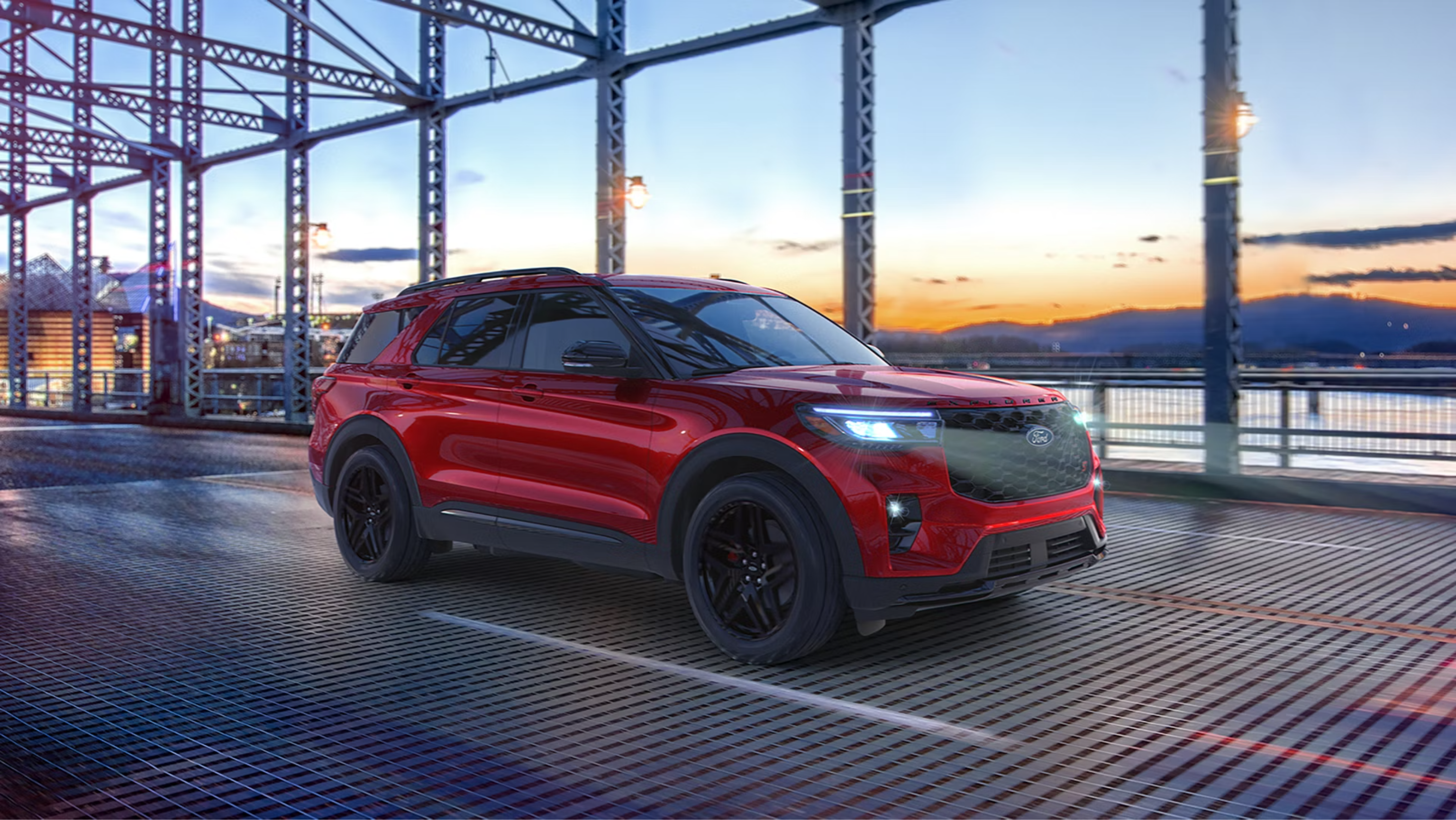
The standard 2027 Ford Explorer uses a 2.3L EcoBoost® engine producing 300 horsepower and 310 lb-ft of torque, paired with a 10-speed automatic.
The gas Highlander’s turbocharged 2.4L four-cylinder produces 265 horsepower and 310 lb-ft of torque.
Same torque. Explorer brings 35 more horsepower.
That extra output can matter when merging, passing, carrying a full load of passengers, or simply wanting a three-row SUV with stronger acceleration. In Ford Explorer vs Toyota Highlander, Explorer also gives you more room to move up in performance.
Available 3.0L EcoBoost® V6 power raises the ceiling considerably, with the Explorer ST reaching up to 400 horsepower depending on state certification.
Highlander takes a different path with its available hybrid, which may appeal more to drivers prioritizing fuel economy.
Two Strengths, Two Very Different Priorities
The Ford Explorer vs Toyota Highlander specs make this matchup easier to narrow down once you know what you want more of.
Explorer: More Performance Range
The Explorer lineup can shift from a comfortable family SUV to something much more performance-focused. Available V6 power, ST models, and the Tremor® configuration give it personalities the Highlander doesn’t directly mirror.
Highlander: More Passenger Capacity
Highlander can seat up to eight with the right second-row configuration and offers a hybrid option for families prioritizing seating capacity and fuel efficiency. That gives Ford Explorer vs Toyota Highlander a clear split in priorities.
Which One Gives Your Family More Room?
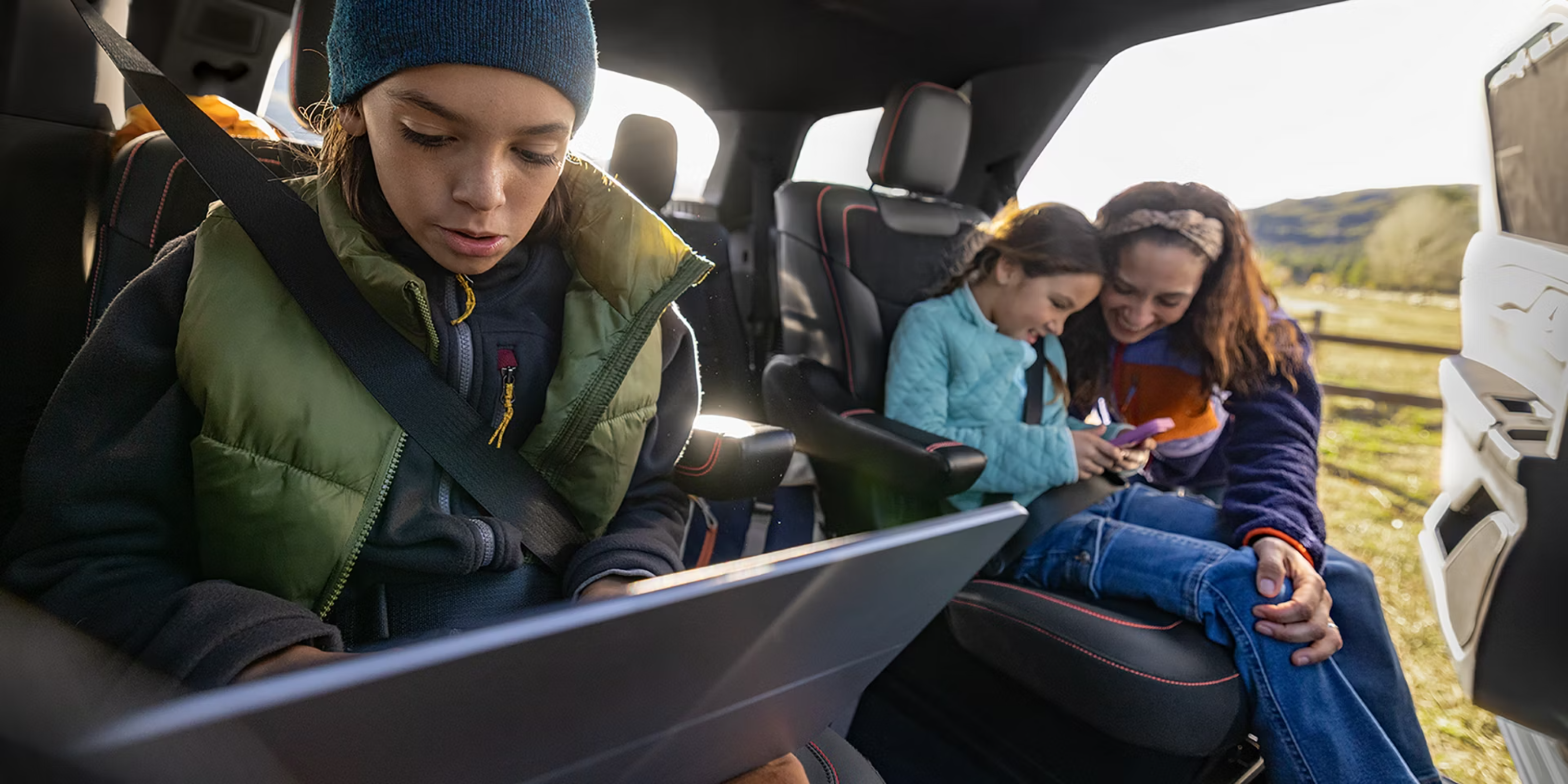
Both SUVs have three rows, but their dimensions aren’t identical.
The Explorer stretches 198.7 inches long with a 119.1-inch wheelbase. Highlander measures about 194.9 inches long with a 112.2-inch wheelbase.
Those Ford Explorer vs Toyota Highlander specs give Explorer a longer overall footprint and nearly seven additional inches of wheelbase.
Highlander, however, can accommodate up to eight passengers. Explorer tops out at seven.
So the tradeoff is interesting: Highlander can offer the extra seat, while Explorer gives you a larger footprint and slightly more maximum cargo capacity.
Cargo Space Is Closer Than You Might Expect
Pack all three rows with passengers and there’s very little separating these SUVs.
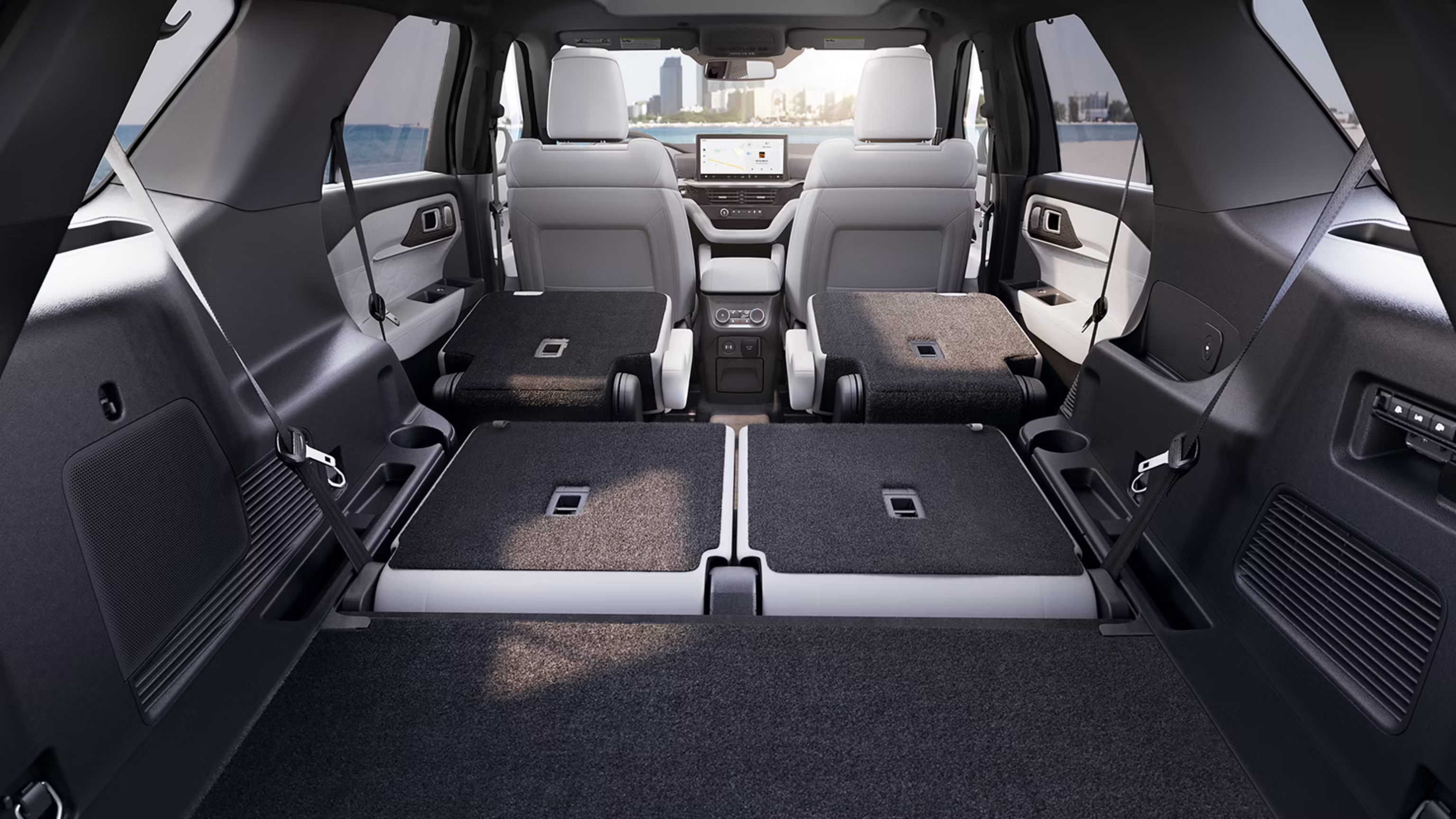
Explorer offers 16.3 cubic feet behind the third row, while Highlander provides roughly 16.0 cubic feet.
Fold the seats and Explorer opens up to 85.8 cubic feet of maximum cargo room. Highlander reaches about 84.3 cubic feet.
That means Ford Explorer vs Toyota Highlander isn’t decided by a huge cargo advantage. Explorer simply gives you a little more room at both ends of the measurement.
For families hauling strollers, sports equipment, luggage, pets, or oversized shopping trips, even small differences can become noticeable over time.
Towing Capacity Is Closely Matched
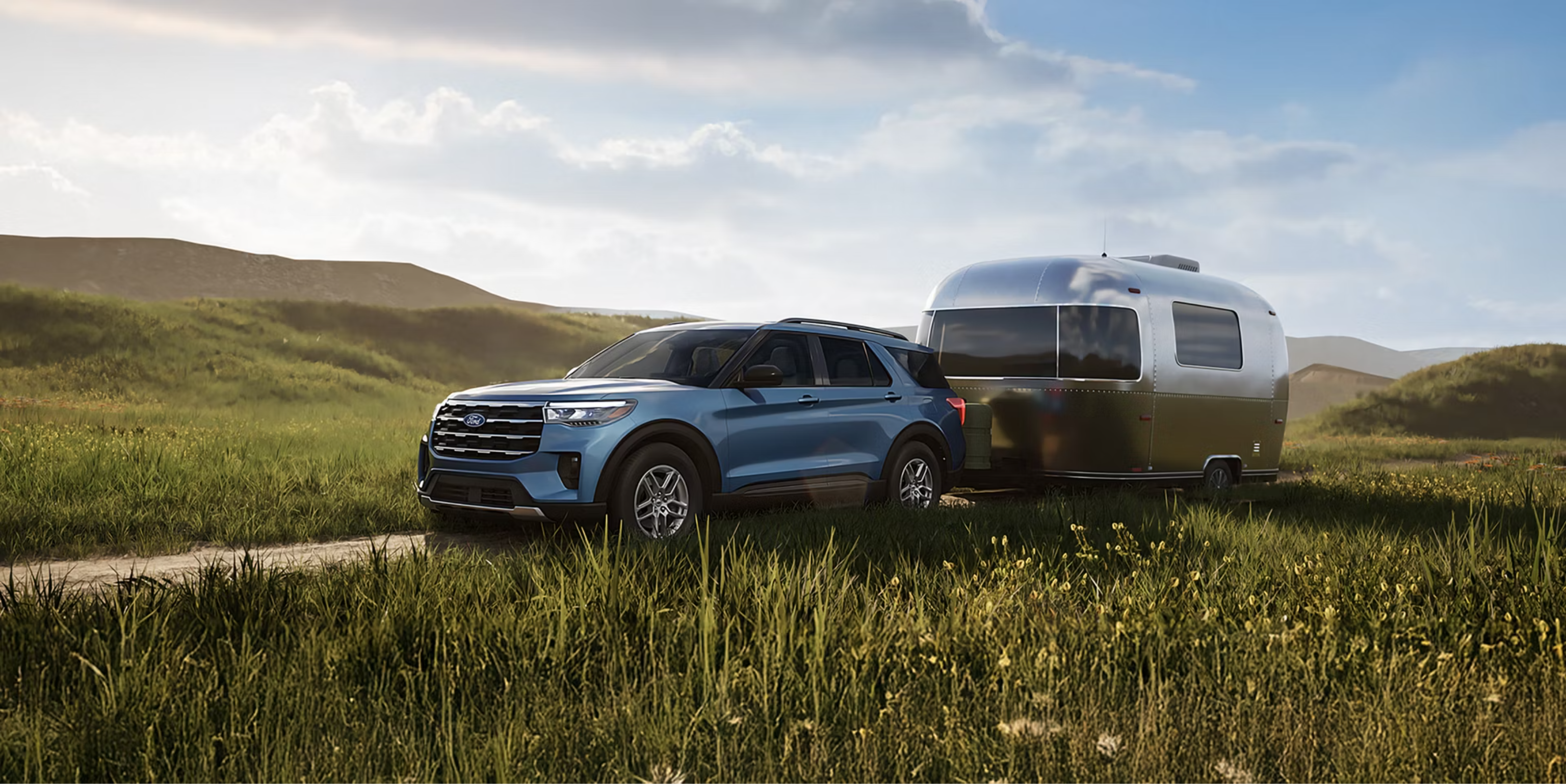
Both Explorer and Highlander can tow up to 5,000 pounds when properly equipped, so Ford Explorer vs Toyota Highlander is essentially even on maximum towing capacity.
The difference is what comes with that capability. Explorer offers more standard horsepower and available V6 performance, giving drivers more power options within the lineup.
If towing is part of your routine, always confirm the capacity of the exact vehicle, drivetrain, hitch equipment, trailer, and load before heading out.
Explorer Doesn’t Have Just One Personality
This is where the Ford Explorer becomes especially interesting.
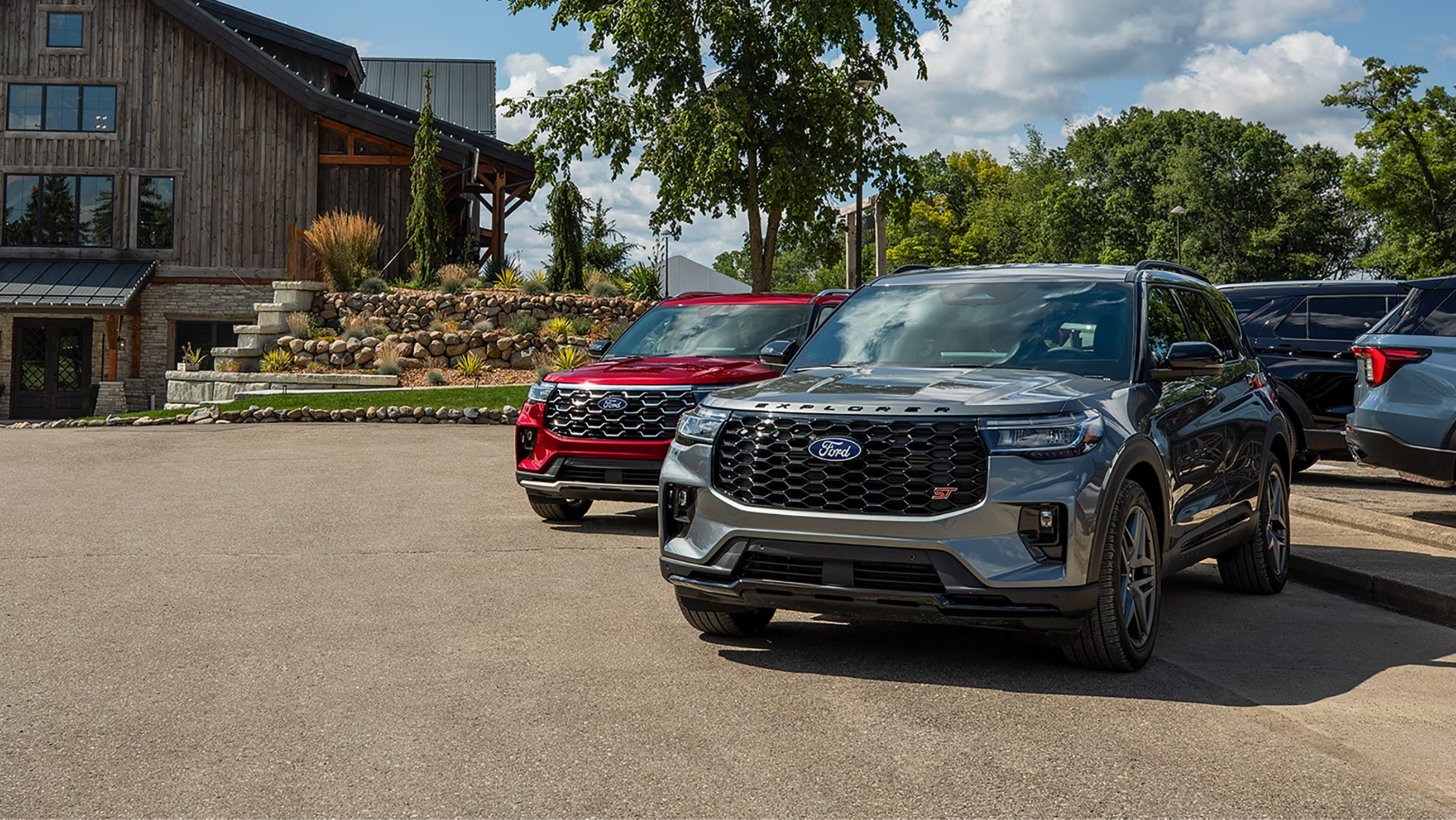
The lineup includes Active, ST-Line, Tremor®, ST, and Platinum™. In Ford Explorer vs Toyota Highlander, that range gives Explorer a broader spread of personalities, with several trims changing the character of the SUV rather than simply adding luxury.
Tremor takes Explorer in a more adventure-ready direction with off-road-oriented equipment. ST turns toward stronger on-road performance. Platinum leans more upscale.
That breadth is difficult to capture in a basic Ford Explorer vs Toyota Highlander specs chart. Two Explorers parked next to each other can be built for noticeably different drivers.
For someone who wants a family SUV but doesn’t want every trim to feel like the same vehicle with extra features, that variety matters.
Technology Without Making the Cabin Complicated
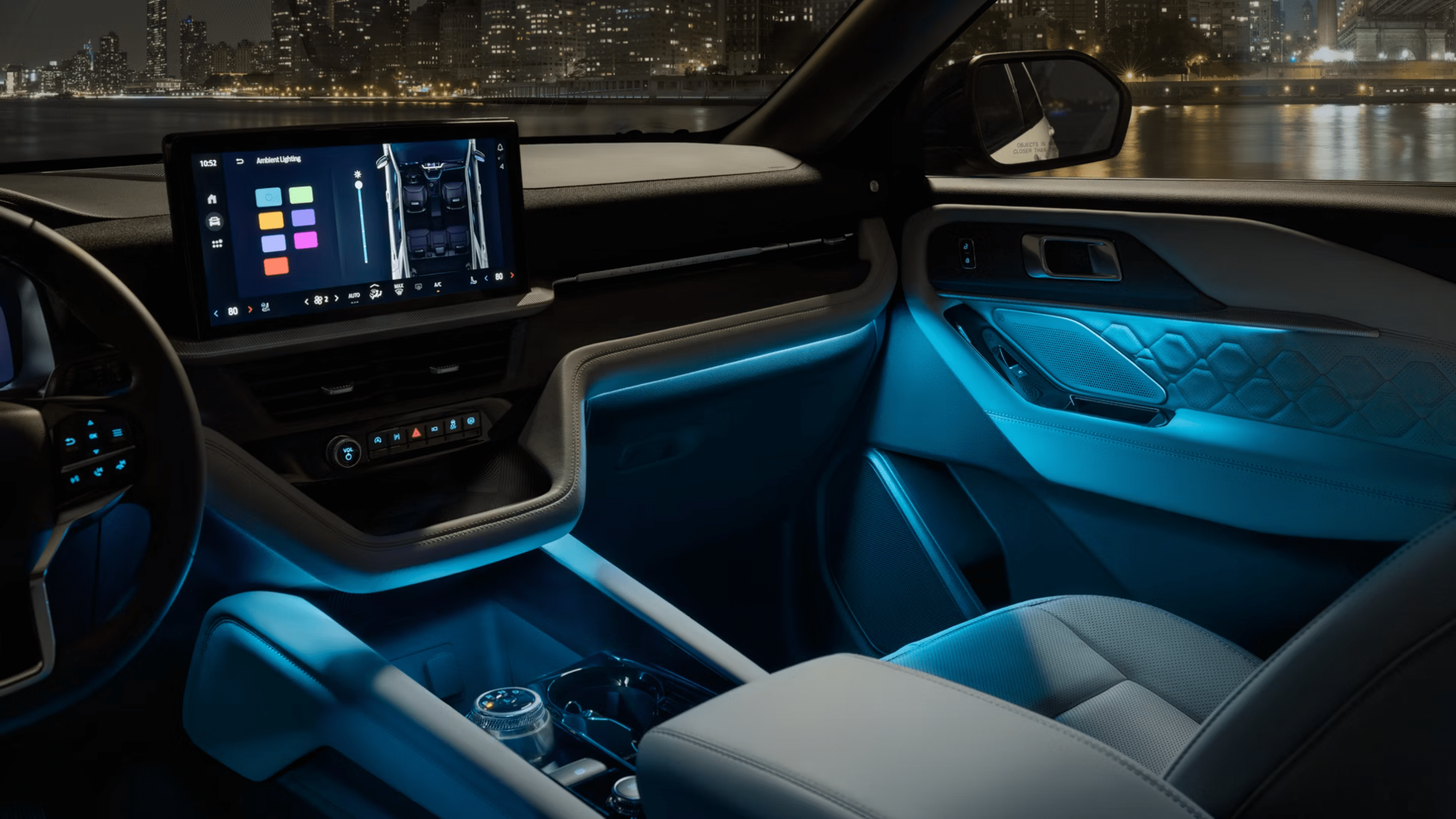
Explorer Active comes with a 13.2-inch center display and 12.3-inch digital instrument cluster, along with wireless Apple CarPlay® and Android Auto™ compatibility.
The Ford Explorer vs Toyota Highlander tech comparison is fairly close on connectivity, but Explorer also places USB-C ports throughout the cabin, including farther back for second- and third-row passengers.
Highlander offers wireless smartphone integration as well, with touchscreen sizing varying by trim.
Neither SUV leaves you without modern connectivity. The difference is that the 2027 Ford Explorer starts with a particularly large display setup even before you move into higher trims.
Where Highlander Stands Out
Highlander has strengths of its own. It can seat up to eight people, offers standard AWD for 2026, and is available with a Highlander Hybrid powertrain.
Those Ford Explorer vs Toyota Highlander specs point to a different set of priorities. For households that routinely fill every seat, the extra passenger position can matter more than additional horsepower. Hybrid availability may also appeal to drivers who place fuel economy higher on the list.
Different families can reasonably value different strengths, which is why there’s more to Ford Explorer vs Toyota Highlander than a quick “which one is better?” answer.
Where Explorer Gives You More to Work With
Explorer offers a broader range of performance and configuration choices for shoppers who want more than basic three-row utility.
The range of capability is one place where Ford Explorer vs Toyota Highlander begins to separate. Explorer offers more standard horsepower, available V6 performance, slightly greater maximum cargo capacity, a longer wheelbase, and trims that can move toward sport, luxury, or added off-road capability.
The 2027 Ford Explorer also offers rear-wheel drive on certain configurations with available four-wheel drive, giving buyers more flexibility in how the SUV is set up.
For drivers around Starke who want one vehicle to handle family duty during the week and something more demanding on the weekend, that broader range can be valuable.
Compare the Explorer in Person at Murray Ford of Starke
The useful question in Ford Explorer vs Toyota Highlander isn’t which SUV checks the most boxes on paper. It’s which boxes matter to you.
Highlander has meaningful strengths in available eight-passenger seating and hybrid efficiency.
Explorer counters with more standard horsepower, available V6 performance, slightly more maximum cargo room, and a broader range of personalities across the lineup.
At Murray Ford of Starke, we can help you compare Explorer trims, seating layouts, drivetrain choices, and equipment in person. If the Ford Explorer vs Toyota Highlander specs have you leaning Ford, seeing how the Explorer fits your family is the next useful step.
Ford Explorer vs Toyota Highlander FAQs
Which is bigger, Ford Explorer or Toyota Highlander?
The Explorer is longer overall and has a longer wheelbase. The 2027 Ford Explorer measures about 198.7 inches long with a 119.1-inch wheelbase, while the current Highlander measures about 194.9 inches long with a 112.2-inch wheelbase.
How does Toyota Highlander compare to a Ford Explorer?
Both are three-row SUVs with up to 5,000 pounds of available towing capability. In Ford Explorer vs Toyota Highlander, Explorer offers more standard gas-engine horsepower and available V6 performance, while Highlander can seat up to eight and offers a hybrid powertrain.
Which is better, Ford Explorer or Toyota Highlander?
It depends on what you need. Explorer offers more standard horsepower, slightly more maximum cargo space, and more performance-oriented configurations. Highlander offers available eight-passenger seating and a hybrid option. Comparing those priorities is more useful than choosing one based on a single specification.
How much horsepower does the 2027 Ford Explorer have?
The standard 2.3L EcoBoost® engine produces 300 horsepower and 310 lb-ft of torque. In Ford Explorer vs Toyota Highlander, one key difference is Explorer’s available 3.0L EcoBoost V6, which can reach up to 400 horsepower in Explorer ST depending on state certification.
Does the Ford Explorer have a third row?
Yes. Explorer is a three-row SUV with seating for up to seven, depending on configuration.
How much can a Ford Explorer tow?
The 2027 Ford Explorer can tow up to 5,000 pounds when properly equipped. Actual capability depends on the vehicle, equipment, trailer, and load.
How many people can the Toyota Highlander seat?
Toyota Highlander can seat up to eight passengers when equipped with an applicable second-row bench. Other configurations use second-row captain’s chairs and seat seven.
Does the Toyota Highlander come as a hybrid?
Yes. Toyota offers the Highlander with a hybrid powertrain, giving buyers an efficiency-focused alternative to the gas model.
Does Explorer have more cargo room than Highlander?
Slightly. Explorer offers up to 85.8 cubic feet of maximum cargo space compared with about 84.3 cubic feet in Highlander. The Ford Explorer vs Toyota Highlander specs are even closer behind the third row, at approximately 16.3 and 16.0 cubic feet, respectively.