Ford Ranger vs Toyota Tacoma
Ford Ranger vs Toyota Tacoma:
Find Your Midsize Match
Midsize trucks deliver real capability without the bulk of a full-size pickup. They’re easier to maneuver and still ready for towing, projects, camping gear, and trail use.
Ford Ranger vs Toyota Tacoma gets more interesting once you look past the shared midsize label.
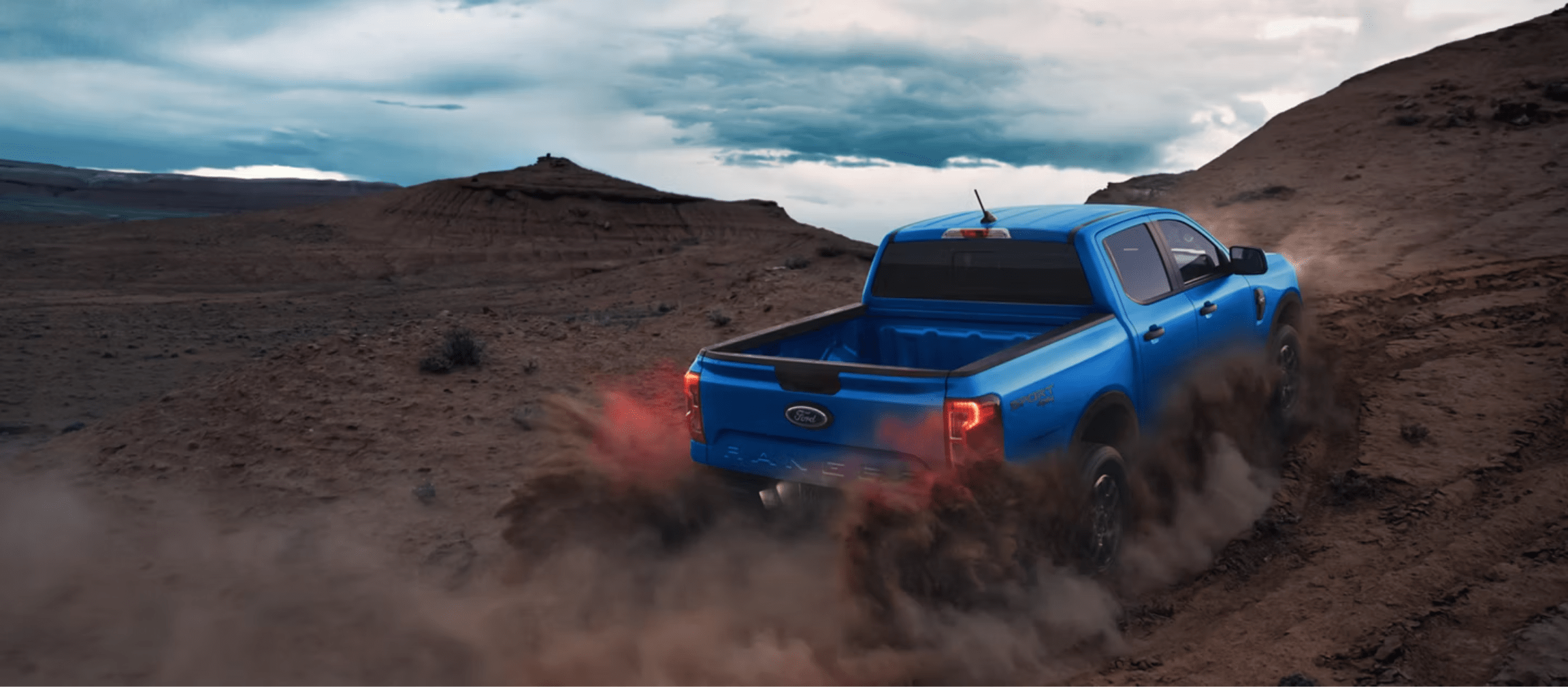
For 2026, Ranger offers three EcoBoost® engines, up to 7,500 pounds of towing capability, and the Ranger Raptor®. Tacoma counters with gas and hybrid powertrains, multiple cab and bed configurations, an available manual, and several off-road-focused trims.
The Toyota Tacoma vs Ford Ranger size comparison also matters early, especially if cab style and bed length are priorities.
At Murray Ford of Starke, we’d focus on the differences that affect how you’ll actually use the truck.
Ford Ranger vs Toyota Tacoma Specs: Start With the Basics
A quick look at the Ford Ranger vs Toyota Tacoma specs shows two trucks that approach the midsize segment differently.
2026 Specification | Ford Ranger | Toyota Tacoma |
|---|---|---|
Standard Engine | 2.3L EcoBoost® | 2.4L turbo i-FORCE |
Maximum Available Horsepower | 405 hp | 326 hp |
Maximum Available Torque | 430 lb-ft | 465 lb-ft |
Maximum Towing | 7,500 lbs. | 6,500 lbs. |
Maximum Payload | Up to 1,767 lbs. | Up to 1,705 lbs. |
Bed Choices | 5-ft. class bed | 5-ft. or 6-ft. bed |
Maximum Seating | 5 | 5 |
Ranger carries the higher maximum tow rating and reaches the higher published horsepower figure through Ranger Raptor. Tacoma offers more body-and-bed variety and adds an available hybrid powertrain.
That body-and-bed flexibility is also important in the Toyota Tacoma vs Ford Ranger size comparison, since Tacoma gives buyers more ways to change the truck’s overall footprint.
That keeps Ford Ranger vs Toyota Tacoma from becoming a simple numbers contest. Each truck gives buyers something the other doesn’t.
Ranger Gives You Three Levels of Turbo Power
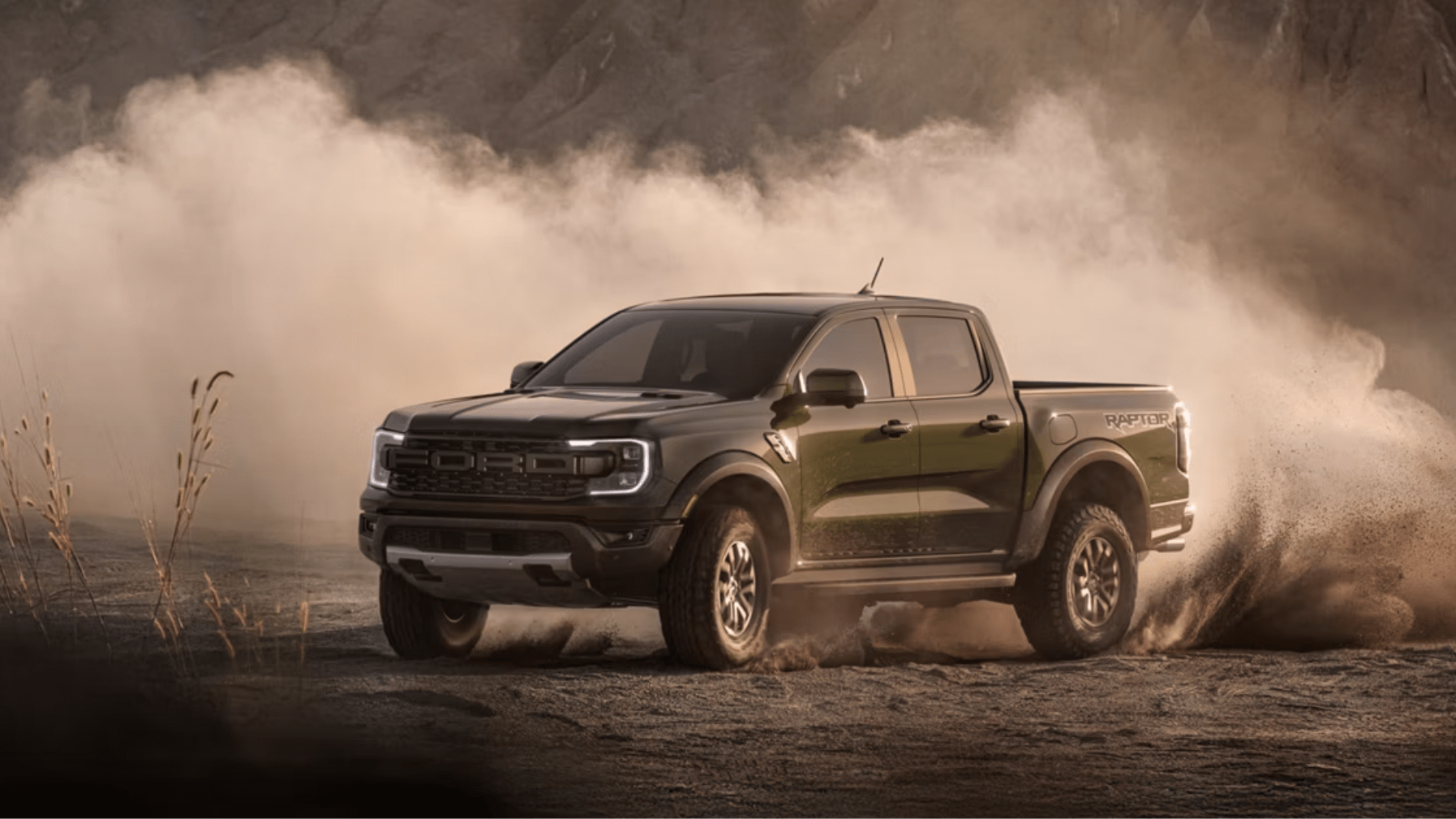
The standard Ranger uses a 2.3L EcoBoost® four-cylinder producing 270 horsepower and 310 lb-ft of torque. XLT and Lariat can step up to an available 2.7L EcoBoost® V6 with 315 horsepower and 400 lb-ft of torque, while Ranger Raptor gets a 3.0L EcoBoost® V6 rated at 405 horsepower and 430 lb-ft.
Tacoma takes a different route. Its gas i-FORCE engine produces up to 278 horsepower and 317 lb-ft of torque, while the available i-FORCE MAX hybrid raises output to 326 horsepower and 465 lb-ft.
Power creates one of the more interesting differences in Ford Ranger vs Toyota Tacoma. Ranger reaches the higher horsepower figure, while Tacoma’s hybrid delivers the stronger peak torque number.
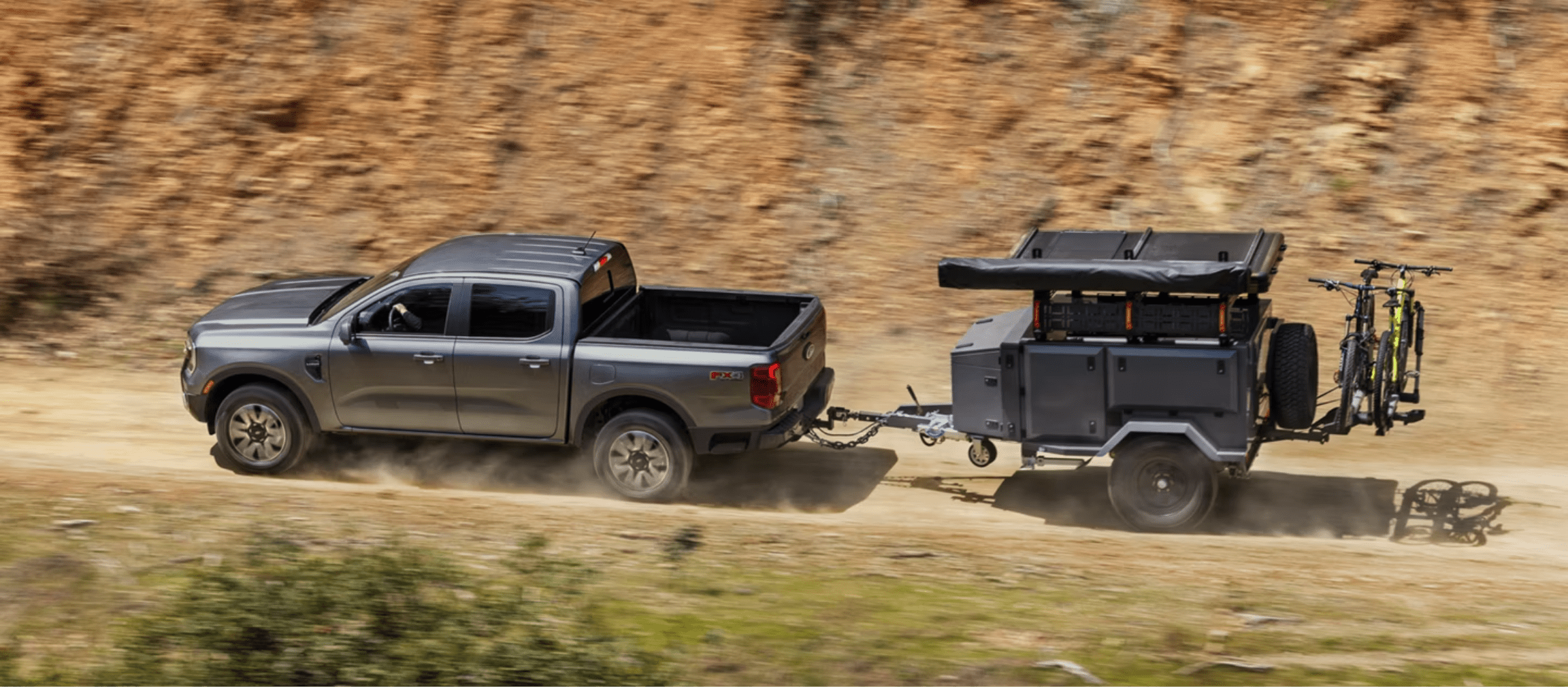
Ranger Holds the Higher Maximum Tow Rating
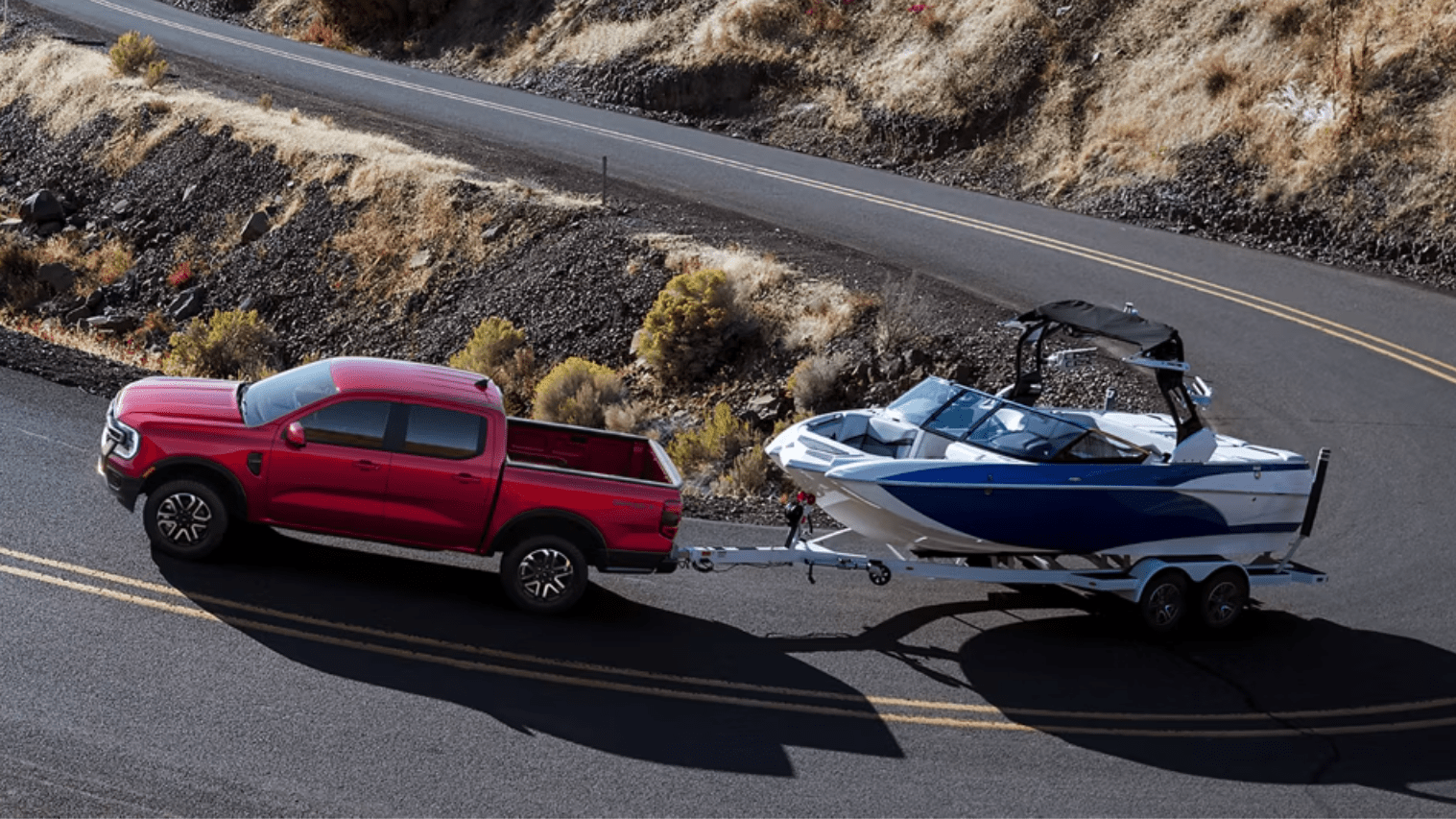
Properly equipped Ranger XL, XLT, and Lariat models can tow up to 7,500 pounds with the appropriate Trailer Tow Package. Tacoma tops out at 6,500 pounds.
That creates a 1,000-pound difference at the top end in Ford Ranger vs Toyota Tacoma, although maximum towing still depends on configuration, passengers, cargo, drivetrain, hitch equipment, and trailer setup.
Ranger Raptor also trades some towing capacity for its performance-focused hardware, so checking the exact truck matters.
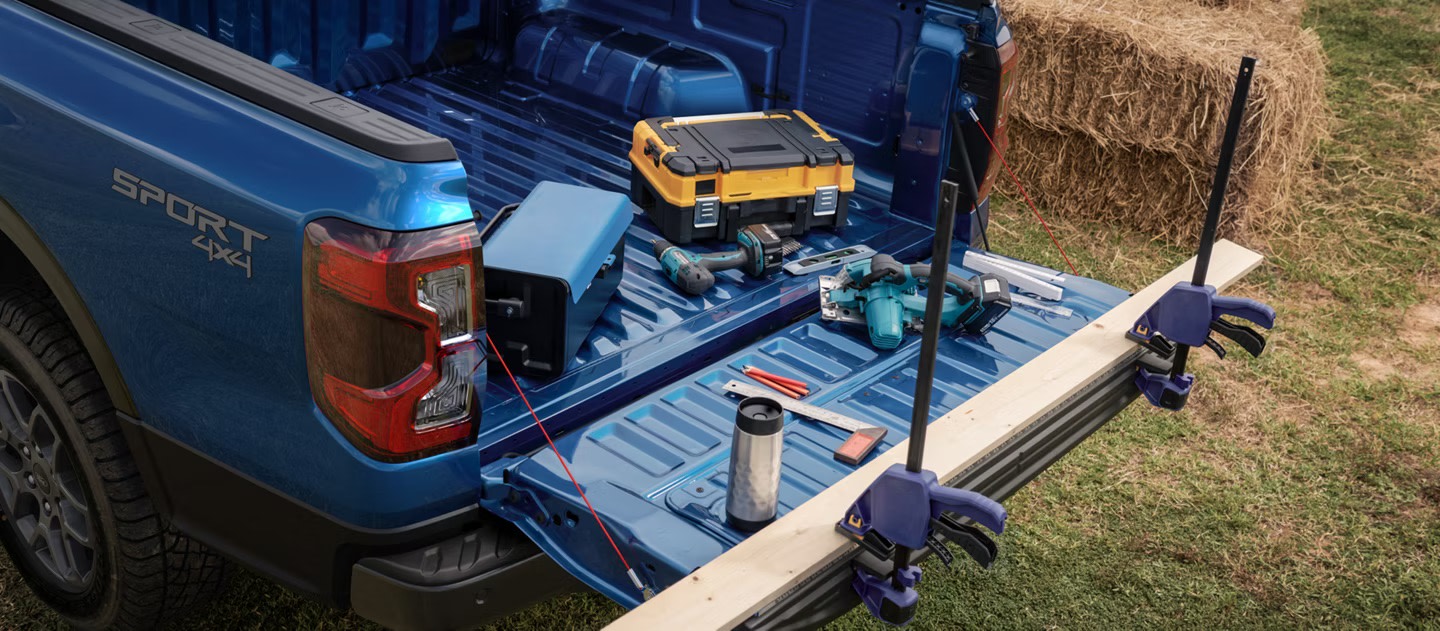
Cab and Bed Choices Change the Size Conversation
The Toyota Tacoma vs Ford Ranger size comparison gets more interesting once cab and bed choices enter the picture.
Ranger keeps things straightforward with a SuperCrew® cab and roughly 5-foot bed across its core U.S. lineup. It measures about 210.6 inches long with a 128.7-inch wheelbase.
Tacoma offers XtraCab and Double Cab layouts along with 5- and 6-foot beds. Some configurations stay relatively close to Ranger in overall length, while longer-bed versions stretch farther.
Ranger’s bed measures about 59.6 inches long and provides 43.5 cubic feet of cargo volume. Tacoma’s available 6-foot bed gives buyers more room for longer materials, motorcycles, camping gear, or work equipment.
That makes body configuration a meaningful part of Ford Ranger vs Toyota Tacoma. Ranger uses a more consistent SuperCrew® configuration, while Tacoma offers more cab-and-bed combinations and additional flexibility in overall length and bed space.
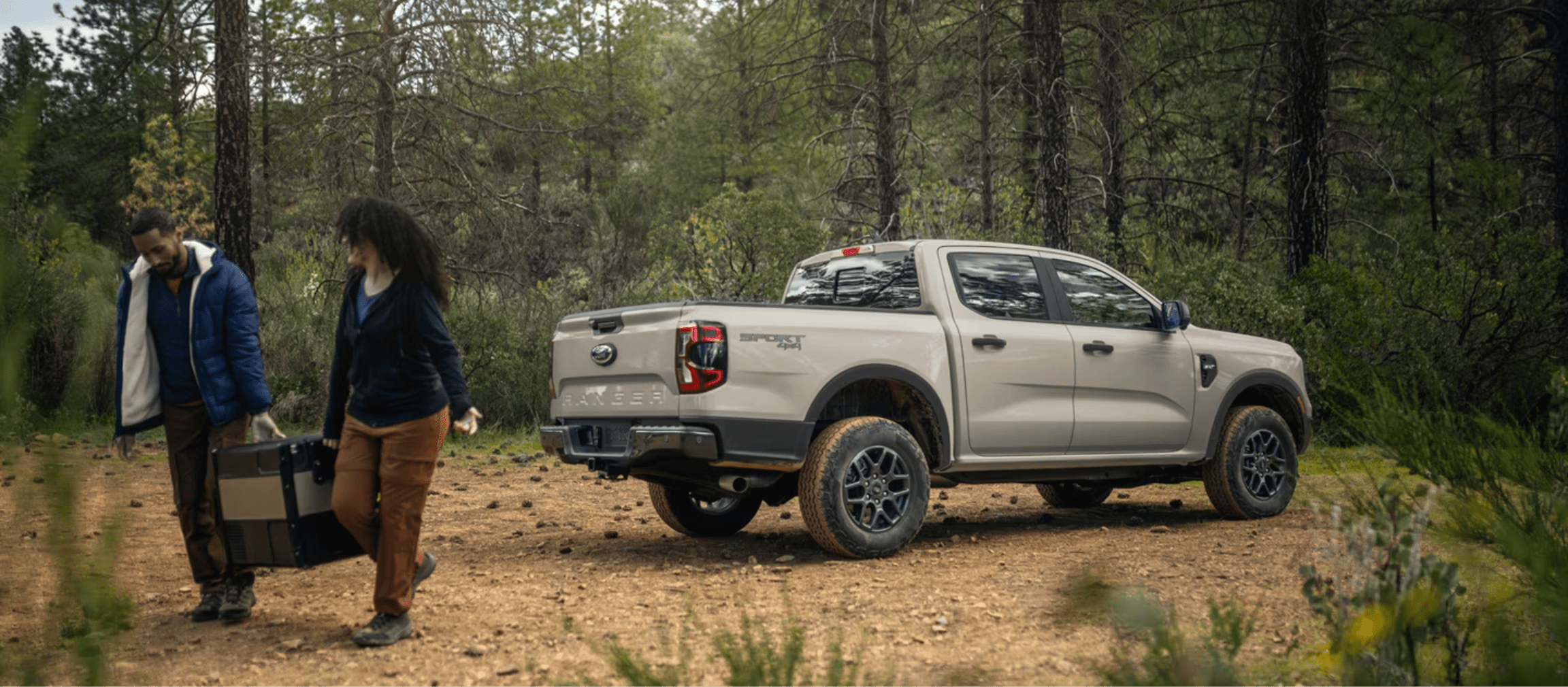
Payload Stays Close
These Ford Ranger vs Toyota Tacoma specs show that both trucks remain useful well after the trailer comes off, whether you’re carrying tools, supplies, recreational equipment, or weekend gear.
Ford lists up to 1,767 pounds of payload for certain Ranger configurations, while Toyota lists up to 1,705 pounds for Tacoma.
Those figures are close enough that the exact truck matters more than the lineup maximum. Drivetrain, engine, trim, passengers, accessories, and other equipment can all reduce available payload, which makes the specific configuration especially important in Ford Ranger vs Toyota Tacoma.
Tacoma Spreads Its Off-Road Hardware Across More Trims
Tacoma backs up its trail reputation with TRD Off-Road, TRD Pro, and Trailhunter configurations, plus available equipment such as a locking rear differential, Multi-Terrain Select, CRAWL Control, and specialized suspension hardware.
Ranger concentrates its most aggressive equipment in Ranger Raptor, which brings a 405-horsepower 3.0L EcoBoost V6, full-time 4x4, FOX™ Live Valve shocks, and added ground clearance.
The off-road side of Ford Ranger vs Toyota Tacoma comes down to two different strategies: Tacoma offers more specialized trail trims, while Ranger puts its highest-performance hardware into Raptor.
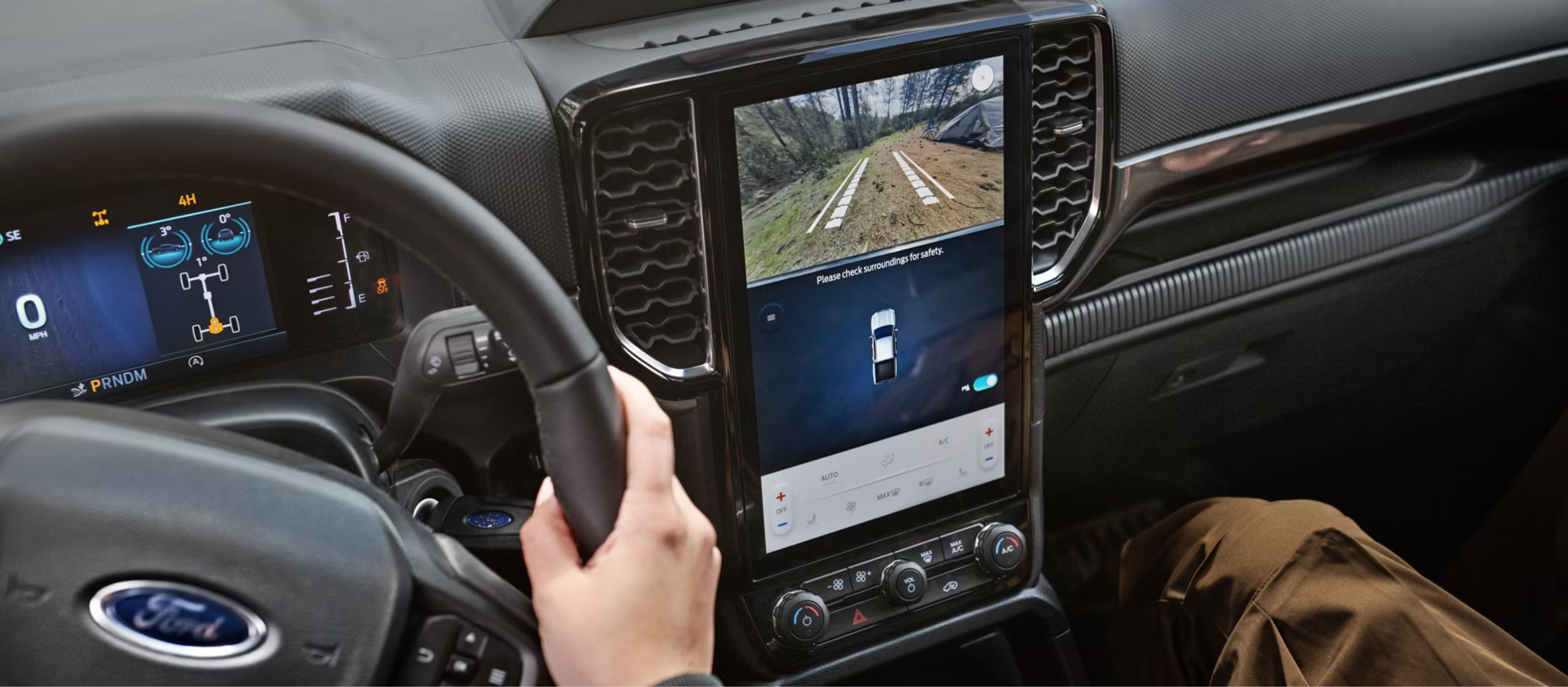
Truck Tech Goes Beyond the Touchscreen
Ranger offers an available 12-inch center display, wireless smartphone connectivity, an available 360-Degree Camera, Adaptive Cruise Control, Front Parking Sensors, and available BLIS® with Trailer Coverage depending on trim.
Tacoma counters with an available 14-inch touchscreen and available trailering aids, including Trailer Back Up Guide with Straight Path Assist.
Both trucks cover the connectivity most buyers expect. With Ford Ranger vs Toyota Tacoma, the bigger difference is how those features are packaged and which setup feels more natural from the driver’s seat.
See Which Ranger Fits Your Side of the Comparison
If Ford Ranger vs Toyota Tacoma has you leaning toward Ranger, explore our current inventory to compare trims, drivetrains, colors, and available equipment at Murray Ford of Starke.
Different Strengths, Different Reasons to Choose One
Tacoma gives buyers more ways to configure the truck, including multiple cab and bed combinations, gas and hybrid powertrains, an available manual transmission, and several dedicated off-road trims. Its i-FORCE MAX hybrid also delivers the higher available peak torque figure. That flexibility carries extra weight in the Toyota Tacoma vs Ford Ranger size comparison.
Ranger takes a more focused approach. It offers the higher maximum tow rating, available V6 power on XLT and Lariat, and the 405-horsepower Ranger Raptor.
The Ford Ranger vs Toyota Tacoma specs point to different strengths rather than one truck dominating every category. Tacoma emphasizes configuration variety and hybrid torque, while Ranger puts more emphasis on towing capacity and available horsepower.
Put the Ranger to the Test at Murray Ford of Starke
In Ford Ranger vs Toyota Tacoma, the right choice comes down to which strengths matter most in daily use. Tacoma offers more cab-and-bed variety, which gives the Toyota Tacoma vs Ford Ranger size comparison extra importance for buyers choosing between body styles and bed lengths.
Ranger counters with a higher maximum tow rating, available V6 power, strong payload capability, and the 405-horsepower Ranger Raptor.
At Murray Ford of Starke, we can help you compare Ranger trims and configurations, then get behind the wheel to see how the truck feels on the road.
Ford Ranger vs Toyota Tacoma FAQs
Quick answers to common Ford Ranger vs Toyota Tacoma questions about size, towing, power, capability, and everyday truck use.
Which is bigger: Toyota Tacoma or Ford Ranger?
It depends on the Tacoma configuration. Ranger measures about 210.6 inches long with a 128.7-inch wheelbase. Tacoma offers multiple cab and bed combinations, so shorter versions are relatively close to Ranger while long-bed configurations can be noticeably longer. That’s why a Toyota Tacoma vs Ford Ranger size comparison should account for the exact Tacoma configuration.
Which is better: Ford Ranger or Toyota Tacoma?
The better fit in Ford Ranger vs Toyota Tacoma depends on what you need from a midsize truck. Ranger offers a higher published maximum tow rating, available V6 power, and up to 405 horsepower in Ranger Raptor. Tacoma offers more cab-and-bed configurations, an available hybrid powertrain, an available manual transmission on select models, and several off-road-focused trims.
How much can a Ford Ranger tow?
The 2026 Ford Ranger can tow up to 7,500 pounds when properly equipped on select configurations. Actual towing capability depends on drivetrain, equipment, passengers, cargo, and trailer setup.
What engines are available in the 2026 Ford Ranger?
Ranger offers a 2.3L EcoBoost® four-cylinder, an available 2.7L EcoBoost® V6 on XLT and Lariat, and a 3.0L EcoBoost® V6 in Ranger Raptor.
How long is the Ford Ranger bed?
The 2026 Ranger bed measures about 59.6 inches long and provides approximately 43.5 cubic feet of cargo volume. That bed length is an important part of the Toyota Tacoma vs Ford Ranger size comparison, especially since Tacoma offers both 5- and 6-foot bed options.
Does the Toyota Tacoma come with a hybrid?
Yes. The 2026 Tacoma offers an available i-FORCE MAX hybrid powertrain producing up to 326 horsepower and 465 lb-ft of torque.
Can you get a Toyota Tacoma with a manual transmission?
Yes. Toyota continues to offer a six-speed manual transmission on select Tacoma configurations.
Does the Ford Ranger have four-wheel drive?
Yes. Four-wheel drive is available across the Ranger lineup, while Ranger Raptor comes standard with 4x4.
Finance the Ranger That Fits the Job
After comparing Ford Ranger vs Toyota Tacoma, once you know which Ranger engine, drivetrain, and trim fit your needs, our finance team at Murray Ford of Starke can help you explore payment options, trade-in value, and available financing.