Blog

15-Year / 150,000-Mile Powertrain Warranty: What It Covers & Why It Matters

Red 2027 Explorer
Planning to keep your next truck long after it’s paid off? Ask us what happens if the engine or transmission needs a major repair after the factory warranty expires. At Murray Ford of Starke, we’ll walk you through your coverage before you buy.

We include a complimentary 15-year/150,000-mile powertrain warranty on qualifying vehicles. If you’re the driver who keeps an F-150 through years of Gainesville commutes, Saturday hardware runs and family trips up US 301, ask us about the 15/150 before you pick your truck. 

What Our Powertrain Warranty Covers

So, what is a powertrain warranty? It protects specified parts in the systems that generate power and deliver it to the wheels. The engine produces it, the transmission manages it, and the drivetrain delivers it.

Under our powertrain warranty, the major areas to look for are the engine, transmission or transaxle, and front- or rear-drive system. The written agreement lists the covered parts and conditions. Ask us to pull it up while you’re here. We can walk through what’s covered on the vehicle you’re considering. 

Powertrain warranty coverage focuses on specified mechanical repairs. When you’re planning your ownership costs, budget separately for routine service, tires and brake pads. Then ask which warranty, if any, applies to items like the touchscreen or power seat.

Two Warranties, Two Timelines

For most new gasoline Ford vehicles, the factory Ford powertrain warranty lasts five years or 60,000 miles, whichever comes first. Ford’s guide lists covered components in the engine, transmission and drive system. The parts list varies with how the vehicle is equipped. 

Our 15/150 program has its own terms. The time limit runs from the sale date, and the mileage limit is 150,000 miles on the odometer. Coverage ends at the first limit you reach. 

Say you buy a qualifying used truck with 50,000 miles. You’re 100,000 miles away from the odometer limit, and the 15-year time limit still applies. If you’re weighing that truck against a new one, we can show you when the factory Ford powertrain warranty and our program each start and end.

How Long Do You Usually Keep a Truck?

If you’re wondering, “What is a powertrain warranty worth to me?” start with how long you normally own a vehicle. At about 15,000 miles a year, a truck bought new can reach 150,000 miles in roughly ten years. Drive closer to 7,500 miles a year, and you’ll likely reach the time limit first.

Our powertrain warranty is especially relevant if you keep a truck long after the first set of tires comes off. We’ll help you compare the written terms with your annual mileage and how long you expect to keep the keys.

Which Vehicles Qualify for Our Powertrain Warranty?

We offer the 15/150 on select new and pre-owned vehicles. Our published exclusions include electric vehicles, Transit vans, certain heavy-duty and high-performance models, and vehicles purchased for commercial use. The program stays with the original purchaser. See the eligibility details.

Tell us if you’re buying for a business or shopping for a particular truck configuration. We’ll check the VIN before you decide, so you know which powertrain warranty coverage applies to that vehicle.

Keep the Service Receipts

To keep your powertrain warranty in effect, follow the manufacturer’s maintenance schedule, use an ASE-certified shop and keep receipts for required work. You can have that maintenance done at a qualifying shop of your choice. 

Set up a folder in your glove box or on your phone when you take delivery. After each service, save the invoice and check that it shows the date, mileage and work performed. That’s easier than tracking down years of paperwork after a repair comes up.

While we’re going over the agreement, ask who to call if you need a repair, whether the work needs approval first and whether a deductible applies. We can go through those details with you before you leave.

Ask About the 15/150 Before You Take the Keys

Found a truck you’d happily drive for the next decade? Bring us the listing. At Murray Ford of Starke, we’ll check eligibility and show you the powertrain warranty terms before you sign. Browse our new and pre-owned inventory.

Powertrain Warranty FAQs

What is a powertrain warranty?

A powertrain warranty covers specific parts that help a vehicle make power and move. Depending on the agreement, that can include engine internals, transmission components, axle shafts and other drive-system parts.

What does Ford powertrain warranty cover?

Ford lists parts such as the cylinder block and heads, oil pump, timing components, transmission internals and torque converter. Drive-system coverage can include axle shafts, bearings and driveshafts, depending on the vehicle. The applicable Ford powertrain warranty guide gives the full list. See Ford’s covered components.

Are oil leaks covered under Ford powertrain warranty?

They can be. A leak may qualify if it comes from a covered defect in a listed component, such as a seal, gasket or oil pan, during the applicable term. A diagnosis identifies the source, and the written terms determine whether powertrain warranty coverage applies. See Ford’s warranty terms.

How long is the Ford powertrain warranty?

For most new gasoline Ford vehicles, it’s five years or 60,000 miles, whichever comes first. Certain diesel engine components have a separate term. Bring us the VIN and we can help you identify the warranty that applies. Check Ford’s coverage periods.


Recommended Posts

Green Bronco Sport

Bronco Sport Towing Capacity: What Can This Compact SUV Actually Tow?

The Bronco Sport is compact enough for everyday driving, but that doesn’t mean towing is off the table. For 2026, Bronco Sport towing capacity reaches up to 2,200 pounds on Big Bend, Heritage, and Outer Banks models when properly equipped with the available Class II Trailer Tow Package. Badlands raises that ceiling to 2,700 pounds and includes the Class II Trailer Tow Package as standard equipment. That gives your Ford Bronco Sport towing capacity enough flexibility for light recreational and utility trailers without turning the SUV into something oversized for daily driving around Starke and North Florida. The important part is knowing which Bronco Sport you have and what the trailer actually weighs when loaded. Most Bronco Sport Trims Top Out at 2,200 Pounds Big Bend, Heritage, and Outer Banks all use the 1.5-liter EcoBoost engine for 2026. Ford rates that engine at 180 horsepower and 200 lb-ft of torque, with standard 4x4 across those trims. When equipped with the Class II Trailer Tow Package, Bronco Sport towing capacity reaches 2,200 pounds. That figure is the maximum loaded trailer weight, not just the empty trailer itself. Cargo inside the trailer counts too. So if you’re thinking about a small utility trailer, lightweight camper, personal watercraft trailer, or similar setup, look at the trailer’s loaded weight rather than its dry or empty number. That’s where Ford Bronco Sport towing capacity becomes useful in real life. It gives you room for lighter towing jobs while keeping the Bronco Sport easy to park, commute in, and take down tighter roads. Badlands Gives You Another 500 Pounds If towing is a bigger part of your plans, Badlands is the version to look at first. The Bronco Sport Badlands towing capacity reaches 2,700 pounds when properly equipped. Badlands uses the stronger 2.0-liter EcoBoost engine with 250 horsepower and 280 lb-ft of torque, along with Advanced 4x4 and a twin-clutch rear-drive unit. That extra 500 pounds may not sound dramatic until your trailer is already approaching the limit of a 2,200-pound setup. The higher Bronco Sport towing capacity gives you more breathing room for heavier recreational gear or a larger small trailer, while the stronger engine adds torque that can make towing feel more natural. For drivers who want trail capability and occasional trailer duty in the same compact SUV, Badlands is the clearest fit. The Tow Package Matters More Than the Hitch Alone A hitch receiver by itself doesn’t tell the whole story. Ford’s Class II Trailer Tow Package includes the hitch receiver and 4-pin trailer wiring harness, along with Trailer Sway Control, a full-size spare tire, and a rubberized cargo floor. The package is standard on Badlands and available on Big Bend, Heritage, and Outer Banks. That equipment is what unlocks the published Bronco Sport towing capacity on applicable trims. Bronco Sport drivers enjoy a maximum tongue load of 220 pounds for the 2,200-pound configurations and 270 pounds for Badlands at its 2,700-pound maximum. That tongue-weight limit matters because too much weight at the hitch can overload the vehicle even if total trailer weight appears acceptable. What Can a Bronco Sport Actually Tow? This is where the spec sheet needs some context. A 2,200- or 2,700-pound rating can work well for lighter trailers, but there isn’t one universal answer because boats, campers, utility trailers, and recreational equipment vary widely in weight. The best use of Bronco Sport towing capacity is to start with the trailer’s GVWR or actual loaded weight, then add everything you plan to carry inside it. The Bronco Sport Badlands towing capacity gives you the highest published limit in the lineup, but even Badlands needs to stay within its trailer, tongue-weight, and combined-weight ratings. Ford lists a 6,990-pound GCWR for the 2.0-liter Badlands configuration in its current towing guide. In other words, don’t buy around an empty trailer number. Buy around the weight you’ll actually tow. Trailer Weight Isn’t the Only Number to Check Passengers and cargo matter too. Maximum towing ratings assume specific vehicle conditions and can change based on cargo, accessories, options, and the number of passengers. The combined weight of the Bronco Sport and trailer also can’t exceed the applicable GCWR. That means the published Bronco Sport towing capacity is a ceiling, not a promise that every real-world setup can use every pound of it. If you regularly travel with four passengers, coolers, camping gear, and a loaded trailer, it’s worth working through the entire weight picture before you hitch up. Match the Bronco Sport to the Trailer in Starke Explore our current Bronco Sport inventory, then talk with our team about what you actually plan to tow. We can help you compare engines, tow-package equipment, and Ford Bronco Sport towing capacity before you choose a specific SUV. The best Bronco Sport towing capacity isn’t simply the biggest number available. It’s enough capability for your trailer without giving up the compact size that made the Bronco Sport appealing in the first place.

Ford Fathom: Ford’s More Affordable Electric Truck Is Coming

Ford Fathom: Ford’s More Affordable Electric Truck Is Coming

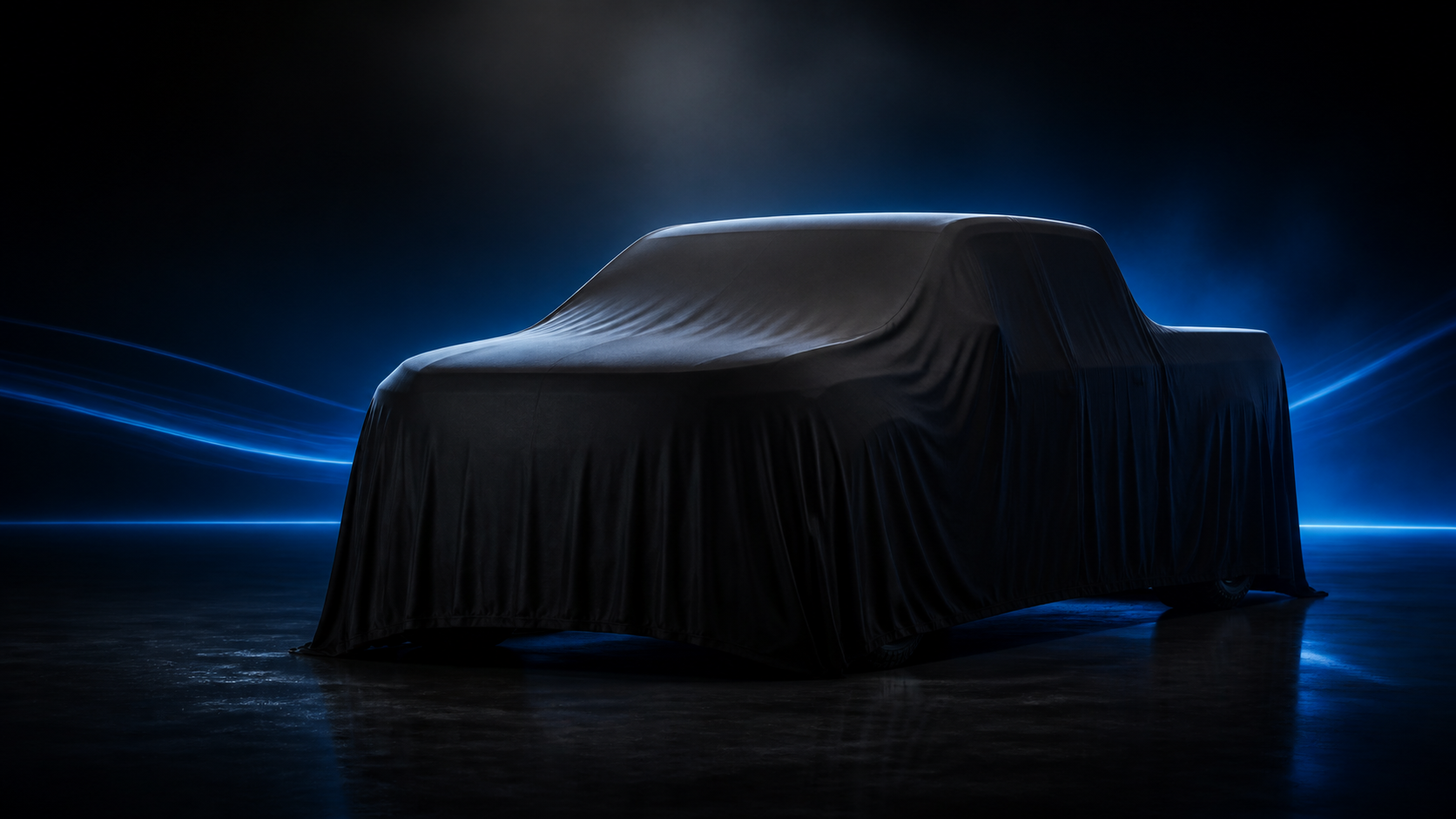
What if buying an electric truck didn’t require a luxury-vehicle budget? That is the idea behind the Ford Fathom, an all-new midsize electric pickup scheduled to arrive in 2027. With a starting MSRP of $28,350 before destination charges, the Fathom is being designed to make electric driving accessible to a much wider group of truck buyers. This is not simply a less expensive version of an existing Ford electric truck. The Fathom will be the first vehicle constructed on Ford’s new Universal Electric Vehicle Platform, using a new production system intended to reduce complexity, control costs, and create room for practical technology. Here is what Ford has confirmed—and what drivers should still be waiting to learn. Ford Fathom at a Glance Ford has announced several important details about its upcoming electric pickup: Midsize, four-door electric truck Seating for five adults Starting MSRP of $28,350 with a standard-range battery $1,595 destination and delivery charge Preorders expected to begin in early 2027 Built on the Ford Universal Electric Vehicle Platform Production planned for Louisville, Kentucky Bed and front trunk, or “frunk,” for cargo Bidirectional power capability Next-generation BlueCruise capability Large high-resolution center display Standard Digital Key Apple CarPlay and Android Auto compatibility Navigation powered by Apple Maps Over-the-air software-update capability Important details such as EPA-estimated range, towing capacity, payload, charging speed, dimensions, and available trim levels had not been released at the time of writing. How Affordable Is the Ford Fathom? The Ford Fathom will start at $28,350 with its standard-range battery. That figure excludes the $1,595 destination charge, taxes, title, registration, dealer documentation fees, and optional equipment. Dealers set final selling prices. Even with those qualifications, the announced starting price places the Fathom in unusual territory. New electric trucks have traditionally carried prices considerably higher than comparable compact or midsize gas-powered pickups. Ford is attempting to change that equation by designing the vehicle, battery, software, and assembly process together. The result is intended to be a modern electric truck that begins below $30,000 without being stripped of the technology customers expect. Why Is It Called Fathom? A fathom is traditionally a unit used to measure the depth of water. The word can also mean understanding something deeply. Ford selected the name to represent the work its development team did to understand how customers actually use their vehicles. The truck is intended for people who want everyday practicality, flexible cargo space, modern technology, and an attainable price—not necessarily the size or towing capacity of a full-size pickup. There is also an older meaning behind the name. A fathom once described the approximate span of a person’s outstretched arms. Ford connects that idea to the Fathom’s welcoming, spacious interior. A New Platform for a New Kind of Ford Electric Truck The Fathom is the first model based on Ford’s Universal Electric Vehicle Platform. This architecture was created to support an eventual family of affordable electric vehicles with different body styles. Instead of adapting a gasoline-powered platform, Ford designed the system specifically around electric propulsion. That gives engineers greater freedom to position the battery, create a spacious cabin, and provide storage at both ends of the vehicle. Ford says the Fathom will have more passenger volume than a Toyota RAV4 while still providing a truck bed and a front cargo area. This could make it particularly useful for households that want one vehicle to handle commuting, errands, passengers, and weekend projects. The platform is also being designed to accept software improvements through over-the-air updates, allowing compatible features to evolve after the truck leaves the dealership. How Ford Plans to Keep the Price Down A lower price does not come from one dramatic breakthrough. Instead, Ford is simplifying hundreds of individual parts and processes. The Fathom will be assembled using the new Ford Universal EV Production System. Rather than moving an incomplete vehicle along one traditional assembly line, Ford’s system divides production into three main branches: The front section of the truck The rear section of the truck The structural battery, seats, carpeting, and center console Those sections come together later in the process. Ford expects the approach to reduce manufacturing time, require less factory space, and improve working conditions for plant employees. The platform is also designed around a more efficient electrical architecture. Reducing excess wiring, fasteners, and individual components can lower weight and manufacturing expense. A lighter and more efficient vehicle may be able to deliver useful driving range without relying on an enormous, expensive battery. American Assembly and LFP Batteries Ford plans to build the Fathom at its retooled Louisville Assembly Plant in Kentucky. The company has invested approximately $2 billion in the plant as part of its affordable-EV program. The truck will use lithium iron phosphate, or LFP, battery technology. Ford plans to assemble the battery cells at BlueOval Battery Park Michigan. LFP batteries can offer several practical advantages, including lower material costs and long service life. They also avoid using nickel and cobalt in the battery chemistry. Ford has not yet disclosed the Fathom’s battery capacity or estimated driving range, so shoppers should wait for official specifications before comparing it directly with other EVs. Bidirectional Power: More Than Transportation One of the Ford Fathom’s most interesting confirmed features is bidirectional power capability. An ordinary electric vehicle takes electricity from the grid and stores it in its battery. A vehicle with bidirectional capability can also send power back out. When paired with compatible home equipment, the Fathom is expected to help run household essentials such as lights, a refrigerator, and Wi-Fi during an outage. That potential could be especially appealing to Florida residents preparing for storms and temporary power interruptions. Bidirectional charging may also help some owners manage electricity costs. The vehicle could charge when electricity rates are lower and return some of that energy to the home during more expensive periods. Home-power functionality will require compatible equipment, professional installation, and support from the owner’s electric utility. Ford has not yet released complete equipment or installation details. A Digital-First Interior The affordable price does not mean Ford is eliminating every screen or connected feature. The Fathom will include a large, high-resolution center display with navigation powered by Apple Maps. Apple CarPlay and Android Auto compatibility will also be standard, allowing drivers to bring familiar apps and services into the vehicle. A standard Digital Key will let a compatible phone act as the vehicle key. Owners will also be able to use the Ford app for supported remote functions. Every Fathom will be built with the necessary hardware for Ford’s next generation of BlueCruise. When activated through an eligible plan or trial, BlueCruise supports hands-free highway driving on designated Hands-Free Blue Zones. It remains a driver-assistance feature, so drivers must continue watching the road and be ready to take control. Where Will the Ford Fathom Fit in the Truck Lineup? The Fathom is not an electric F-150, nor is it simply a battery-powered Maverick. Ford describes it as a midsize pickup. That places it conceptually between the compact Maverick and larger F-150, although official dimensions have not yet been announced. Its likely appeal is different from that of a full-size work truck. The Fathom is being developed for drivers who want: An approachable purchase price An electric vehicle with a real cargo bed Room for five passengers Easy daily drivability Storage in both a bed and frunk Modern connected technology The convenience of charging at home Backup-power potential Buyers who need maximum towing or payload capacity should wait for Ford’s final specifications. Those whose top priority is efficient commuting, home projects, outdoor equipment, or daily family use may find the Fathom’s combination especially compelling. What Has Ford Not Announced Yet? Although Ford has revealed the name, starting price, platform, and several features, many important numbers are still unknown. Ford has not yet published: EPA-estimated driving range Battery capacity Maximum charging rate Estimated DC fast-charging time Horsepower or torque Towing capacity Payload capacity Bed dimensions Overall length and width Available battery choices Trim levels Final production or delivery schedule Until those details are available, claims about the Fathom’s range or capability should be treated as speculation. Is the Ford Fathom Right for North Florida? For drivers in Starke and the surrounding Gainesville, Lake City, and Jacksonville areas, the Fathom could offer an appealing combination of manageable size and everyday utility. Home charging may allow many owners to begin each morning with the range needed for commuting and errands. The bed and frunk should provide flexible storage for tools, sports equipment, groceries, or weekend gear. Bidirectional power could add another layer of value when a properly equipped home experiences an outage. As with any electric vehicle, the right choice will depend on daily mileage, charging access, towing needs, and travel habits. Ford’s forthcoming range and charging specifications will help shoppers determine how well the Fathom fits longer highway trips and demanding truck use. When Can You Order a Ford Fathom? Ford says preorders will begin in early 2027. Interested shoppers can currently register with Ford to receive updates and a future preorder invitation.Exact production timing, dealership allocations, and customer delivery dates have not been announced. At Murray Ford of Starke, we’re here to help North Florida drivers follow the Fathom’s development, understand the preorder process, and compare it with other Ford trucks and electric vehicles as more specifications become available. Visit Murray Ford of Starke at 13447 U.S. Highway 301 South in Starke, Florida, to explore today’s new Ford lineup and ask about future Ford Fathom updates. Frequently Asked Questions What is the Ford Fathom? The Ford Fathom is an upcoming midsize, four-door electric pickup. It will seat five people and will be the first vehicle constructed on Ford’s new Universal Electric Vehicle Platform. How much will the Ford Fathom cost? The Fathom will have a starting MSRP of $28,350 with a standard-range battery. That price excludes a $1,595 destination charge, taxes, registration, dealer fees, and optional equipment. The dealer sets the final selling price. When will the Ford Fathom be available? Ford says Fathom preorders will begin in early 2027. A specific production launch or customer delivery date has not yet been announced. What is the Ford Fathom’s driving range? Ford has not released an EPA-estimated driving range. Battery capacity and charging-speed figures also remain unannounced. How much can the Ford Fathom tow? Ford has not yet published towing or payload ratings for the Fathom. Buyers who plan to tow should wait for the final specifications and confirm the capacity of their selected configuration. Can the Ford Fathom power a house? The Fathom will offer bidirectional power capability. When connected to a properly equipped home, its battery will be able to help power household essentials during an outage and may help manage electricity costs. Additional home equipment and utility approval may be required. Will the Ford Fathom have BlueCruise? Every Fathom will be built with BlueCruise-capable hardware. Using BlueCruise will require activation through an eligible plan or trial. BlueCruise is a hands-free driver-assistance feature, not an autonomous-driving system.

bronco dirt road

Ford Bronco G.O.A.T. Modes Explained: What Each Mode Actually Does

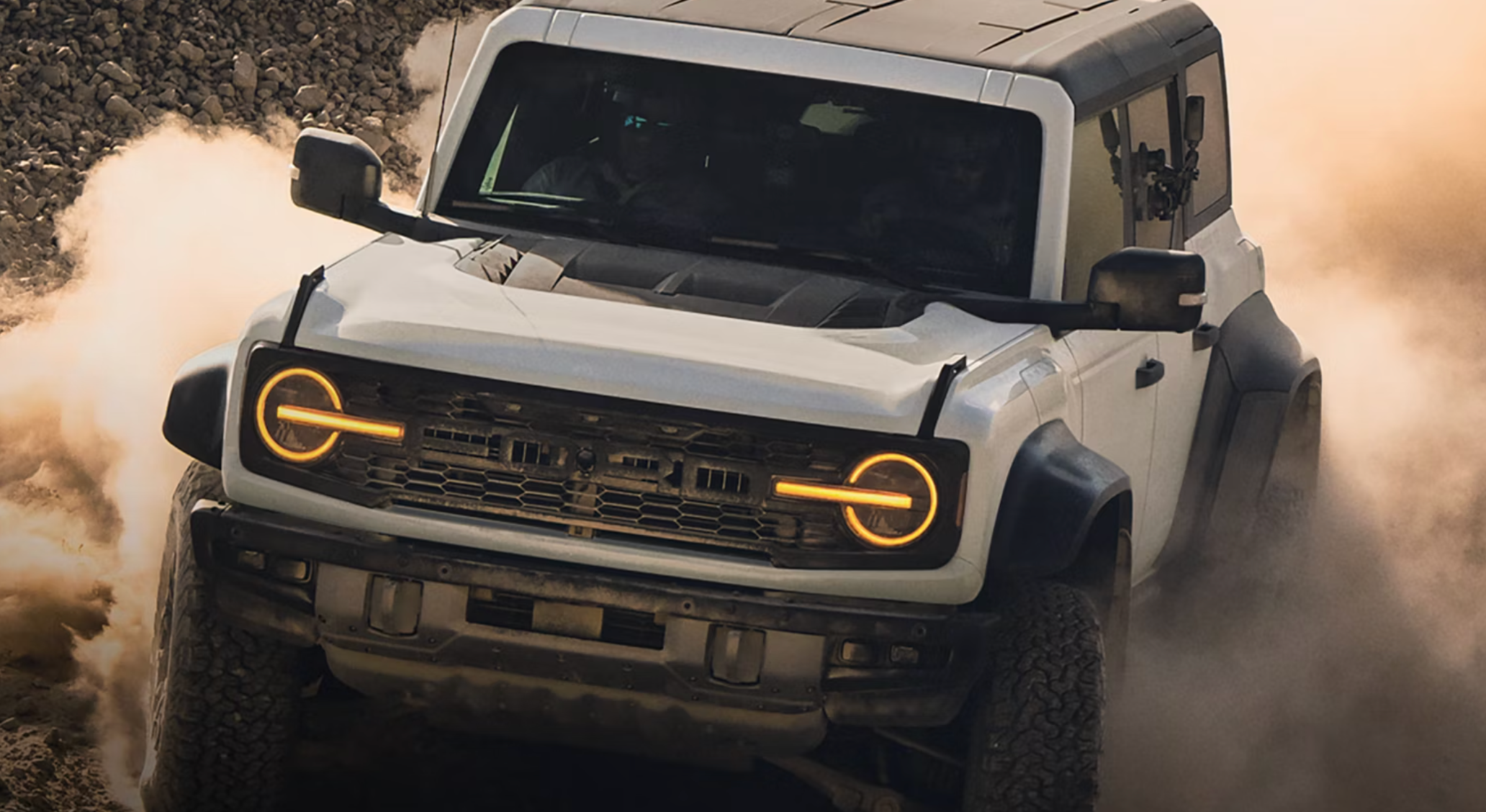
One turn of a dial can change how your Bronco responds to a rainy road, loose sand, rocky terrain, or an open stretch of trail. That’s the idea behind G.O.A.T. Mode on a Bronco. G.O.A.T. stands for “Goes Over Any Type of Terrain,” and the system gives you selectable drive modes designed for specific conditions. Depending on the setting and your Bronco’s equipment, the vehicle can adjust throttle response, transmission behavior, traction and stability controls, and four-wheel-drive settings. If your question is, “What is G.O.A.T. Mode on a Bronco?” the simplest answer is that it helps prepare the vehicle for what’s underneath the tires. Five Modes or Seven? Your Bronco Trim Decides The Bronco G.O.A.T. Modes you get depend on the model. For 2026, Base, Big Bend, Outer Banks, and Heritage Edition models have five modes: Normal Eco Sport Slippery Sand Badlands, Stroppe Edition, and Raptor models get seven: Normal Eco Sport Slippery Off-Road Rock Crawl Baja So, before planning around a particular G.O.A.T. Mode on a Bronco, check the exact model and equipment. Not every Bronco has every setting. Normal, Eco, and Sport Change the Everyday Drive You don’t have to leave pavement to make use of the system. Normal is your everyday setting, balancing comfort and general drivability. Eco prioritizes efficient driving and extended range. Sport goes the other direction by sharpening accelerator response, changing steering feel, and holding lower gears longer for quicker acceleration. That makes G.O.A.T. Mode on a Bronco relevant even if most of your week involves US-301, errands around Starke, or highway miles toward Gainesville or Jacksonville. The trail modes may get the attention, but some of these settings are built for the drive you make every day. Slippery Mode Is the One to Remember When the Weather Turns Florida rain can turn a perfectly ordinary road slick in a hurry. When using G.O.A.T. Mode on a Bronco, Slippery mode reduces throttle response and adjusts shifting for firm surfaces with reduced traction. Depending on the Bronco’s four-wheel-drive system, the mode can also change which 4x4 setting is selected by default. Among the Bronco G.O.A.T. Modes, Slippery may be one of the most useful for drivers who rarely leave pavement. The key is using the mode that matches the surface. Ford specifically warns against using certain four-wheel-drive configurations intended for slippery conditions on dry pavement. Sand Mode Helps the Bronco Keep Moving Loose sand requires momentum, traction, and a different response than pavement. On 2026 Broncos equipped with Sand mode, the vehicle prepares itself for soft terrain rather than treating it like an ordinary road. That makes G.O.A.T. Mode on a Bronco useful when the surface gets loose and maintaining forward progress becomes the priority. It’s also a good reminder that drive modes aren’t magic buttons. Tire pressure, terrain, driver input, vehicle equipment, and good judgment still matter when you leave pavement. Off-Road, Rock Crawl, and Baja Get More Specialized Move into Badlands, Stroppe Edition, or Raptor territory and the Bronco G.O.A.T. Modes get more specialized. Off-Road is built for mixed surfaces like sand, gravel, mud, and uneven terrain, with 4H becoming the default on applicable Broncos. Rock Crawl uses 4L and adjusts throttle and transmission response for more control over obstacles. The rear electronic locking differential engages, and properly equipped models can disconnect the stabilizer bar for better articulation. Baja takes the opposite approach. This G.O.A.T. Mode on a Bronco is designed for higher-speed off-road driving, with quicker throttle response and stronger torque delivery over loose terrain. Rock Crawl wants patience. Baja wants room to move. The Dial Is Easy. Choosing the Right Mode Matters More. Using the system itself isn’t complicated. The Bronco uses a console-mounted controller to select its drive modes. Ford notes that mode availability can depend on vehicle conditions and that off-road modes should be returned to an appropriate on-road setting when you’re back on regular pavement. The important part is understanding what each G.O.A.T. Mode on a Bronco is trying to accomplish instead of simply turning the dial because the terrain looks interesting. You don’t need Baja for a rainy commute, and Rock Crawl isn’t there to make a grocery run more exciting. See G.O.A.T. Mode on a Bronco in Action Before You Hit the Trail The best time to figure out your Bronco’s controls is before you’re staring at an obstacle. At Murray Ford of Starke, our team can show you how the Bronco G.O.A.T. Modes work on the specific model you’re considering and explain which trims offer the terrain settings that match how you want to drive. Explore our current Ford Bronco inventory, then get behind the wheel and try the controls for yourself. A G.O.A.T. Mode on a Bronco can change a lot about how the SUV responds. Knowing when to turn that dial is what makes the technology genuinely useful. Ford Bronco G.O.A.T. Modes FAQs Still learning the terrain-management system? Here are quick answers about Bronco G.O.A.T. Modes, what the settings mean, and how to use them correctly. What is G.O.A.T. Mode on a Bronco? G.O.A.T. Mode on a Bronco refers to selectable drive settings designed for different roads, weather, and terrain. Depending on the selected mode and vehicle equipment, the system can adjust throttle response, transmission behavior, traction and stability controls, and four-wheel-drive operation. How do you use Ford Bronco G.O.A.T. Mode? Use the console-mounted controller to bring up the available modes and select the setting that matches your driving conditions. Available settings depend on the Bronco model, and certain modes are intended specifically for off-road use. What does G.O.A.T. stand for on a Ford Bronco? G.O.A.T. stands for Goes Over Any Type of Terrain. It’s Ford’s name for the Bronco’s selectable terrain and drive modes. Which Ford Bronco models have seven G.O.A.T. Modes? For 2026, Badlands, Stroppe Edition, and Raptor have seven modes. Base, Big Bend, Outer Banks, and Heritage Edition models have five. Always confirm the equipment on the specific Bronco you’re considering. Which Bronco G.O.A.T. Mode should I use in the rain? If you’re using G.O.A.T. Mode on a Bronco in the rain, Slippery mode is the setting designed for firm surfaces with reduced traction. It lowers throttle response and adjusts shifting to help the Bronco respond more smoothly on slick roads.